Author

admin

Browsing

(TheNewswire)

Vancouver, British Columbia / September 11, 2025 ‑ TheNewswire – Harvest Gold Corporation (TSXV: HVG,OTC:HVGDF) (‘ Harvest Gold ‘ or the ‘ Company ‘) announces that, subject to the approval of the TSX Venture Exchange (the ‘ Exchange ‘), it has arranged a non-brokered private placement of up to 6,666,667 units of the Company (‘ Units ‘) at a price of $0.075 per Unit for aggregate gross proceeds of up to $500,000 (the ‘ Private Placement ‘).

Harvest Gold President and CEO, Rick Mark, states: ‘One of our investors in the recently completed Private Placement has asked if we would accept a larger investment with the same terms. The board of directors of the Company has approved the request as it will allow us to do prospecting, mapping and geo chemistry on areas in the southern part of Mosseau and on LaBelle with the goal of providing new drill targets this year. It also provides us flexibility should we wish to add meters to the current drill program at Mosseau.’

Each Unit will consist of one common share in the capital of the Company (each, a ‘ Share ‘) and one transferable common share purchase warrant (each, a ‘ Warrant ‘). Each Warrant will entitle the holder thereof to acquire one additional Share (each, a ‘ Warrant Share ‘) at a price of $0.12 per Warrant Share for a period of two years following the closing date of the Private Placement.

The Company anticipates using the proceeds from the Private Placement for exploration expenses on its properties in the Urban Barry area of Quebec, Canada, and general working capital.

All securities issued will be subject to a four-month hold period pursuant to securities laws in Canada and, where applicable.  Finders’ fees may be payable to qualified parties.

About Harvest Gold Corporation

Harvest Gold has three active gold projects focused in the Urban Barry area, totalling 329 claims covering 17,539.25 ha , located approximately 45-70 km east of the Gold Fields Windfall Deposit.

Harvest Gold acknowledges that the Mosseau Gold Project straddles the Eeyou Istchee-James Bay and Abitibi territories.  Harvest Gold is committed to developing positive and mutually beneficial relationships based on respect and transparency with local Indigenous communities.

ON BEHALF OF THE BOARD OF DIRECTORS

Rick Mark
President and CEO
Harvest Gold Corporation

For more information please contact:

Rick Mark or Jan Urata
@ 604.737.2303 or
info@harvestgoldcorp.com

Neither TSX Venture Exchange nor its Regulation Services Provider (as that term is defined in the policies of the TSX Venture Exchange) accepts responsibility for the adequacy or accuracy of this release.

Forward Looking Information

This news release includes certain statements that may be deemed ‘forward looking statements’. All statements in this news release, other than statements of historical facts, that address events or developments that Harvest Gold expects to occur, are forward looking statements. Forward looking statements are statements that are not historical facts and are generally, but not always, identified by the words ‘expects’, ‘plans’, ‘anticipates’, ‘believes’, ‘intends’, ‘estimates’, ‘projects’, ‘potential’ and similar expressions, or that events or conditions ‘will’, ‘would’, ‘may’, ‘could’ or ‘should’ occur.

Although the Company believes the expectations expressed in such forward-looking statements are based on reasonable assumptions, such statements are not guarantees of future performance and actual results may differ materially from those in the forward-looking statements. Factors that could cause the actual results to differ materially from those in forward looking statements include market prices, exploitation and exploration successes, and continued availability of capital and financing, and general economic, market or business conditions. Investors are cautioned that any such statements are not guarantees of future performance and actual results or developments may differ materially from those projected in the forward-looking statements. Forward looking statements are based on the beliefs, estimates and opinions of the Company’s management on the date the statements are made. Except as required by securities laws, the Company undertakes no obligation to update these forward-looking statements in the event that management’s beliefs, estimates or opinions, or other factors, should change.

The securities referred to in this news release have not been, and will not be, registered under the United States Securities Act of 1933, as amended (the ‘U.S. Securities Act’), or any applicable securities laws of any state of the United States, and may not be offered or sold within the United States or to, or for the account or benefit of, U.S. persons (as such term is defined in Regulation S under the U.S. Securities Act) or persons in the United States unless registered under the U.S. Securities Act and any other applicable securities laws of the United States or an exemption from such registration requirements is available.

This press release does not constitute an offer to sell or a solicitation of an offer to buy any of these securities within any jurisdiction, including the United States.  Any public offering of securities in the United States must be made by means of a prospectus containing detailed information about the company and management, as well as financial statements.

NOT FOR DISTRIBUTION OR DISSEMINATION TO THE UNITED STATES

Copyright (c) 2025 TheNewswire – All rights reserved.

News Provided by TheNewsWire via QuoteMedia
This post appeared first on investingnews.com

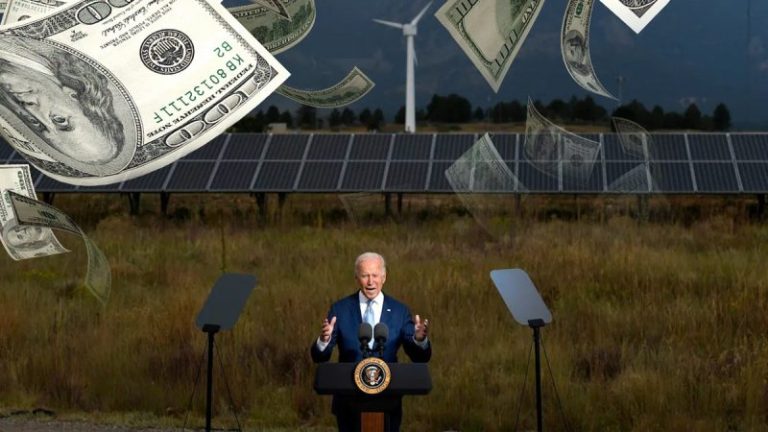
Republicans from the House Oversight Committee released a report outlining what they allege are conflicts of interest, financial mismanagement and oversight failures associated with a Biden-era green energy grant program that sent $20 billion to just 8 different nonprofits.

The money stems from the Inflation Reduction Act of 2022, which budgeted roughly $27 billion to advance clean energy and ‘environmental justice’ under the Greenhouse Gas Reduction Fund (GGRF). An undercover recording of a former Biden Environmental Protection Agency (EPA) political appointee, who described disbursements made through GGRF as akin to tossing gold bars off the Titanic at the end of Biden’s term, was cited by EPA Administrator Lee Zeldin in February when he announced that the agency would be looking into the matter. Republicans are currently trying to claw back the funds, which they claim were rushed out the door at the end of the Biden administration with little oversight and steered toward Democratic allies. 

‘Today’s report from the House Oversight Committee exposes the Biden administration’s sweeping green energy scheme, designed to funnel tens of billions in taxpayer dollars to enrich Democratic allies and fund partisan, politically motivated projects,’ House Republican Oversight Chairman James Comer told Fox News Digital. ‘Americans deserve better than this green energy scam disguised as environmental justice, and Oversight Republicans will continue to hold the Biden administration accountable to ensure the EPA operates as intended and that taxpayer dollars are spent transparently, responsibly, and in the best interest of the American people.’

The EPA terminated most of these grants after the Trump administration took office, but the move was met with legal pushback from Democrats. However, last week, a federal appeals court judge struck down a lower court’s ruling that blocked the Trump administration’s move to freeze the funds, arguing the administration was acting in accordance with its role to provide ‘proper oversight’ of how funds are distributed.

The EPA has referred the matter to the agency’s inspector general. The Justice Department and Federal Bureau of Investigation are also running concurrent investigations, the EPA has indicated. However, up to this point, no criminal wrongdoing has been uncovered.   

Oversight and Investigations Subcommittee Ranking Member Rep. Yvette Clarke, D-N.Y., declined to comment on the matter. Additionally, several other top ranking Democrats, including the ranking member on the House Oversight Committee, Rep. Robert Garcia, D-Calif., did not respond to requests for comment.

However, in an Aug. 11 letter to Zeldin signed by several ranking Democrats, including Clarke, they accused Zeldin of ‘lying’ about the Inflation Reduction Act funding. 

‘Time and again, you have boasted about the unlawful activities EPA is conducting under your leadership without any credible evidence to justify your actions,’ the letter stated.

While there may not be any criminal wrongdoing alleged thus far, the picture painted by the investigation by House Oversight Republicans shows the Biden administration ‘turned the Environmental Protection Agency into a vehicle for rewarding political allies, all while risking the stability of our energy infrastructure,’ according to Comer.

‘Today’s report from the House Oversight Committee exposes the Biden administration’s sweeping green energy scheme, designed to funnel tens of billions in taxpayer dollars to enrich Democratic allies and fund partisan, politically motivated projects,’ Comer added.

The report released by Oversight Republicans details how committee staff reviewed ‘tens of thousands’ of documents produced by the GGRF awardees in question. The documents also included EPA materials for reviewing and awarding the GGRF funds, among other records.

The report shows how the EPA judged the applicants using a scoring system that awarded points for different parts of the nonprofits’ proposals. For example, flawless ‘financial risk management’ awarded a total of 85 points, while flawless ‘legal and compliance risk management’ could provide an applicant up to 40 possible points. Meanwhile, the EPA weighted ‘equity and environmental justice’ the same way it did ‘financial statements’ and more than it weighted good ‘governance’ or ‘legal and compliance risk management,’ among other categories. 

‘By doing so, the EPA all but ensured that the grants would go to President Biden’s political allies. All awardees of the GGRF had ‘climate equity’ or diversity, equity, and inclusion (DEI) policies in place or committed to putting equivalent policies in place,’ the House Oversight report argues. ‘EPA criticized multiple applicants because their targeted reductions in emissions were too low. In other cases, the EPA staff complained that there was not enough ‘environmental justice’ expertise represented in leadership or on the boards of the nonprofits. The Biden EPA insisted on climate equity metrics over merit.’


After receiving their scores, the program provided a ‘reconciliation process’ for EPA staff to discuss their assessments and adjust their scores, according to the Oversight report. The ultimate decision was then passed to a single ‘selection official’ who made the final determination.

The report also claims that the disbursement review process was ‘full of contradictions.’ It says documents showed EPA officials had concerns about the groups receiving the funds related to overly optimistic projections for financial benefits or emissions reductions, lack of access to private capital, high uninsured cash balances, and lack of transparency. Simultaneously, in other documents, the EPA justified the GGRF recipients as entities ‘with track records, staff, risk management policies, and other programmatic capabilities,’ according to the House Oversight report.

One of the groups under scrutiny, Climate United Fund, was established for the purpose of utilizing the GGRF, according to the Oversight report. The report points to claims from EPA staff indicating the group is ‘a new-entity purpose built for the execution of our program plan and does not have a robust reporting history.’

Climate United, reported just $95,557 in assets for fiscal year 2023 but received $6.97 billion from the EPA, representing a 7,293,980% increase in reported assets since 2023, the Oversight report points out.

Other groups also saw similarly significant increases.

Power Forward Communities received $2 billion as part of the GGRF disbursements. The group, not established until after the Biden administration announced the GGRF application process, reported just $100 in assets in its first and only tax filing – meaning that following the $2 billion GGRF award, the entities’ assets increased 2,000,000,000%, according to the House Oversight report.

‘These tired allegations distract from the fact that EPA’s illegal funding freeze will drive up energy costs for hardworking Americans across the country. When household bills are skyrocketing, Congress should be focused on deploying cheap, clean energy technologies rather than resurfacing false claims,’ Brooke Durham, a spokesperson for Climate United told Fox News Digital when reached for comment. ‘Climate United welcomes the opportunity to explain our work and the benefits of the NCIF program to Congress, federal agencies, and to the public.’

The spokesperson also noted that while the Climate United coalition – which is made up of three separate organizations – is new, the organizations that make it up are not.

‘The organizations that make up Climate United have been investing in communities for over 30 years, and are experts in the capital markets who have collectively managed more than $30 billion in institutional and public funds,’ Durham said. She added that the group was proud to tout a 946.5 point evaluation score by the EPA out of a possible 1050 points, which Durham noted was among the highest of all the awardees.

Power Forward declined to comment. However, the group’s CEO, Tim Mayopolous told CBS News last month that the GGRF award process ‘was a highly structured, competitive process that the United States government went through.’

‘The organizations that are part of our coalition that actually do this work – they have been around collectively for nearly a century, and they have invested or disbursed over $100 billion of capital into communities all over America over those years,’ Mayopolous added. ‘We’re not inexperienced people.’    

Climate United, along with some of the other groups in question, are also under fire for allegedly inflating their executives’ salaries and travel benefits in proposed budgets. The CEO’s salary at Climate United was slated to be over $500,000, and at Power Forward $800,000, with an increase to over $900,00 in a year. One group produced a budget that paid its executive staff of seven employees a total of $24,862,419 over three years, according to the report.

Meanwhile, conflicts of interest, which Zeldin has described as ‘blatant,’ were also laid bare in the report. The director of the GGRF selected by the Biden White House was a former policy director at the group that wanted to pay their executive staffers close to a combined $25 million over three years, according to the report. The report says the director had to recuse himself from the award process because of the conflict.   

At Climate United, the group currently staffs a former Biden climate advisor who worked during the last two years of the former president’s term. Their board makeup while pursuing the GGRF award also had ties to the Obama administration. However, Durham contested the implication that there were conflicts of interest, telling Fox News Digital that no staff or board members at Climate United helped with the design of the program, or the selection of the award recipients.

Power Forward’s GGRF application process was also accused of being led by Democrat allies in the Republican Oversight report. Power Forward was founded by executives at nonprofit Rewiring America, co-founded by top Obama administration advisors, the report states. It also claims that Power Forward had planned on awarding Rewiring America with nearly $500,000,000.

‘The nonprofits receiving awards are littered with connections to Biden Administration staff and allies. The executives and board members at some of the GGRF’s awardees even helped write the policies that created the GGRF and are now benefitting from exorbitant salaries provided by taxpayers,’ the House Oversight report states. 

‘The GGRF was a huge step for the Left in realizing the Green New Deal. The program is a National Green Bank that will flood the economy with billions in taxpayer dollars to fund partisan projects regardless of whether they merit investment or not.’

This post appeared first on FOX NEWS

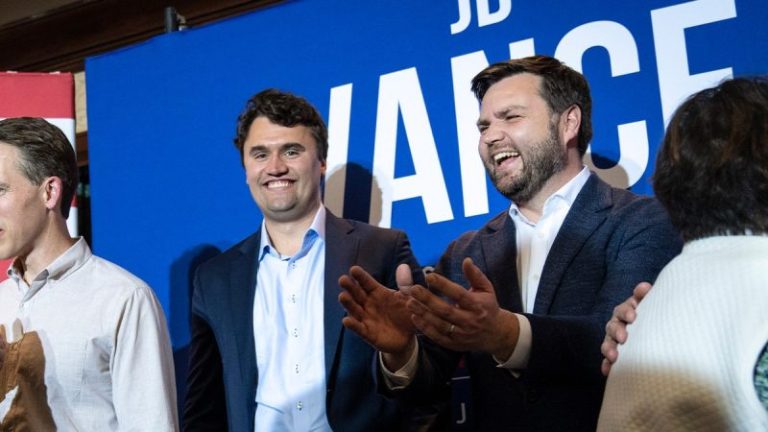
Vice President JD Vance shared a deeply personal remembrance of conservative activist Charlie Kirk, who was fatally shot Wednesday while speaking at Utah Valley University. In a lengthy post on X, Vance honored his late friend as a man of ‘courage,’ ‘faith’ and profound loyalty.

Kirk, the co-founder and CEO of Turning Point USA, was a close confidant of Vance’s both personally and politically. Their friendship stretched from early skepticism about Donald Trump in 2016 to the heights of the 2024 campaign trail.

Vance’s candid social media reflection gave a rare glimpse into Kirk’s influence not only on the conservative movement but also on the very formation of the Trump-Vance team.

‘Charlie was fascinated by ideas and always willing to learn and change his mind,’ wrote the Vice President. ‘Like me, he was skeptical of Donald Trump in 2016. Like me, he came to see President Trump as the only figure capable of moving American politics away from the globalism that had dominated for our entire lives.’

‘Charlie was one of the first people I called when I thought about running for senate in early 2021. We talked through everything, from the strategy to the fundraising to the grassroots of the movement he knew so well. He introduced me to some of the people who would run my campaign and also to Donald Trump Jr.’

Kirk, a longtime advocate for young people in the conservative movement, was described by Vance as pivotal to President Trump’s decision-making process in his selection as running mate in 2024.

‘When I became the VP nominee—something Charlie advocated for both in public and private—Charlie was there for me… Charlie was constantly calling and texting, checking on our family and offering guidance and prayers,’ Vance added.

He also highlighted the father-of-two’s strong faith in Christ, saying, ‘Charlie genuinely believed in and loved Jesus Christ. He had a profound faith. We used to argue about Catholicism and Protestantism and who was right about minor doctrinal questions. Because he loved God, he wanted to understand him.’

His ‘true,’ friendship and loyalty were valued by Vance, with the Vice President recalling Kirk as ‘a true friend. The kind of guy you could say something to and know it would always stay with him.’

Vance also credited Kirk with helping power the Trump movement in 2024, noting that ‘so much of the success we’ve had in this administration traces directly to Charlie’s ability to organize and convene.’

After reports came out Wednesday afternoon, the Vice President said he spoke with President Trump about Kirk candidly.

‘I was talking to President Trump in the Oval Office today, and he said, ‘I know he was a very good friend of yours.’ I nodded silently, and President Trump observed that Charlie really loved his family,’ said Vance. ‘The president was right.’

‘I was in a meeting in the West Wing when those group chats started lighting up with people telling Charlie they were praying for him. And that’s how I learned the news that my friend had been shot,’ recalled Vance.

This post appeared first on FOX NEWS

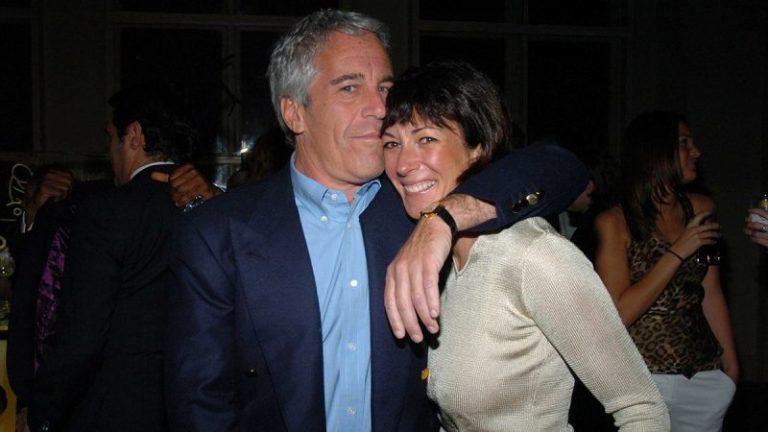
House Judiciary Committee Democrats have announced they are probing the FBI over whether Director Kash Patel is willfully refusing to disclose information related to Jeffrey Epstein.

‘Who exactly are you protecting by refusing to release the Epstein files? In 2023, on Benny Johnson’s podcast, you were asked why the Federal Bureau of Investigation (FBI) was ‘protecting the world’s foremost predator’ by refusing to release the Epstein client list. Your answer: ‘Simple. Because of who’s on that list,” Democratic lawmakers, led by ranking member Rep. Jamie Raskin, D-Md., wrote.

‘Now that you are the Director of the FBI, you know precisely who is implicated in the Epstein files, yet you refuse to release them. Who are you protecting and why?’

The letter pointed to several occasions where Patel called for transparency in Epstein’s case, including his statement soon after taking the role, ‘There will be no cover-ups, no missing documents, and no stone left unturned — and anyone from the prior or current Bureau who undermines this will be swiftly pursued.’

‘Strangely, all these promises appear to have collapsed once you determined who was actually in the files,’ the Democrats wrote.

They also referenced a New York Times report that detailed hundreds of people pouring over thousands of documents related to Epstein.

‘This frantic review by nearly 1,000 agents of over 100,000 pages of investigative material apparently revealed no information worthy of disclosure to the American public— however, at least some information from the review was shared with President Trump. In May, Attorney General Bondi reportedly informed President Trump that his name indeed appeared repeatedly in the Epstein files,’ the letter said.

‘Obvious questions abound: why were so many agents tasked with reviewing documents that were never released? What specific instructions were they given during the review? What information did these agents uncover that led DOJ and FBI to reverse their promise to release the files, and how are these decisions related to the President?’

President Donald Trump himself denied being told that his name was in any files related to Epstein in late July.

‘No, I was never, never briefed. No,’ the president said at the time.

It was never reported in what context Trump’s name may have appeared, however. It’s known that the two were friendly before a falling out in the early 2000s, though Trump has never been implicated in any wrongdoing related to Epstein’s crimes.

Trump himself directed the Department of Justice (DOJ) to release grand jury transcripts related to Epstein, and Attorney General Pam Bondi subsequently had her deputy interview Epstein accomplice Ghislaine Maxwell in a Florida prison.

Trump has also called the furor surrounding Epstein a ‘hoax’ on multiple occasions.

The DOJ has since turned over thousands of documents related to Epstein to the House Oversight Committee.

Convicted sex offender Epstein committed suicide in 2019 while awaiting prosecution on federal sex trafficking charges and the GOP base has fractured over the administration’s handling of the case.

The divisions stem from a DOJ memo released in July that said, ‘This systematic review revealed no incriminating ‘client list.’ There was also no credible evidence found that Epstein blackmailed prominent individuals as part of his actions. We did not uncover evidence that could predicate an investigation against uncharged third parties.’

Democrats have since seized on the discord with newfound calls for transparency in Epstein’s case, which Republicans have panned as hypocrisy.

An FBI public information officer declined to comment on the letter when the bureau was reached by Fox News Digital.

This post appeared first on FOX NEWS

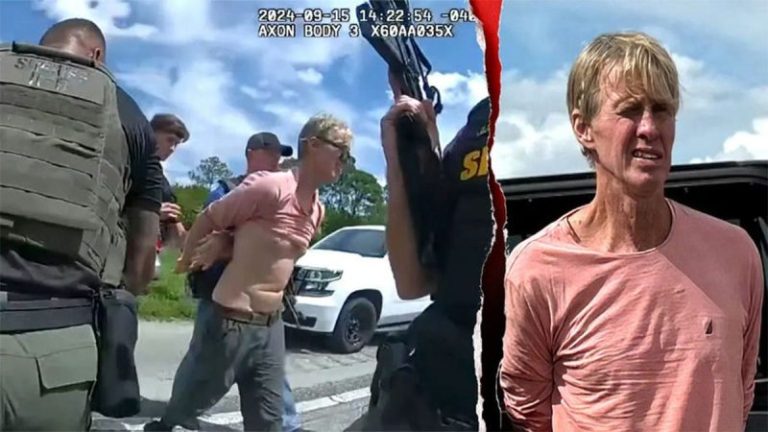
The federal trial of Ryan Routh, the accused would-be assassin of President Donald Trump at his West Palm Beach golf club last year, is scheduled to begin Thursday. 

After several rounds of jury selection that began Monday, a panel of 12 jurors — along with four alternates — were seated Wednesday. The group includes six White women, four White men, one Black woman and one Black man. The alternates consist of two White women and two White men.

Opening arguments are scheduled for Thursday at the federal courthouse in Fort Pierce, Florida, where prosecutors are expected to move swiftly into presenting their case.

Roughly 180 people were summoned for jury duty in three waves of 60. Both prosecutors and Routh, who has declined public defense and has chosen to self-represent, questioned candidates to determine whether they could serve impartially.

Routh peppered prospective jurors with offbeat questions, asking about Ukraine, the war in Gaza and even what they would do if a turtle crossed the road while they were driving.

The most recent high-profile federal defendant to represent themselves was Dylann Storm Roof, the mass murderer responsible for the 2015 Charleston, South Carolina, church shooting. Roof briefly represented himself in the federal death penalty phase of his trial in 2016. He requested to proceed pro se and was allowed to do so for part of the proceedings before ultimately reverting to court-appointed counsel.

By the end of Tuesday, the court had already dismissed more than 70 of the initial 180 prospective jurors, many citing strong opinions about Trump, connections to law enforcement or concerns about impartiality in a highly politicized case. 

Routh has pleaded not guilty to federal charges of attempting to assassinate a major presidential candidate and assaulting a federal officer. Prosecutors say he was armed with an AK-style rifle when Secret Service agents stopped him near Trump’s golf course in West Palm Beach in September 2024. The attempt came just months after Trump was shot and narrowly survived an assassination attempt in Butler, Pa.

The trial is expected to last two to four weeks with Trump-appointed Judge Aileen Cannon at the helm of the trial.

Fox News Digital’s Diana Stancy contributed to this report.

This post appeared first on FOX NEWS

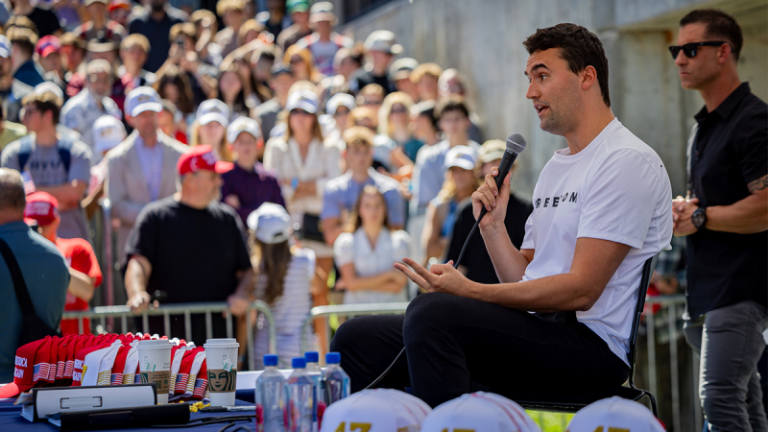
Vigils were held across the country following the killing of conservative activist Charlie Kirk at an event in Utah on Wednesday.

Kirk, the 31-year-old co-founder of Turning Point USA, was shot and killed on the campus of Utah Valley University on Wednesday afternoon. He was transported to a hospital in critical condition before he was later pronounced dead.

Politicians, faith leaders, fellow conservative activists and others mourned Kirk’s death, with some announcing vigils to stand against political violence in the wake of his murder.

Turning Point USA campus chapters at colleges across the country organized vigils on Wednesday night for the organization’s founder.

‘In response to the reprehensible and senseless murder of Charlie Kirk, we are gathering tonight at Westlake Park in Seattle at 7:30PM for a time of prayer, worship, and solitary as we take a stand against the senseless political and religious violence in America,’ Russell Johnson, lead pastor at The Pursuit in Washington state, wrote on X announcing his church’s vigil.

Rep. Ryan Zinke, R-MT, said there would be a prayer vigil at a church on Capitol Hill on Wednesday night.

‘I invite Montanans to join us in prayer and spirit praying for Charlie, his family and our divided nation. We must heal,’ he wrote on X.

In Arizona, the group Catholics for Catholics said a rosary vigil would be held Wednesday night.

‘Charlie Kirk’s local Catholic community gathers to pray the Rosary for the Eternal Rest of his soul,’ the group wrote on Instagram.

‘Charlie was our friend,’ the post added. ‘His family are our neighbors. He attended our Church. We loved him and America loves him too. It’s time now for us to pray and ask for Our Lady to usher his soul into heaven.’

The New York Yankees held a moment of silence ahead of Wednesday night’s game against the Detroit Tigers to honor Kirk.

‘Before tonight’s game we held a moment of silence in memoriam of Charlie Kirk. Kirk founded the youth activist group ‘Turning Point USA’ and had become a fixture on college campuses,’ the team said on X.

Kevin Smith, founder of the conservative media company The Loud Majority, also announced a vigil scheduled for Saturday in New York.

President Donald Trump, officials in his administration, other U.S. politicians on both sides of the aisle, foreign leaders and sports figures were among those who came out in mourning Kirk and condemning acts of political violence.

‘The Great, and even Legendary, Charlie Kirk, is dead. No one understood or had the Heart of the Youth in the United States of America better than Charlie. He was loved and admired by ALL, especially me, and now, he is no longer with us,’ Trump wrote on Truth Social. ‘Melania and my Sympathies go out to his beautiful wife Erika, and family. Charlie, we love you!’

California Gov. Gavin Newsom, a Democrat, said on X that the attack on Kirk was ‘disgusting, vile, and reprehensible,’ adding: ‘In the United States of America, we must reject political violence in EVERY form.’

‘Charlie Kirk was murdered for speaking truth and defending freedom,’ Israeli Prime Minister Benjamin Netanyahu said on X. ‘A lion-hearted friend of Israel, he fought the lies and stood tall for Judeo-Christian civilization.’

‘Condolences to his family and the young people of this country,’ Bruce Pearl, Auburn University’s men’s basketball coach, said on X. ‘Many in our Auburn student body are horrified tonight, you young patriots who love our country like Charlie. For now let’s morn, keep the violent rhetoric down and then live our best lives, committed to making this country better.’

Kirk leaves behind his wife, Erika Lane Frantzve, and two children.

This post appeared first on FOX NEWS

The Labor Department has announced an inquiry into the Bureau of Labor Statistics over recent changes to its data practices.

In a letter published Wednesday, the office of the inspector general for the Labor Department cited the BLS’ recent decision to reduce data collection activities for two key inflation reports, as well as the large downward revision in employment estimates it announced Tuesday. It said it is reviewing the ‘challenges’ the agency has faced ‘in collecting and reporting closely watched economic data.’

The probe comes one month after President Donald Trump fired the head of the BLS as part of a broader pressure campaign that critics say has risked politicizing a part of the government that has long played a crucial role in the business world. The BLS, which is tasked with collecting data on economic indicators such as jobs and inflation, had generally been left alone by previous administrations.

But Trump began zeroing in on the BLS as his frustrations with the Federal Reserve mounted, coinciding with economic numbers that started to warn about a broader U.S. slowdown.

Since then, the labor market has slowed considerably. Just before the head of the BLS was fired, the department released a weaker-than-expected jobs report, citing claims of data manipulation that critics say are unfounded.

Federal Reserve Chair Jerome Powell, another frequent target of Trump’s, has said Fed policymakers are ‘getting the data that we need to do our jobs’ and stressed the importance of the federal statistical agencies.

‘The government data is really the gold standard in data,’ he added. ‘We need it to be good and to be able to rely on it.’

Trump then nominated E.J. Antoni, an economist with the far-right Heritage Foundation, as the new head of the BLS, a move many economists have criticized.

Trump and other BLS critics have focused on the department’s revisions to its reports, a practice that dates back decades and has been generally seen as a necessary part of the challenge of collecting near-term economic data. It has also faced other challenges in data collection, including budget challenges and low response rates to its collection efforts.

The BLS previously said the decision to reduce inflation data surveys was necessary given existing budget constraints. Meanwhile, mainstream economists say the latest downward revisions — while large — are part of a routine annual process known as benchmarking.

While response rates to the bureau’s surveys have been declining, researchers recently found that revisions and falling response rates did not reduce the reliability of the jobs and inflation reports.

This post appeared first on NBC NEWS

In the high-stakes world of resource extraction, a nation’s mineral wealth is a powerful magnet for investment, fueling economic growth and national prosperity. But not all countries are created equal.

For investors in the mining sector it’s key to understand that jurisdictional risk can be profoundly impacted by political changes, as new administrations can swiftly alter the regulatory landscape. These policy shifts can present both opportunities and setbacks, introducing a complex layer of uncertainty to even the most promising ventures.

At the same time, regions traditionally seen as stable and secure for resource development can face their own challenges, including rigorous permitting regimes that can slow mine development activity.

Read on for three case studies on jurisdictional risk and how to navigate this type of complexity.

Case study: First Quantum’s Cobre Panama mine

Perhaps the most notable example in recent years of how politics can affect operations is the closure of First Quantum Minerals’ (TSX:FM,OTC Pink:FQVLF) Cobre Panama mine in Panama.

As with many mining operations, Cobre Panama took decades to bring into production. First Quantum received approval to begin work at the site in February 1997; however, it would take 22 years and US$10 billion to build the mine and the required infrastructure before production commenced in September 2019.

When it was placed on care and maintenance in November 2023, the mine was one of the largest in the world, accounting for approximately 1 percent of total copper supply.

The closure came after Panama’s government faced intense public backlash for granting First Quantum a 20 year mining contract; it was quickly declared unconstitutional by the Supreme Court.

The Panamanian government also introduced an indefinite moratorium on all mining concessions. The move put the country’s mining sector in a state of limbo and led other companies to cease activities in Panama. For example, Orla Mining (TSX:OLA,NYSEAMERICAN:ORLA) decided to halt funding of its Cerro Quema project until it had “greater certainty with respect to the mining concessions, as well as fiscal and legal stability in Panama.”

Cobre Panama’s closure and the subsequent moratorium led Fitch to downgrade its investment outlook for Panama in March 2024, from BBB- to BB+. The credit agency cited fiscal governance challenges that arose following the mine’s closure, noting that Cobre Panama accounted for 5 percent of the nation’s GDP.

Although the International Monetary Fund expects Panama’s GDP to rebound to 4.5 percent in 2025 as non-mining sectors of the nation’s economy grow, the changes have already had a significant impact on the national economy, with GDP growth slowing to 2.9 percent in 2024, from 7.4 percent in 2023.

Case study: Barrick Mining’s Loulo-Gounkoto complex

Another recent example is the impact of unrest on Barrick Mining’s (TSX:ABX,NYSE:B) operations in Mali.

The African nation has experienced a prolonged period of instability, with the government being overthrown in three coup d’états within a 10 year span, in 2012, 2020 and 2021.

The most recent two came following months of turmoil after election irregularities and accusations of corruption in 2020, then calls for a more legitimate government to be installed in 2021.

Ultimately, the government was replaced by a military junta, and in 2022, it was announced that elections would be held in 2024. However, these were delayed until early 2025, at which time they were again postponed.

This past July, Malian military authorities granted current leadership a five year mandate, renewable as many times as necessary without requiring an election, which guarantees control of the government until 2030.

The impact on the mining sector has been notable. In 2022, the new government ordered an audit of the mining sector, which led to Mali adopting a new mining code in 2023 after limited industry consultation.

The code aims to generate more revenue for the government from mining operations by increasing government ownership to 35 percent from 20 percent and removing tax-exempt status for some operations.

Existing mining contracts were also reviewed, which limited the ability to renegotiate, leading to a protracted negotiation process between the Malian government and Barrick over its Loulo-Gounkoto complex.

While Barrick has said its commitment to Mali remains firm, going so far as to make a good-faith payment of US$83 million, the two parties were unable to reach an agreement. The stalled negotiations led the government to arrest or issue arrest warrants for key personnel over unpaid taxes and contract disputes, including Barrick CEO Mark Bristow.

With no resolution, Barrick was ultimately forced to shut down the mine in January of this year. Although arbitration proceedings continue, the operation was placed under provisional administration on June 16, and government helicopters were seen onsite removing more than 1 metric ton of gold on July 10.

According to the Extractive Industry Transparency Initiative, the mining sector makes a significant contribution to the nation’s economy, representing 79 percent of exports and 9.2 percent of GDP. Although other companies haven’t ceased operations in the country, the government’s action has created tensions for investors, with CEOs suggesting that the new rules make it economically unfeasible for new mines or takeovers in the country.

The Fraser Institute gave Mali a policy perception score of 14.94 in its 2024 Annual Survey of Mining Companies, a significant decrease from 2023, when it achieved 33.34, and a precipitous decline from 2020’s score of 78.18. In the overall ranking, Mali fell to 74 out of 82 countries included in the survey, down from 37 out of 77 in 2020.

The institute notes that companies say policy accounts for about 40 percent of their decision when choosing where to establish operations. The other 60 percent is based on the mineral potential. In this regard, Mali improved to 55.26 from 41.18 in 2023; however, it remains in the bottom half of all jurisdictions, ranking 40 out of 58.

The institute uses these scores to determine the overall investment attractiveness of jurisdictions. In 2024, Mali scored 39.13 and ranked 72 out of 82. Respondents to the survey suggested that the rejection of gold mining permits and the lack of transparency created uncertainty and deterred investment.

Even when investment is in the national interest, underlying issues can be hard to overcome.

Case study: The DRC

The Democratic Republic of the Congo (DRC) is endowed with a vast wealth of minerals, ranging from copper to cobalt and diamonds, but a lack of infrastructure and geopolitical instability have hindered investment.

However, the mining sector has seen steady growth in recent years as the government looks to attract investment. One project is the construction of the Lobito Corridor, Africa’s first open-access transcontinental rail link. It connects Zambia and the DRC with the port of Lobito in Angola, providing improved shipping opportunities for producers.

Among the operations that have signed on to use the rail link is Ivanhoe Mines’ (TSX:IVN,OTCQX:IVPAF) Kamoa-Kakula mine. The asset is one of the world’s largest copper mines, producing 964 million pounds in 2024.

In February 2024, the company signed a term sheet to access the corridor, allowing it to transport between 120,000 and 240,000 metric tons of copper concentrates per year for a five year term, commencing in 2025.

In a press release, Robert Friedland, Ivanhoe’s founder and executive co-chair, said the corridor is “fast becoming one of the most important trade routes for vital copper metal in the world.”

He added that the rail link will unlock projects due to the lower logistical costs.

While development in the DRC is moving in the right direction, it’s not without its problems. Tensions remain with neighboring Rwanda, as Rwanda has backed anti-government M23 rebels. The groups have been warring since 2022, with much of the violence occurring in the Eastern DRC, a mineral-rich area of the country.

In April 2024, M23 seized the town of Rubaya, the center of coltan production in the DRC; coltan is a critical mineral for the tech sector. While Ivanhoe’s mine has avoided the violent uprisings elsewhere in the country, it still highlights key security challenges for operations in the country and underscores the fragility of stability.

Like Mali, the DRC declined in the Fraser Institute’s survey last year.

It dropped to 12.97 on policy, down from 24.93 in 2023, ranking 77 out of 82. However, its mineral potential ranked much higher, scoring 73.53 — that’s up from 55 in 2023 and a rank of 14 out of 58.

On overall investment attractiveness, the DRC was middling, scoring 49.31 and ranking 58 out of 82. The report points to issues such as disputes over land tenure ownership, which have led to uncertainty and deterred investment.

Is there any truly safe mining jurisdiction?

The mining community has looked mainly to North America, Europe and Australia to minimize jurisdictional risk.

Canada, the US and Australia are widely considered safe places to invest in due to the stability of their governments and the absence of cross-border conflicts. Despite changes in government, political parties in these nations tend to support extractive industries through tax credits and investment programs.

As a whole, challenges in these jurisdictions tend to be more regulatory than geopolitical in nature, with strict environmental and social regulations adding years to development timelines.

Recently, however, there have been some moves to break down these barries.

The US and Canada have both made promises to streamline the permitting process to decrease timelines for critical minerals. Additionally, under the Biden administration, the US Department of Defense, increased funding for projects deemed critical to national interests, including those involving Canadian companies Fortune Minerals (TSX:FT,OTCQB:FTMDF) and Lomiko Metals (TSXV:LMR,OTC Pink:LMRMF).

The program has continued under US President Donald Trump, with the most recent award being announced on July 22, for US$6.2 million in funding for Guardian Metal Resources (LSE:GMET,OTCQX:GMTLF).

Although challenges in these regions still exist, in general they remain stable. For investors, it can help to de-risk portfolios and avoid the geopolitical tensions and uncertainty that arise elsewhere.

Securities Disclosure: I, Dean Belder, hold no direct investment interest in any company mentioned in this article.

This post appeared first on investingnews.com