Author

admin

Browsing

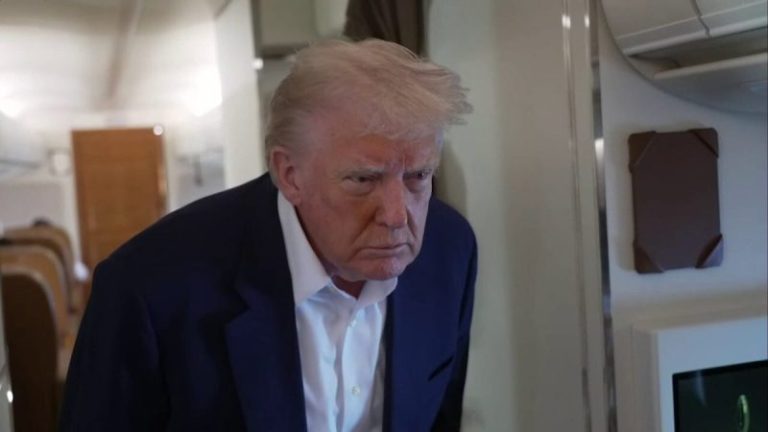
President Donald Trump said Sunday that he plans to appoint a new national security advisor in about six months, telling reporters the former advisor, Mike Waltz, did not resign, but was instead tapped for an upgraded position as the administration’s ambassador to the United Nations.

Trump spoke with reporters on Air Force One on Sunday night, where he was asked about several topics, including the trade deals, Mexican cartels and the national security advisor position.

One reporter asked the president about Waltz’s exit as the national security advisor, which the president said he was being selected for what he called a ‘higher position,’ or an ‘upgrade.’

Trump also said Waltz did not make any mistakes, and, as the ambassador to the UN, he would do a good job.

‘I didn’t lose confidence in him,’ Trump said. ‘He’s going to the United Nations for a reason. To me, I think it’s personally, if I had assurance for myself… I’d rather have that job than the other.’

He also reiterated that Waltz did not resign, but instead, Trump moved him.

‘There was no resignation,’ the president said.

Waltz and other National Security Council staffers were ousted from their office on Thursday in the most high-profile executive office exits of the second Trump administration. Trump’s announcement on naming Waltz as U.N. ambassador unfolded just hours after the news began circulating. 

Trump told reporters Sunday that he plans to appoint someone to the national security advisor position within six months, saying there are a lot of people who want the job, which works into Secretary of State Marco Rubio’s – the interim national security advisor – current responsibilities.

The president was specifically asked if White House deputy chief of staff Stephen Miller was being considered for the role.

‘Stephen Miller at the top of the totem pole? I mean, I think he sort of indirectly already has that job… because he has a lot to say about a lot of things,’ Trump said. ‘He’s a very valued person in the administration, Stephen Miller.’

The president was also asked if any trade deals would be announced this week, answering that there could be some coming.

But when pressed if he could say more about the deals, Trump held back.

‘Nobody understands,’ he said. ‘We’re negotiating with many countries. But at the end of this, I’ll set my own deals because I set the deal. They don’t set the deal. I set the deal.’

Trump said he is meeting with almost all of the countries regarding trade deals, including China.

Explaining the process further, Trump said he will set the tariff, and a country could agree to it or not.

‘They don’t have to deal with us, which is ok, because we lost under Biden. We’re losing $5 billion a day,’ he said. ‘Think of it. $5 billion a day. Now we’re not dealing with China at all because of the tariffs… Because of that, we’re saving billions of dollars.’

During the gaggle, a reporter also asked if it was true that he offered to send U.S. troops to Mexico to take care of the cartels.

‘It’s true because they should be. They are horrible people that have been killing people left and right,’ Trump said. ‘They’ve made a fortune in selling drugs and destroying other people.’

He explained that the cartels are responsible for importing fentanyl into the U.S., which has killed over 300,000 people this year.

Trump called the cartel members ‘bad news.’

‘If Mexico wanted help with the cartels, we would be honored to go in and do it,’ Trump said ‘I told [Mexican President Claudia Sheinbaum] that I would be honored to go in and do it. The cartels are trying to destroy our country. They’re evil.’

The offer was ultimately rejected, which Trump said was because Sheinbaum is afraid of the cartels, so afraid that she ‘can’t even think straight.’
This post appeared first on FOX NEWS

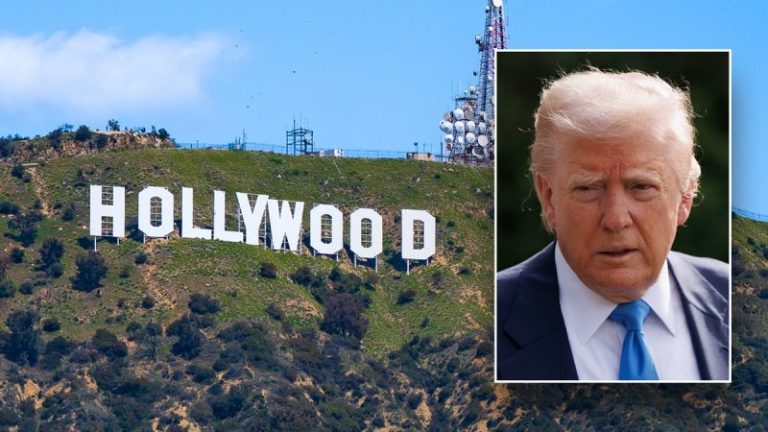
President Donald Trump decried the state of the motion picture industry in a social media post on Sunday while announcing plans to implement a Hollywood-related tariff.

In a Truth Social post on Sunday, Trump wrote that the ‘Movie Industry in America is DYING a very fast death.’

‘Other Countries are offering all sorts of incentives to draw our filmmakers and studios away from the United States,’ Trump claimed. ‘Hollywood, and many other areas within the U.S.A., are being devastated.’

The president said that the situation was a ‘concerted effort by other Nations and, therefore, a National Security threat.’

‘It is, in addition to everything else, messaging and propaganda!’ Trump wrote.

The Republican said that his plans to institute a tariff are in the works, and he authorized the Department of Commerce and the United States Trade Representative ‘to immediately begin the process of instituting a 100% Tariff on any and all Movies coming into our Country that are produced in Foreign Lands.’

‘WE WANT MOVIES MADE IN AMERICA, AGAIN!’ Trump concluded.

The comments come after several of Trump’s tariff plans have been paused in recent months due to market turmoil and backlash. On Sunday, Trump said that he would not drop tariffs on China to get Beijing to come to the negotiating table.

‘At some point, I’m going to lower them, because otherwise you could never do business with them,’ Trump told NBC’s Kristen Welker. ‘And they want to do business very much like their economy is really doing badly. Their economy is collapsing.’ 

Fox News Digital’s Danielle Wallace contributed to this report.

This post appeared first on FOX NEWS

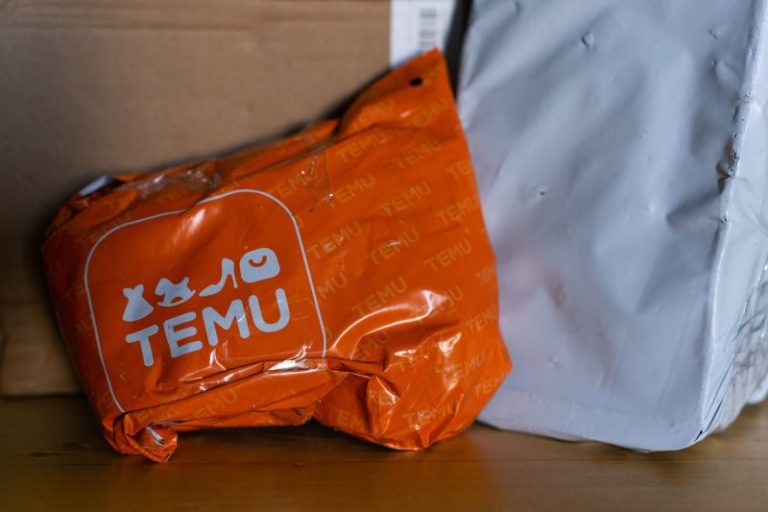
Chinese bargain retailer Temu changed its business model in the U.S. as the Trump administration’s new rules on low-value shipments took effect Friday.

In recent days, Temu has abruptly shifted its website and app to only display listings for products shipped from U.S.-based warehouses. Items shipped directly from China, which previously blanketed the site, are now labeled as out of stock.

Temu made a name for itself in the U.S. as a destination for ultra-discounted items shipped direct from China, such as $5 sneakers and $1.50 garlic presses. It’s been able to keep prices low because of the so-called de minimis rule, which has allowed items worth $800 or less to enter the country duty-free since 2016.

The loophole expired Friday at 12:01 a.m. EDT as a result of an executive order signed by President Donald Trump in April. Trump briefly suspended the de minimis rule in February before reinstating the provision days later as customs officials struggled to process and collect tariffs on a mountain of low-value packages.

The end of de minimis, as well as Trump’s new 145% tariffs on China, has forced Temu to raise prices, suspend its aggressive online advertising push and now alter the selection of goods available to American shoppers to circumvent higher levies.

A Temu spokesperson confirmed to CNBC that all sales in the U.S. are now handled by local sellers and said they are fulfilled “from within the country.” Temu said pricing for U.S. shoppers “remains unchanged.”

“Temu has been actively recruiting U.S. sellers to join the platform,” the spokesperson said. “The move is designed to help local merchants reach more customers and grow their businesses.”

Before the change, shoppers who attempted to purchase Temu products shipped from China were confronted with “import charges” of between 130% and 150%. The fees often cost more than the individual item and more than doubled the price of many orders.

Temu advertises that local products have “no import charges” and “no extra charges upon delivery.”

The company, which is owned by Chinese e-commerce giant PDD Holdings, has gradually built up its inventory in the U.S. over the past year in anticipation of escalating trade tensions and the removal of de minimis.

Shein, which has also benefited from the loophole, moved to raise prices last week. The fast-fashion retailer added a banner at checkout that says, “Tariffs are included in the price you pay. You’ll never have to pay extra at delivery.”

Many third-party sellers on Amazon rely on Chinese manufacturers to source or assemble their products. The company’s Temu competitor, called Amazon Haul, has relied on de minimis to ship products priced at $20 or less directly from China to the U.S.

Amazon said Tuesday following a dustup with the White House that had it considered showing tariff-related costs on Haul products ahead of the de minimis cutoff but that it has since scrapped those plans.

Prior to Trump’s second term in office, the Biden administration had also looked to curtail the provision. Critics of the de minimis provision argue that it harms American businesses and that it facilitates shipments of fentanyl and other illicit substances because, they say, the packages are less likely to be inspected by customs agents.

This post appeared first on NBC NEWS

The market does not always follow the same script or sequence, but bear markets typically end with a bottoming process marked by specific stages. These include capitulation, a short-term reversal-thrust, a follow-through thrust and long-term regime change. The first two stages mark downside excess and the initial turn around, while the latter two signal strong follow through. Today’s report will look at the first two phases, and preview the last two.

Phase 1: Capitulation

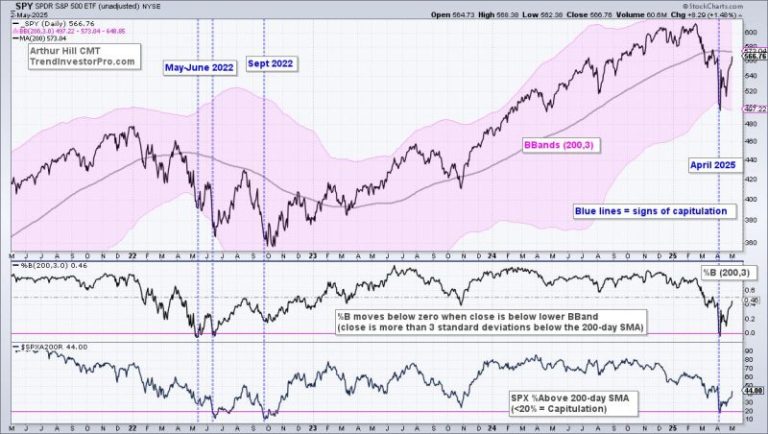
The capitulation phase of a bear market occurs when traders throw in the towel as downside momentum and selling pressure accelerate. Usually, the capitulation phase occurs after an extended decline, and this phase is the first step to a bottom. The chart below shows SPY with Bollinger Bands (200,3), %B (200,3) and S&P 500 Percent Above 200-day SMA ($SPXA200R). Signs of capitulation emerge when %B is below 0 and/or fewer than 20% of S&P 500 stocks are above their 200-day SMAs. The blue dashed lines show capitulation in June 2022, September 2022 and early April 2025. Note that we initially covered this capitulation phase in a report on April 8th.

Phase 2: Short-term Thrust Signals (ZBT)

Phase 2 is marked by a sharp-reversal from oversold extremes and an upside thrust. The Zweig Breadth Thrust is perhaps the most famous thrust indicator these days. We covered the ZBT extensively over the last few weeks and introduced a strategy using this indicator. The chart below shows the S&P 1500 ZBT indicator in the lower window (10-day EMA of S&P 1500 AD%). A thrust signal triggered on April 24th and stocks followed through with further gains.  

Two Down and Two to Go

The capitulation phase showed excessive selling pressure and the thrust phase marked a short-term reversal. These are bullish events, but the market cup is not yet half full. SPY remains below its 200-day SMA and the late March high (see chart above). Medium-term thrust indicators have yet to trigger and long-term breadth remains bearish. The 14% surge over the last 17 days is impressive, but keep in mind that SPY surged 10% in nine days in March 2022, which was a bear market bounce.

TrendInvestorPro produced a report this week covering the four phases – and what to watch going forward. Click here to take a trial and get immediate access.

  • Phase 1: Capitulation
  • Phase 2: Short-term Thrust Signals
  • Phase 3: Medium-term Thrust Signals
  • Capitulation and Thrust Indexes
  • Phase 4: Long-term Indicators turn Bullish
  • Short-term Improvements, but Longer Term 

//////////////////////////////////////////////////////

Gold trended down this week, dropping to just over US$3,200 per ounce on the first day of May.

While the yellow metal remains historically high after a strong run this year, its price has pulled back from last week’s record-setting level of US$3,500, causing concern for some market participants.

However, many experts agree that this week’s retreat isn’t a reason to worry.

His technical analysis shows that the US$3,100 to US$3,140 area will be important to watch moving forward — in his view, that’s when bullish players should start re-entering the space, boosting the price.

Soloway also outlined gold’s future price potential, saying he sees a potential path to US$7,000. Check out the full interview for more of his thoughts on gold, as well as silver and the US economy.

Bullet briefing — Fed to meet next week, US-Ukraine deal signed

Market watchers eye Fed meeting

Eyes are shifting to the US Federal Reserve’s next meeting, set to run from May 6 to 7. It follows initial numbers showing that real GDP contracted by an annual rate of 0.3 percent in Q1.

That’s the first negative reading since 2022, and as the news weighed on the stock market, US President Donald Trump took to social media to suggest the data is an ‘overhang’ from Joe Biden’s term.

Trump has pressured Fed Chair Jerome Powell to cut interest rates sooner than later, but CME Group’s FedWatch tool shows the vast majority of market participants expect rates to stay flat.

Trump advisor Elon Musk also has his eye on the Fed. Speaking to reporters on Wednesday (April 30), he said the US$2.5 billion renovation of the central bank’s headquarters could become a point of inquiry for the Department of Government Efficiency, better known as DOGE.

Calling the cost an ‘eyebrow raiser,’ Musk questioned where the money is being spent. The price of the project was initially set at US$1.9 billion in 2021, but has increased since then.

‘Since at the end of the day, this is all taxpayer money, I think we certainly — we should definitely — look to see if indeed the Federal Reserve is spending $2.5 billion on their interior designer’ — Musk

US, Ukraine sign critical minerals deal

The US and Ukraine signed a much-anticipated minerals deal on Wednesday, ending months of often-tense negotiations between the two countries. If approved by parliament in Ukraine, the agreement will set up a reconstruction investment fund that will be split 50/50 between each party.

According to Ukrainian officials, the deal is more equitable than previous versions.

The fund will be financed only by new licenses for critical materials, oil and gas; aside from that, Ukraine will not have to pay back wartime aid provided by the US.

While Ukraine had pushed for security guarantees from the US, that component ultimately wasn’t put in place. However, the US may provide new assistance to Ukraine, such as air defense systems.

A total of 55 minerals are reportedly covered in the arrangement, but more can be added in the future if there is consensus between the US and Ukraine. Although the US will get preferential rights to mineral extraction, Ukraine will have the final say on what is mined and where, and will retain subsoil ownership.

The agreement comes on the back of an increasing global focus on critical minerals, many of which are key for new technology and important industries like defense.

It’s worth noting that while Ukraine is home to a wide variety of these commodities, more geological data will be needed to determine commercial viability — for example, there is no up-to-date information on the country’s reserves of rare earths, which are important to the US.

Securities Disclosure: I, Charlotte McLeod, hold no direct investment interest in any company mentioned in this article.

This post appeared first on investingnews.com

Vice President JD Vance, Second Lady Usha Vance and their young children are adjusting well to life as the Second Family, with the vice president telling Fox News Digital that they are trying to ‘deliver as much normalcy to the kids in a very abnormal situation.’ 

Vance sat down for an exclusive interview with Fox News Digital this week. 

‘Everyone is adjusting well—they are doing very well,’ Vance said. ‘It’s different, right?’ 

‘My seven-year-old son Ewan, he’s adjusting, but he’s also aware of all of it,’ Vance said. 

‘And then we have our five-year-old son, Vivek, who I think is a little bit less aware of it,’ Vance continued. ‘To him, it’s just fun. He has a bunch of Secret Service agents to play with, and he gets to go wherever he wants to, and he really likes that.’ 

‘And Mirabel, who’s three, has no idea what’s going on,’ Vance said of his youngest. 

Vance shared a photo of Mirabel, which he and his wife display in their home in the Naval Observatory, ‘in her pajamas reviewing this Indian troop formation.’ 

‘It’s so funny—it’s maybe my favorite photo of the entire 100 days that we’ve had so far—it’s very cute,’ Vance said. ‘So, you sort of see different levels of kids’ understanding of it.’ 

Vance said the children ‘have a good school situation.’ 

‘We have good friends here, and they spend a lot of time at the White House,’ Vance said. 

‘Of course, our primary residence—we still have our home in Cincinnati—but our primary residence is the Naval Observatory,’ Vance said. ‘It’s very isolated, so it’s nice, because, for the kids, it’s not like growing up in a fishbowl.’ 

Vance said the children ‘have a lot of room to run around.’ 

‘There aren’t cameras everywhere, and it feels very, very private—very normal for the kids—which is all we could ask for,’ Vance said. 

As for his wife, Vance said ‘each second lady approaches the role differently—there’s not like, a manual that says—this is how you will be second lady.’ 

‘I think what Usha has done is she has focused on some issues she cares about and she is very involved in the Kennedy Center—she really likes the arts and that is a project that she’s taken on,’ Vance explained, adding that she plans to ‘take on additional projects.’ 

‘But she also is a mom,’ Vance said. ‘And the kids are really young, and she saw this as an opportunity to try to deliver as much normalcy to the kids in a very abnormal situation.’ 

He added: ‘But she’s doing well, and she really likes it—I think the role suits her and she’s having fun. She’s amazing.’ 

This post appeared first on FOX NEWS

A small English town north of bustling Manchester just saw two controversial pro-Gaza candidates flip seats held by the mainstream Labour Party. Both candidates ran as independents in the May 1 local elections.

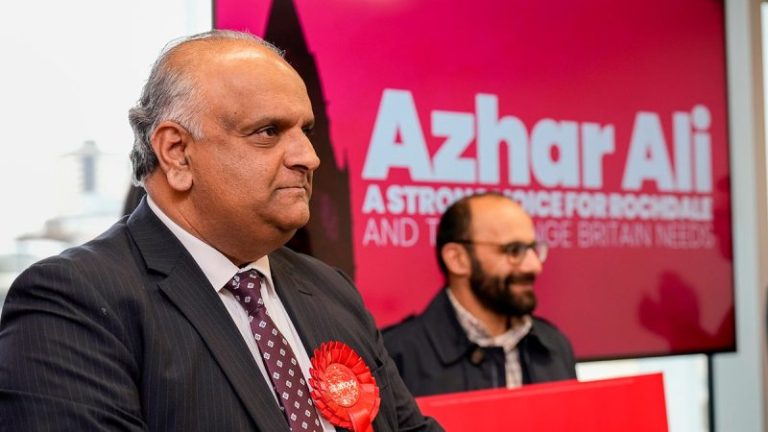
Maheen Kamran, 18, won the Burnley Central East seat on the Lancashire County Council, while Azhar Ali won the position of county councillor for the Nelson East ward. The Telegraph noted that their victories could be part of a growing trend, following a slew of pro-Gaza candidates—including former Labour leader Jeremy Corbyn—winning seats in last year’s general election.

Ali is a former Labour Party member who was suspended from the party and lost its backing over allegations of antisemitism during an election last year. Labour initially supported Ali after he claimed that Israel ‘allowed’ Hamas’ Oct. 7 massacre to occur as a pretext to invade Gaza, according to the BBC. He later apologized for making what he called a ‘deeply offensive, ignorant and false’ claim. Labour withdrew its support for Ali and later suspended him from the party.

The Board of Deputies of British Jews did not accept Ali’s apology, calling his comments ‘disgraceful and unforgivable.’

‘It is clear to us that Mr. Ali is not [apologizing] out of a genuine sense of remorse. Despite what he says in his apology, we do not see how we could possibly engage with him at this time, and we believe other leading Jewish communal groups will feel similarly,’ the organization wrote in a 2024 statement.

Meanwhile, Kamran has taken radical stances of her own. She voted in favor of ending the ‘free mixing’ of Muslim men and women in public spaces. 

‘Muslim women aren’t really comfortable with being involved with Muslim men. I’m sure we can have segregated areas, segregated gyms, where Muslim women don’t have to sacrifice their health,’ Kamran told PoliticsHome.

In the same interview, Kamran said she entered politics because she believes there is a ‘genocide’ taking place in Gaza. While critics of Israel’s military actions use the term ‘genocide,’ supporters of the Jewish state often argue that Israel has the capability to destroy Gaza’s population but has chosen not to, thereby disputing the genocide claim.

Ali and Kamran’s victories come as mainstream parties lose influence in local elections. The right-wing populist Reform UK Party saw major gains in the latest election, according to the Telegraph. Meanwhile, despite its control of 10 Downing Street, Labour suffered losses in the recent local elections. 

This post appeared first on FOX NEWS

NEWYou can now listen to Fox News articles!

George Orwell famously said, ‘If liberty means anything at all, it means the right to tell people what they do not want to hear.’ On World Press Freedom Day, we must remind ourselves of the people who have lost their freedoms fighting for this very right. 

My father Jimmy Lai is one such man. He is currently in Stanley maximum security prison in Hong Kong, facing potential life in prison for simply publishing what Chinese authorities do not want to hear. 

His story is one of extraordinary transformation and unwavering conviction. Arriving in Hong Kong at age 12 after fleeing Communist China, he began his journey as a child laborer in a clothing factory, enduring hardship and poverty. 

Yet, through grit and vision, he rose from factory worker to factory manager, and by 1975, used his savings to purchase a bankrupt garment factory. This bold move laid the foundation for his first major success: Giordano, a clothing chain that grew into an international brand with thousands of employees and stores across Asia.

The 1989 Tiananmen Square massacre marked a turning point for him. Witnessing the brutal suppression of pro-democracy protesters, he redirected his life’s work from business to activism, determined to fight for freedom and human rights in Hong Kong. 

In 1995, he founded Apple Daily, a newspaper that quickly became a beacon for free speech and democracy, unafraid to criticize the Chinese Communist Party and expose corruption. My father poured $100 million of his own fortune into the venture, ensuring the paper’s independence and fearless reporting.

His media empire, including Next Magazine and Apple Daily, became a megaphone for Hong Kong’s pro-democracy movement, rallying citizens and challenging the authorities. His outspoken criticism of Beijing and unwavering support for protestors made him a target. 

The CCP labeled him a ‘troublemaker,’ and his businesses faced retaliation, including the closure of his Beijing Giordano store after a controversial column. Yet, he never wavered, famously stating, ‘Information is choice and choice is freedom’ using both high-brow and popular content to spread the message of liberty.

His commitment to principle set him apart from other tycoons. While many business leaders in Hong Kong chose silence or compromise, he stood alone, enduring threats, arrests, and ultimately imprisonment for his beliefs. In 2014, he was arrested during the pro-democracy Umbrella Movement protests, and in 2020, as Beijing tightened its grip on Hong Kong, my father was again detained under the draconian National Security Law. 

Despite the risks, he refused to flee, choosing to remain in Hong Kong and continue the stand for his beliefs, even as Apple Daily was forced to close, even as he now faces the possibility of the rest of his life behind bars.

My father’s life is a testament to the power of conviction. He is not just a businessman or media mogul – he is a symbol of freedom and hope for many. His outsider status, as an immigrant who never quite fit in, gave him the strength to play by his own rules and challenge the status quo.

Despite his wealth and influence, he remains deeply human – a husband, father and practicing Catholic. We miss his booming voice and boisterous laughter around our dinner table. We long for the day we can again share a meal, again pray together.

Over the past few months, both President Donald Trump and Secretary of State Marco Rubio have publicly stated their commitment to securing my father’s freedom, consistent with the president’s prioritizing the release of those wrongly detained abroad. He has secured the release of 14 prisoners since taking office in January.

My father is fortunate to have deep bipartisan support in this country and abroad. The U.S. and the U.K. have called for his immediate and unconditional release, as have the parliaments of Canada and the EU. He has received numerous awards for his courage, and I will receive a Bradley Prize on his behalf on May 29 in Washington. But he remains in prison.

My father is one of 10 journalists who are still being held in Hong Kong’s prisons, some of whom worked for him at Apple Daily. While he may be the most high-profile among them, all of these journalists were fighting for their right to speak truth to power, and to defend their way of life.

Their bravery reminds us that freedom is never guaranteed – it must be fought for, often at great personal cost. My father’s defiance in the face of overwhelming power, his willingness to sacrifice everything for his principles, and his belief in the dignity of every individual make him a genuine hero of our time. 

At 77 years old, he has spent the last four years in a maximum-security prison for these beliefs. His legacy endures as a beacon of hope, showing that just one person’s courage can change the course of history. 

The end to my father’s story is not yet written. This World Press Freedom Day, I appeal to all who cherish free speech to join our fight to secure my father’s release so he can leave Hong Kong and spend his old age with his family.

This post appeared first on FOX NEWS

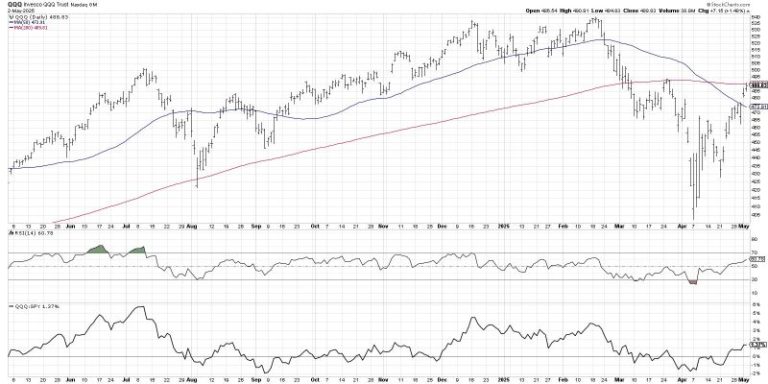
With the major averages logging a strong up week across the board, and with the Nasdaq 100 finally retesting its 200-day moving average from below, it can feel like a challenging time to take a shot at winning charts. You may ask yourself, “Do I really want to be betting on further upside after an incredibly strong April?”

When the macro environment feels less certain, I find it’s helpful to go back to tried-and-true technical analysis approaches. By identifying stocks with constructive chart patterns, we can hopefully focus our attention on names that could do well regardless of the overall market movements in the coming weeks.

With that bottom-up investing justification in mind, let’s review three recent earnings names that are showing strong technical profiles going into next week.

Visa Inc. (V)

Both Visa (V) and Mastercard (MA) reported earnings, and both stocks experienced an upside follow-through after their quarterly report. Visa has been pounding out a consistent pattern of lower lows and lower highs since the end of February, but this week appears to have broken that downtrend pattern.

After Tuesday’s earnings release, Visa completed a move out of the downtrend phase by breaking trendline resistance using the major peaks from February and March. Wednesday’s up day pushed V back above the 50-day moving average, a level which had repelled a previous breakout attempt in mid-April. MA has now broken above its late March high, and a similar move next week would suggest a retest of all-time highs for Visa.

Coca Cola Co. (KO)

The Consumer Staples sector pulled back this week, and leading names in the sector, such as Coca-Cola (KO), experienced a brief drop post-earnings. KO is demonstrating a cup-and-handle pattern, although we’ve not seen the breakout that would serve to confirm a bullish outlook.

We’ve used the Annotations tool to draw a rectangle marking the resistance zone from the September 2024 peak. Subsequent peaks in March and April 2025 have retested this same range, forming the cup-and-handle pattern which often precedes a strong upthrust. The trigger for this pattern is a confirmed break above the rim of the cup, and, with this week’s pullback, investors will have to wait for this bullish confirmation.

We’ve noted the bearish momentum divergence in recent months, with the higher price highs in March and April marked by weaker RSI peaks. With this bearish divergence clearly signalling a weaker momentum profile, we would need to see a valid break above $74 on stronger RSI readings to negate the divergence and confirm an upside breakout.

CME Group Inc. (CME)

Since I discussed the exchanges with Jay Woods on my Market Misbehavior podcast back in February, I’ve been following the resilient uptrend of higher highs and higher lows. The daily chart features a series of consolidation patterns followed by upside breakouts that have led to further gains.

This is the kind of chart that I think about when someone asks, “But if you’re buying the new highs list, isn’t that too late?” The chart of CME shows that new highs often lead to even more new highs. And when a stock like CME Group keeps pulling back to an ascending 50-day moving average, I’m reminded the essence of trend-following is to remain invested in charts that continue to work.

In the immortal words of legendary technical analyst Paul Montgomery, “The most bullish thing the market can do is go up!”


I had the pleasure of heading back into the StockCharts TV studio this week to shoot the “Top Ten Stocks for May 2025” video with Grayson Roze. Visa was one of the five stocks I contributed. Check out the other nine in this week’s video!

RR#6,

Dave

P.S. Ready to upgrade your investment process? Check out my free behavioral investing course!


David Keller, CMT

President and Chief Strategist

Sierra Alpha Research LLC


Disclaimer: This blog is for educational purposes only and should not be construed as financial advice. The ideas and strategies should never be used without first assessing your own personal and financial situation, or without consulting a financial professional.

The author does not have a position in mentioned securities at the time of publication. Any opinions expressed herein are solely those of the author and do not in any way represent the views or opinions of any other person or entity.

We just wrapped up a busy week jam-packed with key economic data and big tech earnings. And we have some positive news: the market held up pretty well. May is off to a good start.

Strong earnings from META Platforms (META) and Microsoft (MSFT) gave the stock market a boost. Together, their strong performance helped the Nasdaq Composite ($COMPQ) break above its 50-day simple moving average (SMA).

On Friday, the rally got an extra shot in the arm from a better-than-expected jobs report—177,000 jobs added vs. 135,000 expected. That helped fuel a market-wide rally, with all the major indexes ending the week in positive territory. The Dow Jones Industrial Average ($INDU) closed up 1.46%, the S&P 500 ($SPX) up 1.42%, and the Nasdaq Composite ($COMPQ) up 1.41%.

A quick glance at the Equities panel (US Indexes tab) in the Market Summary page shows that the S&P 500, Dow Industrials, Russell 1000, and the Wilshire 5000 had nine consecutive up days. This is quite the reversal after trade war outcomes spooked investors. The weekly streak isn’t too shabby either, with many indexes displaying four consecutive up streaks. More indexes are now trading above their 50-day moving averages compared to a few days ago.

What Does This Mean Going Forward?

After a negative statistic in the Q1 GDP growth, the strong jobs report put recessionary fears in the rearview mirror. However, this also lowers the chances of the Federal Reserve cutting interest rates in the May FOMC meeting. And looking at the CME FedWatch Tool, the probability of a rate cut in June has dropped to 36.4%, so it may be July before we see a rate cut. But this scenario could change between now and June.

Does this week’s price action mean the equity market is reversing? One thing is clear: The situation is much more positive than it was three weeks ago. But to get an objective view, it’s best to focus on the charts.

The Technical PoV

The daily chart of $SPX below shows that Friday’s close basically wipes out the “post Liberation Day” losses. Essentially, all the volatile action that took place in the last month was an emotional reaction to the uncertainty that investors were battling against. It was an emotional roller coaster. Now that the S&P 500 is back to the high of April 2, does it mean things have returned to business as usual?

FIGURE 1. DAILY CHART OF S&P 500. The index closed at around the same level it did on Liberation Day. Chart source: StockCharts.com. For educational purposes.

Seasonally, May is a good month in the stock market, as are June and July. You can see this in the seasonality chart of the S&P 500. The data supports some of the price action we’re seeing, especially among sectors and industry groups.

Sector Snapshot

All 11 S&P sectors closed in the green on Friday. For the week, Industrials, Technology, and Financials were the leading sectors. It’s interesting to note that Friday’s leading sector, Financials, is showing signs of recovery after the April fall. The daily chart of the Financial Select Sector SPDR (XLF) shows the ETF trading above its 50- and 200-day SMAs. Its relative strength index (RSI) is also rising.

FIGURE 2. DAILY CHART OF XLF. The ETF broke above its 50-day moving average and its relative strength is also rising. Chart source: StockCharts.com. For educational purposes.

Of the three, the Technology sector is technically the weakest. It’s trading below its 200-day SMA, and its 50-day SMA is below its 200-day SMA. To see strength return to the broader market, the Technology sector needs show technical strength.

The Nasdaq Composite Bullish Percent Index ($BPCOMP) is at 46.52. It showed a reversal from a level just above 20 and crossed above 30, indicating a bull alert. A cross above 50 would be a favorable bull signal.

FIGURE 3. NASDAQ COMPOSITE BULLISH PERCENT INDEX. After a sharp reversal from above 20, $BPCOMPQ crossed above the 30 level and is approaching the 50 level. Chart source: StockCharts.com. For educational purposes.

Keep an eye on this chart, since a break above 50 could be an early signal of improving breadth in the Nasdaq Composite.

At the Close

While the stock market’s price action seems to have regained some of its momentum, there needs to be more confirmation to suggest a trend reversal. Keep an eye on the charts of the broader indexes, sectors, and the BPIs. Look for technical indicators to confirm the rally’s strength and keep an eye on interest rate expectations.


End-of-Week Wrap-Up

  • S&P 500 up 2.92% on the week, at 5686.67, Dow Jones Industrial Average up 3.0% on the week at 41,317.43; Nasdaq Composite up 3.42% on the week at 17,977.73.
  • $VIX down 8.86% on the week, closing at 22.64.
  • Best performing sector for the week: Industrials
  • Worst performing sector for the week: Energy
  • Top 5 Large Cap SCTR stocks: Palantir Technologies, Inc. (PLTR); Duolingo Inc. (DUOL); Summit Therapeutics PLC (SMMT); MicroStrategy (MSTR); Roblox Corp (RBLX)

On the Radar Next Week

  • Earnings season continues with Berkshire Hathaway (BRK-B), Palantir Technologies (PLTR), Taiwan Semiconductor Manufacturing Company (TSM), Novo Nordisk (NOVO-B.CO), Ford (F), Advanced Micro Devices (AMD), and several others reporting.
  • ISM Services PMI
  • Fed Interest Rate Decision/Press Conference
  • Fed speeches from Kugler, Goolsbee, Waller, Williams, and others on Friday

Disclaimer: This blog is for educational purposes only and should not be construed as financial advice. The ideas and strategies should never be used without first assessing your own personal and financial situation, or without consulting a financial professional.