Author

admin

Browsing

As top U.S. officials prepare for a meeting with a Russian delegation in Saudia Arabia Sunday, questions have mounted over how the Trump administration will push Moscow to extend a preliminary ceasefire. 

Russian President Vladimir Putin this week agreed to temporarily halt strikes on Ukraine’s energy infrastructure, which includes Europe’s largest nuclear power plant, the Zaporizhzhia Nuclear Power Station. 

Secretary of State Marco Rubio and National Security Advisor Mike Waltz, who will both travel to Jeddah for the negotiations, said the next step will be to secure a ceasefire over the Black Sea.

Moscow had previously agreed to a similar deal brokered by Turkey and the United Nations in 2022, known as the Black Sea Grain Initiative, which attempted to secure Ukrainian exports of agricultural products to control global prices, but Putin pulled out of the agreement in 2023. 

Security experts remain unconvinced that Putin can be trusted this time around.

But there is another issue that apparently will be on the negotiating table in the Middle East — Ukraine’s nuclear power. 

As the president’s focus on a mineral deal with Ukraine appears to have diminished, he has turned his interest to a new business venture, U.S. ‘ownership’ of Kyiv’s ‘electrical supply and nuclear power plants.’

‘American ownership of those plants would be the best protection for that infrastructure and support for Ukrainian energy infrastructure,’ a joint statement released by Rubio and Waltz said after Trump’s phone call Wednesday with Ukrainian President Volodymyr Zelenskyy.

When asked by Fox News Digital how Putin, who has made his interest in the Zaporizhzhia nuclear power plant clear, will respond to Trump’s new ambitions, Rebekah Koffler, a former DIA intelligence officer and author of ‘Putin’s Playbook,’ said she does not think it will go over well. 

‘Putin almost certainly is not in favor of this idea and will attempt to sabotage such a deal,’ said Koffler, who briefed NATO officials of Putin’s ambitions in Ukraine years before the 2022 invasion. ‘Moreover, Zelenskyy is unlikely to sign off on such a deal also.

‘Zelenskyy would likely agree to cede control of the Zaporizhzhia nuclear power plant to the U.S., which is currently under Russian control. The Russians will not voluntarily give up control of Zaporizhzhia. If someone tries to take it over by force, they will fight to the bitter end.’

It is unclear when Trump’s interest in acquiring Ukraine’s energy infrastructure began, though it appears to tie into his previous assertions that Ukraine will be better protected if it has American workers and businesses operating within its borders. 

The basis of this argument has been debated because there were, and remain, American companies operating in Ukraine during Russia’s invasion. The debate contributed to an Oval Office blowup between Trump and Zelenskyy last month. 

Koffler said Putin could view a U.S. takeover of Kyiv’s four nuclear power plants as a ‘backdoor way’ for the U.S. to extend some security guarantees for Ukraine and a ‘clever way of controlling Ukraine’s nuclear capability, which the Russians believe can be militarized.’

‘It would be viewed as a threat to Russia,’ Koffler said.

When asked how U.S. ownership of Ukraine’s energy infrastructure could affect negotiations, former CIA Moscow station chief Dan Hoffman told Fox News Digital he is not convinced it will have much of an effect on actually securing peace. 

‘Show me the deal. We don’t have a deal yet. We have a ceasefire that’s been broken on energy infrastructure,’ Hoffman pointed out. He noted that even after Putin agreed to stop attacking Ukraine’s infrastructure on Tuesday, the following morning a drone strike hit a railway power system in the Dnipropetrovsk region, which led to civilian power outages. 

‘It’s just another discussion point. There are so many other issues that are of far greater importance. What Putin would probably do for his negotiating strategy is to say, ‘Oh, yeah, I’ll let you do that United States of America, but I want this in return’. It’s always going to be that way,’ Hoffman added, reflecting on his own negotiations with Russian counterparts during his time with the CIA.

‘He wants Ukraine. He wants to topple the government. That’s his objective,’ Hoffman added. ‘Whatever deals he agrees to in the short term, what he really wants to do is destroy Ukraine’s ability to deter Russia in the future and to give Russia maximum advantage. 

‘Right now, he can gain through negotiation what he can’t gain on the battlefield.’ 

While a number of issues will be discussed, the former CIA Moscow station chief said the real key in accomplishing any kind of ceasefire will need to be an authentic signal from Putin that he actually wants the war to end.

‘The big question that John Ratcliffe has to answer is explain to me why Putin wants a ceasefire. I would argue he doesn’t,’ Hoffman said in reference to the director of the CIA. ‘There is zero indication that he wants one.

‘If he wanted to stop the war and stop the killing of his own people and stop spilling so much blood and treasure, he would have stopped it,’ Hoffman argued.

Ultimately, Hoffman said, when looking at how most major wars have concluded, history suggests the war in Ukraine can only truly end on the battlefield.

‘One side loses, one side wins, or both sides don’t have the means to fight anymore,’ Hoffman said. ‘That’s how the wars end.’

This post appeared first on FOX NEWS

After reaching an all-time around $540 in mid-February, the Nasdaq 100 ETF (QQQ) dropped almost 14% to make a new swing low around $467. With the S&P 500 and Nasdaq bouncing nicely this week, investors are struggling to differentiate between a bearish dead-cat bounce and a bullish full recovery.

There was no question that valuations had become incredibly rich going into the end of 2024, so some sort of corrective move was widely anticipated in Q1 2025. But was the February to March drawdown enough to appease the valuation trolls and empower investors to buy weakness to drive prices to further all-time highs? Today, we’ll lay out four potential outcomes for the Nasdaq 100 ETF (QQQ).

As I share each of these four future paths, I’ll describe the market conditions that would likely be involved, and I’ll also share my estimated probability for each scenario. The goal of this example of “probabilistic analysis” is to expand our thinking of what’s possible, to break down our preconceived market biases, and to open our minds to alternative points of view.

Before we do so, though, I’d love to revisit the last time we conducted this exercise on the Nasdaq 100 back in December 2024.

Going into early January, it appeared that Scenario 4, the Super Bearish scenario, was matching very closely with market action. But a very choppy month of January kept prices fairly stable, and by the end of January the Nasdaq 100 was very close to the end of our Scenario 3.

Back to the current market environment, we’re thinking a Very Bullish Scenario would mean the QQQ continues the current uptrend, which eventually becomes a full recovery to retest the February 2025 high. On the other hand, if this week is really more of a dead cat bounce, then the Super Bearish Scenario could take us all the way down to retest the August 2024 lows.

And remember, the point of this exercise is threefold:

  1. Consider all four potential future paths for the index, think about what would cause each scenario to unfold in terms of the macro drivers, and review what signals/patterns/indicators would confirm the scenario.
  2. Decide which scenario you feel is most likely, and why you think that’s the case. Don’t forget to drop me a comment and let me know your vote!
  3. Think about how each of the four scenarios would impact your current portfolio. How would you manage risk in each case? How and when would you take action to adapt to this new reality?

Let’s start with the most optimistic scenario, involving the QQQ continuing this week’s rally to retest the recent all-time high.

Scenario 1: The Very Bullish Scenario

I’ve heard plenty of calls that last week’s low was actually “the” low and the bottom is now in. But for the Nasdaq 100 to get all the way back up to $540, we would need to see a dramatic recovery in the Mag 7 names. Without a rally from the mega-cap growth trade, I don’t think it’s even possible for this sort of bull phase to play out.  Given the continued weakness in charts like META, I’d say this is a low probability.

Dave’s Vote: 5%

Scenario 2: The Mildly Bullish Scenario

What if we do see a recovery in most sectors and themes outside the Mag 7 stocks? Scenario 2 would mean the QQQ can only get up to around $200, because without the biggest growth names participating the uptrend has limited momentum. Breadth conditions would definitely improve in this scenario, as stocks thrive on a decent Q1 earnings season.

Dave’s vote: 20%

Scenario 3: The Mildly Bearish Scenario

The two bearish scenarios would mean that the recent upswing starts to turn lower as renewed fears of inflation, geopolitical risk, and a weak earnings season all weigh on risk assets. A mildly bearish scenario means perhaps that we see some signs of optimism as investors begin to feel more familiar with the flurry of policy decisions from Washington. And even though we haven’t gained much ground by the end of April, it definitely feels as if the bear phase is limited.

Dave’s vote: 30%

Scenario 4: The Super Bearish Scenario

What if the flurry of policy decisions we’ve seen is just an appetizer, and the main course arrives in April? Given the global instability and economic concerns, it’s not hard to envision a scenario where the February to March drop was the first in a multi-wave decline that takes the QQQ back down to the August 2024 lows. This scenario seems like the most likely outcome based on the breadth and momentum deteriorations we’ve been tracking for months on our daily market recap show.

Dave’s vote: 45%

What probabilities would you assign to each of these four scenarios?  Check out the video below, and then drop a comment with which scenario you select and why!

RR#6,

Dave

P.S. Ready to upgrade your investment process? Check out my free behavioral investing course!


David Keller, CMT

President and Chief Strategist

Sierra Alpha Research LLC


Disclaimer: This blog is for educational purposes only and should not be construed as financial advice. The ideas and strategies should never be used without first assessing your own personal and financial situation, or without consulting a financial professional.

The author does not have a position in mentioned securities at the time of publication. Any opinions expressed herein are solely those of the author and do not in any way represent the views or opinions of any other person or entity.

The Zweig Breadth Thrust is best known for its bullish reversal signals, which capture a material increase in upside participation. There is, however, more to the indicator because traders can also use the “setup” period to identify oversold conditions. This report will explain the original Zweig Breadth Thrust and show how these signals work.

Note that our breadth models turned bearish in mid March and the major index ETFs triggered long-term downtrend signals. I am now watching for something that would prove this stance otherwise, such as a Zweig Breadth Thrust. A set up is in the making using S&P 500 data, but this has yet to translate into a signal. We will follow this setup closely in the coming days. Click here for a trial and full access to our reports and videos.

A Sharp Increase in Advancing Stocks 

The Zweig Breadth Thrust (ZBT) indicator uses NYSE advance-decline data to identify major shifts in the percentage of advancing stocks (breadth). The first step is to calculate the percentage of advancing stocks (advances divided by advances plus declines). Second, apply a 10-day EMA. Thus, the indicator is the 10-day EMA of Advances/(Advances + Declines). This formula comes from Greg Morris’ book, the Encyclopedia of Breadth Indicators.

A value of .40 means the 10-day EMA is just 40%, which shows an extremely low percentage of advancing stocks. A value of .615 means the 10-day EMA is 61.5%, which shows an exceptionally large percentage of advancing stocks. For reference, the chart below shows NYSE Advances and Declines in the middle window and the ZBT indicator in the lower window.

From Setup to Signal

The Zweig Breadth Thrust triggers when the indicator moves from an extremely low level to an exceptionally high level in a short period. Such moves show a major turnaround in participation (advancing stocks). A setup occurs when the indicator dips below .40 (40%), and the Zweig Breadth Thrust signals when the indicator surges above .615 (61.5%) within 10 days.

The chart above shows the ZBT indicator (!BINYBT) in the top window, the digital signal in the middle window (!BINYBTD) and the NY Composite in the lower window. The blue shadings show the indicator surging from below .40 to above .615 within a 10 day window (April and November 2023). The pink shadings show two signals that missed the 10 day cutoff.

This indicator can also identify short-term oversold conditions with a move below .40 (40%). The gray vertical lines show instances when this indicator became oversold (March, August, September and October 2023, April and December 2024). Short-term oversold conditions reflect an extreme pullback that can lead to a bounce.

Solid Rationale, but Something Missing

There is a solid rationale behind the Zweig Breadth Thrust, but something is missing. Those “somethings” are Nasdaq stocks. I suspect Zweig used NYSE breadth because he developed it when the big board (NYSE) dominated trading (80s). The Nasdaq is now a major exchange so a modern breadth indicator should include Nasdaq stocks. I would suggest using S&P 500 or S&P 1500 stocks. Nasdaq stocks account for around 30% of the S&P 500, which is the most important benchmark and where institutions are active. Nasdaq stocks account for around 33% of the S&P 1500, a broad index that covers large-caps, mid-caps and small-caps.

The NYSE ZBT Indicator did not move below .40 in mid March, but versions using the S&P 1500 and S&P 1500 did on March 13th. This means two things. First, the S&P 500 and S&P 1500 became oversold and ripe for a bounce. Second, a possible Zweig Breadth Thrust is setting up with March 27th as the cut off date.

The full version of this report is reversed for subscribers. We show how to set up the ZBT indicator using S&P 500 and S&P 1500 breadth, review past signals and analyze the current situation. This report includes custom SharpCharts with links and a video for deeper understanding. Click here to subscribe and gain immediate access. 

///////////////////////////////////////////

We wrote about the American Association of Individual Investors (AAII) poll results a few weeks ago. Since then, the bearish activity on the chart has broken a record for the poll. Going back to the poll’s inception in 1987, we have never seen four weeks in a row of bearish readings above 55%. We are now at bearish extremes for this indicator.

Remember that sentiment, which this poll measures, is contrarian. This means that when market participants are extraordinarily bearish, it is a bullish indication. The opposite also applies; extraordinarily bullish readings are bearish for the market.

Clearly, you can see that, even after and during the bear market in 2022, we never saw a cluster of readings this high. This has put the bull/bear ratio at a very low reading. Typically speaking, this would result in an upside reversal.

One thing we would say is that sometimes poll takers are RIGHT! So while we do see extremely bearish readings, we wouldn’t bet the house that this isn’t a bear market. At DecisionPoint.com we have been monitoring our indicators and participation and we are considering that we are in the throes of a bear market rally and that it isn’t likely to stick around. However, charts like this do have us wondering if the correction is all we’ll get.

Conclusion: Sentiment is extremely bearish on AAII and typically this will lead to a sustained rally. However, we have to understand that sometimes the respondents are correct and we’ll see more downside after all.


The DP Alert: Your First Stop to a Great Trade!

Before you trade any stock or ETF, you need to know the trend and condition of the market. The DP Alert gives you all you need to know with an executive summary of the market’s current trend and condition. It not only covers the market! We look at Bitcoin, Yields, Bonds, Gold, the Dollar, Gold Miners and Crude Oil! Only $50/month! Or, use our free trial to try it out for two weeks using coupon code: DPTRIAL2. Click HERE to subscribe NOW!


Learn more about DecisionPoint.com:


Watch the latest episode of the DecisionPointTrading Room on DP’s YouTube channel here!


Try us out for two weeks with a trial subscription!

Use coupon code: DPTRIAL2 Subscribe HERE!


Technical Analysis is a windsock, not a crystal ball. –Carl Swenlin


(c) Copyright 2025 DecisionPoint.com


Disclaimer: This blog is for educational purposes only and should not be construed as financial advice. The ideas and strategies should never be used without first assessing your own personal and financial situation, or without consulting a financial professional. Any opinions expressed herein are solely those of the author, and do not in any way represent the views or opinions of any other person or entity.

DecisionPoint is not a registered investment advisor. Investment and trading decisions are solely your responsibility. DecisionPoint newsletters, blogs or website materials should NOT be interpreted as a recommendation or solicitation to buy or sell any security or to take any specific action.


Helpful DecisionPoint Links:

Trend Models

Price Momentum Oscillator (PMO)

On Balance Volume

Swenlin Trading Oscillators (STO-B and STO-V)

ITBM and ITVM

SCTR Ranking

Bear Market Rules


Seeing that the earnings slate is light, this week we focus on certain stocks to watch during uncertain times.

If you are jittery and risk-averse, we have two safer (boring) stocks, plus one tech stock that has shown great relative strength compared to its peers. Let’s do a deep dive into all three.

American International Group (AIG)

Insurance stocks have done quite well in the current volatile environment. As inflation fears mount, it’s ironic that an inflationary sector is a good one to buy in the current cycle.

We can go with a basket of insurance stocks by adding the iShares U.S. Insurance ETF (IAK), which is up 7.3% YTD, but, for this article, let’s focus on one of its leaders, AIG.

Fundamentally, results have been solid and bolstered by a strong buyback program. AIG pays a dividend of 1.9%. Analysts, according to Bloomberg data, have the equivalent of 12 buys, 8 holds, and 0 sells with an average price target at current levels of $85.

FIGURE 1. WEEKLY CHART OF AIG. The stock is one of strongest within its sector and is likely to be more stable.

Technically, let’s keep it simple. Looking at multiple time frames, we are seeing breakouts. There are great risk/reward set-ups based on these patterns. It’s one of the strongest within the sector and looks attractive above $80. 

Shares won’t run up like a tech stock, but, in tougher and unpredictable times, look for more stable and slow growth with solid returns; thus, one of the best within the insurance sector.

John Deere (DE)

Another stock with great relative strength within the Industrial sector is DE. It’s up 11.3% year-to-date and outperforming both the Industrials Select Sector SPDR ETF (XLI) (up 0.2% year-to-date) and the S&P 500 (-4%).

Fundamentally, John Deere’s guidance was not solid. Tariff concerns were mentioned, but — and this is a BIG BUT — CEO John May noted in the call that “75% of all products that we sell in the U.S. are assembled here in the U.S.” This fits well with the narrative coming out of Washington.

FIGURE 2. WEEKLY CHART OF DE. After breaking out of a two-year base, it looks like a great setup.

Technically, we see another great set-up. Shares experienced a major break-out of a two-year base on a weekly timeframe. The daily chart, while a tad more choppy, looks solid as well. The risk/reward set-up is also favorable to the bulls.

Again, kinda boring, but pullbacks have been bought. An upside target of $540 over the next year is very plausible given the base it broke out of on the weekly. Use a near-term stop on a pullback just under the $440 level, depending on your risk tolerance.

Broadcom (AVGO)

Broadcom (AVGO) is anything but boring. It’s the third biggest weight in the VanEck Vectors Semiconductor ETF (SMH), fourth in the Technology Select Sector SPDR ETF (XLK) and eighth in S&P 500. It’s one of the biggest stocks in a sector that has been struggling. And yet, when you look at it technically, it’s a top name with great relative strength.

Fundamentally, AVGO had a great quarterly result. AI chip revenue was up 220% y-o-y to $12.2 billion. The $69 billion acquisition of VMWare (end of 2023) is starting to pay dividends, as it helped expand its software business now that it has a full year under its belt. Like most semiconductor stocks, it hasn’t recovered since the DeepSeek news.

FIGURE 3. DAILY CHART OF BROADCOM STOCK. AVGO has retraced to its 200-day simple moving average and looks like a good risk/reward setup.

Yet technically, shares have retraced back to the rising 200-day simple moving average (SMA) and held. That level also coincides with the gap from which it broke above. Thus, the former major resistance area now becomes support. This gives investors a good risk/reward set-up, using the recent lows just below $177 as a near-term stop.

We can also see a bullish crossover in the Moving Average Convergence/Divergence (MACD), which signaled a buy signal last week. Between solid support holding, good technical relative strength, and a MACD buy signal, shares could run back to $215. That target would reach its declining 50-day moving average. If we see momentum come back into the sector, this should lead the rally.


Disclaimer: This blog is for educational purposes only and should not be construed as financial advice. The ideas and strategies should never be used without first assessing your own personal and financial situation, or without consulting a financial professional.

If one word could characterize this week’s stock market price action, it would be “sideways.” At least it’s better than trending lower.

The stock market seemed comfortable with the Federal Reserve’s message on Wednesday, but lost that upside momentum and wasn’t able to follow through on the upside move until the last 30 minutes of Friday’s trading.

The Dow ($INDU), S&P 500 ($SPX), and Nasdaq Composite ($COMPQ) managed to eke out gains, ending the week on a slightly optimistic note.

On the bright side, the Cboe Volatility Index ($VIX) pulled back from its March 10 level. Even quadruple witching Friday—when contracts for stock index futures, stock index options, stock options, and single-stock futures all expire—didn’t see volatility spike too high. That said, the VIX is still elevated, relatively speaking, so we’re not exactly in complacent territory.

Quarterly earnings reports from Nike, Inc. (NKE), FedEx Corp. (FDX), and Micron Technology, Inc. (MU) didn’t help. The most troubling of the three is FDX. FedEx’s performance indicates the overall health of the U.S. economy. Tariffs, declining consumer confidence, and uncertainty about economic growth could be headwinds, for FedEx and other companies.

The weekly chart of FDX below shows the stock is trading below its 150-week exponential moving average (EMA) with its 40-week EMA trending lower. FDX has been underperforming the Industrials Select Sector SPDR (XLI) since early September 2024.

FIGURE 1. WEEKLY CHART OF FEDEX STOCK. FDX is trading below its 150-week EMA and underperforming the Industrial sector. Chart source: StockCharts.com. For educational purposes.

Be sure to save this chart to your ChartLists. It acts like a monitor to check the U.S. economy’s pulse.

Precious Metals Shine

But it’s not all negative. Gold and silver prices have trended higher with gold hitting an all-time high this week. The daily six-month chart of gold futures ($GOLD) below shows that gold prices are trading above $3,000 per ounce.

FIGURE 2. DAILY CHART OF GOLD FUTURES. Gold prices have rallied most of the year and could keep rising if investors invest in safe-haven assets such as gold. Chart source: StockCharts.com. For educational purposes.

In addition to trading above its 50- and 200-day SMAs, gold is outperforming the S&P 500. A rise in gold prices indicates risk-off sentiment, and, if investors continue to sell off stocks, gold prices could rise further. This is another valuable chart to monitor when uncertainty reigns.

Next week is heavy on macro data, so this back-and-forth movement could continue. Fasten your seatbelts.


End-of-Week Wrap-Up

  • S&P 500 up 0.51% on the week, at 5667.56, Dow Jones Industrial Average up 1.2% on the week at 41,985.35; Nasdaq Composite up 0.17% on the week at 17,784.05.
  • $VIX down 11.39% on the week, closing at 19.28.
  • Best performing sector for the week: Energy
  • Worst performing sector for the week: Utilities
  • Top 5 Large Cap SCTR stocks: Elbit Systems, Ltd. (ESLT); XPeng, Inc. (XPEV); Palantir Technologies, Inc. (PLTR); Applovin Corp. (APP); Rocket Lab USA, Inc. (RKLB)

On the Radar Next Week

  • March S&P Global PMI
  • February PCE
  • Q4 GDP Growth Rate (final)
  • Fed speeches from Bostic, Barr, Kugler, and others

Disclaimer: This blog is for educational purposes only and should not be construed as financial advice. The ideas and strategies should never be used without first assessing your own personal and financial situation, or without consulting a financial professional.

Almonty Industries (TSX:AII,ASX:AII,OTCQX:ALMTF) has entered into a strategic partnership agreement with government relations and business development firm American Defense International (ADI).

Toronto-based Almonty is currently strengthening its positioning within the critical metals sector, aiming to support the US government and the American defense and technology industries.

On February 27, Almonty announced that its shareholders had approved its proposed continuance from Canada to Delaware, US, signifying the start of its redomiciling to the US.

Speaking about the company’s new partnership with ADI, President and CEO Lewis Black explained that it will help position Almonty as a supplier of tungsten and molybdenum for the US.

“As we move to finalize our redomiciling to the United States, ADI’s expertise and relationships, forged through working with industry-leaders such as SpaceX, will position us to strengthen relationships with key stakeholders in a rapidly evolving global landscape,’ he said in a Tuesday (March 18) press release.

Last month, Almonty signed a molybdenum offtake deal with SpaceX Korean contractor SeAH M&S, wherein SeAH will purchase 100 percent of the material produced from Almonty’s Sangdong molybdenum project in Korea.

Through the partnership with ADI, Almonty hopes to enhance its engagement in the US market by reinforcing its alignment and support of government policies and industry priorities.

The US domestication is still subject to court and other regulatory approvals.

Almonty currently holds tungsten projects in Portugal, Spain and Korea. While it does not have projects in the US, the country is becoming more important in the company’s strategic positioning.

Black said in Tuesday’s release that it expects redomiciling to enhance the company’s competitiveness in light of geopolitical tensions and policies and the recent shift to domestic sourcing of critical minerals.

The company’s move to redomicile also comes amid heightened tariff concerns.

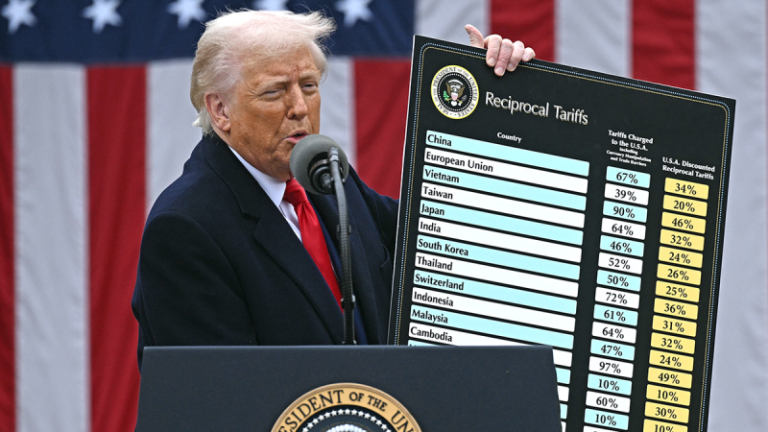
US President Donald Trump has imposed widespread tariffs, including an additional 10 percent tariff on Chinese imports; China has responded with export controls on US goods, including tungsten.

Securities Disclosure: I, Gabrielle de la Cruz, hold no direct investment interest in any company mentioned in this article.

This post appeared first on investingnews.com

At NVIDIA’s (NASDAQ:NVDA) GTC 2025, CEO Jensen Huang delivered on his promise to detail the company’s latest advancements in artificial intelligence (AI) and hardware.

Key announcements included the Blackwell Ultra AI chip, the next-generation Vera Rubin platform and a glimpse into future product roadmaps.

The keynote emphasized the “tipping point of accelerated computing,” marked by a shift from retrieval to generative AI and driven by a combination of agentic and physical AI.

NVIDIA’s AI-powered future

Huang’s speech, delivered without a script, highlighted NVIDIA’s focus on the transformative power of AI, particularly in robotics and generative computing, while also touching on NVIDIA’s advancements in quantum computing with CUDA-Q, a platform for hybrid quantum-classical computing.

For self-driving cars, he showed how NVIDIA’s technology is used to train and simulate autonomous vehicles, explaining how the company will provide the complete system from the data center to the car itself.

Speaking of data centers, Huang addressed the critical role they will play in supporting the next stage of AI advancements. The company is focusing on optimizing data centers to handle the massive computational demands of AI, particularly for AI inference.

This involves a balance between speed and accuracy in token generation, crucial for cost-effectiveness. To support these needs, NVIDIA will deploy powerful configurations of its Blackwell GPUs. Each rack—an enclosure designed to hold multiple electronic equipment modules—is equipped with 8 Blackwell GPUs. This dense configuration will allow for a high concentration of processing power within a compact footprint in modern data centers.

NVIDIA also introduced the Dynamo operating system, designed to manage and optimize large-scale AI infrastructure like data centers and “AI factories”, which are designed to produce AI models and capabilities at scale with intensive computation, data processing and model training. Huang mentioned NVIDIA’s collaboration with Perplexity, one of his “favorite, favorite partners”, on this project, but didn’t provide specific details.

The Omniverse and Cosmos software, which together will create simulated environments for training robots on synthetic data, is intended to leverage the Dynamo operating system for efficient deployment and execution within these AI factories.

The unveiling of NVIDIA Groot N1 – a dual-system architecture for humanoid robots – and its open-sourcing, were significant highlights. Groot N1 allows robots to perform complex tasks, like handling objects and following multi-step instructions, addressing anticipated labor shortages by 2030.

In terms of graphics, Huang demonstrated improvements in real-time ray tracing, a technique for creating more realistic images. He also hinted at future GeForce graphics cards, suggesting that they will be smaller, use less power and perform better than current models.

Blackwell and Vera Rubin: NVIDIA’s next-generation hardware platforms

Hardware advancements were also central, with updates on the production of the Blackwell system highly anticipated. Huang stated that the Blackwell system is now in full production with architectural improvements, including increased transistor density and optimized data pathways for AI workloads to deliver 1 exaflop of FP4 performance, a 25x increase over the previous Hopper architecture.

NVIDIA also unveiled Blackwell Ultra, a higher-performance variant of the Blackwell GPU designed for demanding AI workloads, slated for release in H2 2025. Later, Huang detailed the Vera Rubin platform, NVIDIA’s next-generation platform that will succeed Blackwell in H2 2026. The Vera Rubin platform features the Rubin GPU, which will utilize HBM4 memory, and the Vera CPU. An enhanced version of the Rubin GPU, Rubin Ultra, utilizing HBM4e memory, is also planned for 2027.

Forging strategic partnerships for future technologies

Partnerships were another key theme, with announcements including:

    • A partnership with the telecom industry to develop “AI-native” wireless network hardware for upcoming 6G networks.
    • Collaborations with DeepMind and Disney Research on the Newton physics engine, aimed at improving AI training through real-time simulation.

    How did NVIDIA’s share price perform?

    NVIDIA’s share price has fluctuated following a record-shattering run in 2024 that saw the company briefly surpass Microsoft (NASDAQ:MSFT) and Apple (NASDAQ:APPL) as the world’s most valuable on more than one occasion.

    NVIDIA’s record high of US$149.43, recorded on January 6, has been in decline since due to macroeconomic factors combined with speculation that the company could be past its peak. Its customers have turned to competitors like Broadcom (NASDAQ:AVGO) or are working to develop chips of their own. The company also faced setbacks rolling out its Blackwell product line and is challenged by export restrictions to China, a large customer base.

    Despite this, NVIDIA reported strong financial results for the fourth quarter of 2025, exceeding analyst expectations with significant revenue growth driven by high demand for its AI solutions. Following those results and Huang’s optimistic remarks about the demand for the Blackwell architecture, NVIDIA’s share price saw a 3.67 percent increase.

    However, NVIDIA’s share price dropped over 3 percent in early trading on Tuesday, hours before Huang was set to take the stage, following a report from The Information on Amazon’s lowered cost of its AI chips.

    As the keynote progressed, NVIDIA’s share price saw a slight uptick but declined by 3.35 percent to close at US$115.43, followed by an additional decrease in after-hours trading.

    Securities Disclosure: I, Meagen Seatter, hold no direct investment interest in any company mentioned in this article.

    This post appeared first on investingnews.com

    Syntheia Corp. (‘Syntheia’ or the ‘Company’) (Syntheia.ai), CSE SYAI, a leading provider of conversational AI solutions for inbound telephone call management, proudly announces 10,000 subscribers for its AssistantNLP platform ahead of Management’s expectations by nine months.

    Originally, management had set a milestone of obtaining 10,000 subscribers for the year 2025. Management is pleased to report that it achieved 100% its internal forecast within less than two months from commencement of going live. This milestone is significantly ahead of schedule and forecast by nine months. Management has revised its original internal subscriber forecast of 10,000 subscribers for 2025 and now aims to achieve approximately 100,000 subscribers by end of 2025.

    Uniquely uncovered and not anticipated is that the businesses subscribing to our platform often require translation assistance as English is their second language. So in addition to business efficiencies offered by Syntheia, our subscribers are also benefiting from Syntheia as their automated AI receptionist by eliminating the language barrier that challenges many small and medium businesses today in North America.

    We achieved a very significant milestone in record time and now have adjusted our yearly subscription outlook significantly by a factor of 10 to 100,000 subscriptions by the end of the year. In 2025, we look to aggressively build our community, introduce new offering and ultimately monetize on the community that we have built,’ commented Tony Di Benedetto, Chief Executive Officer of Syntheia.

    About Syntheia

    Syntheia is an artificial intelligence technology company which is developing and commercializing proprietary algorithms to deliver human-like conversations. Our SaaS platform offers conversational AI solutions for both enterprise and small-medium business customers globally.

    Cautionary Statement

    Neither the Canadian Securities Exchange nor its Market Regulator (as that term is defined in the policies of the Canadian Securities Exchange) accepts responsibility for the adequacy or accuracy of this news release.

    This news release contains certain ‘forward-looking information’ within the meaning of applicable securities law. Forward-looking information is frequently characterized by words such as ‘plan’, ‘expect’, ‘project’, ‘intend’, ‘believe’, ‘anticipate’, ‘estimate’, ‘may’, ‘will’, ‘would’, ‘potential’, ‘proposed’ and other similar words, or statements that certain events or conditions ‘may’ or ‘will’ occur. These statements are only predictions. Forward-looking information is based on the opinions and estimates of management at the date the information is provided and is subject to a variety of risks and uncertainties and other factors that could cause actual events or results to differ materially from those projected in the forward-looking information. Forward-looking statements in this news release include, but are not limited to the Company’s mission and business objectives and the Company’s efforts to grow its subscriber base, brand awareness, customer base and sales. Readers are cautioned that forward‐looking information is not based on historical facts but instead reflects the Company’s management’s expectations, estimates or projections concerning the business of the Company’s future results or events based on the opinions, assumptions and estimates of management considered reasonable at the date the statements are made.

    Although the Company believes that the expectations reflected in such forward‐looking information are reasonable, such information involves risks and uncertainties, and undue reliance should not be placed on such information, as unknown or unpredictable factors could have material adverse effects on future results, performance or achievements. Please refer to the Company’s listing statement available on SEDAR+ for a list of risks and key factors that could cause actual results to differ materially from those projected in the forward‐looking information. Should one or more of these risks or uncertainties materialize, or should assumptions underlying the forward‐looking information prove incorrect, actual results may vary materially from those described herein as intended, planned, anticipated, believed, estimated or expected.

    Although the Company has attempted to identify important risks, uncertainties and factors which could cause actual results to differ materially, there may be others that cause results not to be as anticipated, estimated or intended. The Company undertakes no obligation to update forward-looking information if circumstances or management’s estimates or opinions should change unless required by law. The reader is cautioned not to place undue reliance on forward-looking information.

    The securities of the Company have not been and will not be registered under the United States Securities Act of 1933, as amended and may not be offered or sold in the United States absent registration or an applicable exemption from the registration requirement. This press release shall not constitute an offer to sell or the solicitation of an offer to buy nor shall there be any sale of the securities in any jurisdiction in which such offer, solicitation or sale would be unlawful.

    View source version on businesswire.com: https://www.businesswire.com/news/home/20250321135594/en/

    For further information, please contact:

    Tony Di Benedetto
    Chief Executive Officer
    Tel: (844) 796-8434

    News Provided by Business Wire via QuoteMedia

    This post appeared first on investingnews.com

    Copper prices surged past US$10,000 per metric ton on Thursday (March 20), hitting a five month high as traders scrambled to secure supply ahead of potential US tariffs on the base metal.

    London Metal Exchange (LME) copper futures climbed sharply in early trading, reflecting a combination of supply constraints, rising demand and uncertainty surrounding trade policy.

    US President Donald Trump has ordered a probe into the national security implications of copper imports, raising concerns that a 25 percent tariff could be imposed, similar to levies already placed on aluminum and steel.

    The potential for such tariffs has triggered a wave of preemptive buying, particularly in the US, where traders are paying record premiums to acquire copper before any duties take effect. The spread between New York Comex futures and the LME price widened to more than US$1,254 this week, exceeding February’s high of US$1,149.

    Tariff threat complicating copper trade

    If the US imposes a 25 percent tariff on copper imports, analysts say the price gap between Comex and LME copper could widen even further, potentially surpassing US$2,000.

    StoneX analyst Natalie Scott-Gray told the Financial Times that this would further distort global copper trade, creating strong incentives for suppliers to shift even more metal to the US market.

    Wei Lai, deputy trading head at Zijin Mining Investment Shanghai, told Bloomberg that “a round of cross-regional repricing triggered by potential US tariffs’ is unfolding. The rush to divert supply to the US is leaving other regions short of the metal, while also boosting investor confidence in copper as a lucrative commodity.

    Beyond tariffs, the copper market is facing broader supply-side challenges. Processing fees for copper smelters have reached historic lows, raising concerns about the long-term viability of some refining operations. An oversupply of smelting capacity — particularly in China — has made it difficult for copper smelters to maintain profitability.

    Commodities trading giant Glencore (LSE:GLEN,OTC Pink:GLCNF) recently announced it would halt operations at its Philippine copper smelter, citing “increasingly challenging market conditions” as processing fees collapsed.

    More smelters could shut down if the situation persists, further tightening copper supply and boosting prices.

    While trade policy is a key factor driving copper’s price surge, broader macroeconomic trends are also playing a role. Expectations of rising demand from Germany’s major infrastructure and military spending initiatives, as well as stimulus measures in China, are supporting bullish sentiment for the metal. Furthermore, some investors are diversifying away from US tech stocks, shifting funds into gold and industrial metals as a hedge against economic volatility.

    During the recent Prospectors & Developers Association of Canada convention, Adrian Day, president of Adrian Day Asset Management, explained why US tariffs on copper imports would be a bad idea.

    ‘Logically, if you’re worried that we need a lot of copper in the US and we’re not producing enough, the last thing you want to do is put tariffs on shipments from abroad,’ Day explained. ‘I suspect, that the people making a recommendation will recommend no tariffs, and they’ll recommend encouraging domestic production, and so on.’

    Rising copper prices boost China’s Zijin

    The positive impact of higher copper prices is already being felt across the mining sector.

    Zijin Mining Group (OTC Pink:ZIJMF,SHA:601899), China’s largest metals producer, reported a 52 percent jump in profit last year, driven by increased output and soaring prices for copper and gold. The company posted net income of 32.1 billion yuan (US$4.4 billion), with revenue climbing 3.5 percent to 303.6 billion yuan.

    Despite these gains, Zijin recently lowered its copper output target for 2025 by about 6 percent to 1.15 million metric tons, citing regulatory hurdles and geopolitical challenges that have slowed its overseas expansion. Resistance to Chinese acquisitions in western markets has also played a role in the company’s revised projections.

    Market waits for copper probe results

    For now, the outlook for copper is uncertain as traders await the results of the US tariff investigation.

    While final recommendations are unlikely to come until later this year, major investment banks, including Goldman Sachs (NYSE:GS) and Citigroup (NYSE:C), expect 25 percent import duties on copper by the end of 2025.

    In the meantime, copper prices are likely to remain volatile.

    As of midday Thursday (March 19), LME copper was trading just below US$10,000, with other base metals showing mixed performance. Aluminum remained slightly higher, while nickel remained steady.

    Securities Disclosure: I, Giann Liguid, hold no direct investment interest in any company mentioned in this article.

    This post appeared first on investingnews.com