Author

admin

Browsing

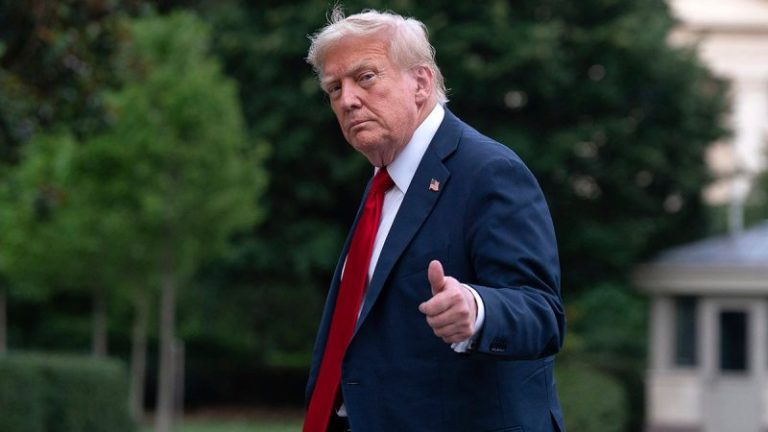
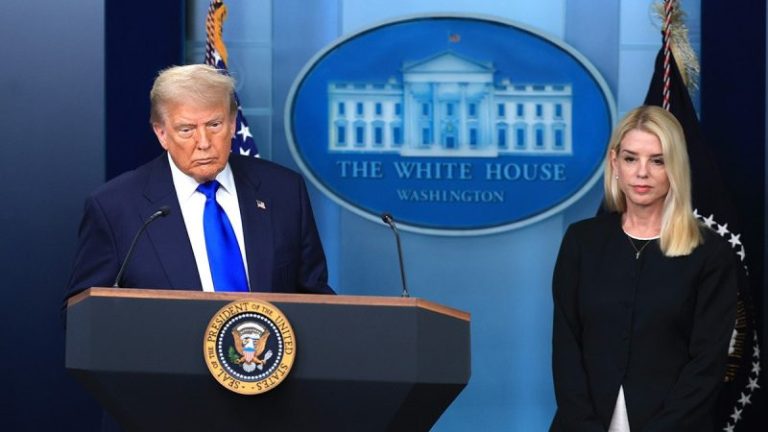
President Donald Trump and Secretary of State Marco Rubio are continuing to overhaul the National Security Council and shift its main functions to other agencies like the State and Defense departments. 

The latest efforts to slim down a federal agency come weeks after Trump announced former National Security Advisor Mike Waltz would depart his post at the White House overseeing the agency and serve as UN ambassador. Waltz himself began the streamlining process in January, when, in one of his first moves as Trump’s national security adviser, he ordered 160 NSC staffers off the job pending a comprehensive review of the agency’s alignment with Trump’s agenda.

The current plans to upend the agency would include whittling down the size of the National Security Council, which the Trump White House believes is full of long-term, bureaucratic staffers who don’t align with Trump’s agenda. 

Additionally, the restructuring will move Andy Barker, national security advisor to Vice President JD Vance, and Robert Gabriel, assistant to the president for policy, into roles serving as deputy national security advisors. 

Axios was the first to report the Trump administration’s restructuring plans. A White House official confirmed Axios’ reporting to Fox News Digital. 

A White House official involved in the planning said Trump and Rubio are driving the change in an attempt to target Washington’s so-called ‘Deep State.’ 

‘The NSC is the ultimate Deep State. It’s Marco vs. the Deep State. We’re gutting the Deep State,’ a White House official told Axios. 


The National Security Council is located within the White House and provides the president guidance on national security, military and foreign affairs matters. 

Waltz’s departure from the agency followed his involvement with other administration officials, like Defense Secretary Pete Hegseth, in the Signal chat controversy over strike plans against the Houthis in March.

But Waltz had been focused early in his short tenure on the issue of what the Trump administration considers ‘deep state’ infiltration of the agency. The former Green Beret and Florida congressman was especially concerned about Biden administration political appointees and holdovers assigned to the NSC from other agencies. 

Since Waltz’s departure earlier this month, Rubio has taken on the role of national security advisor. That’s in addition to leading the State Department and serving as acting archivist and acting administrator of the U.S. Agency for International Development, which the administration is aiming to dismantle this year. 

Fox News Digital was the first to report that the State Department planned to absorb the remaining operations and programs USAID runs so it would no longer function as an independent agency. The move requires cutting thousands of staff members in an attempt to bolster the efficiency of the existing, ‘life-saving’ foreign assistance programs, according to a State Department memo Fox News Digital obtained. 

Fox News’ Emma Colton contributed to this report. 

This post appeared first on FOX NEWS

Satellite imagery captured what remained of a mangled 5,000-ton North Korean naval destroyer damaged during its launch ceremony this week, leaving the country’s dictator distraught. 

A photo captured by Maxar Technologies of the northeastern port of Chongjin, shows the ship apparently twisted and lying on its side, partly lodged on a launch slip and partly submerged in water. 

The secretive communist nation covered the would-be warship with a blue tarp.

Mexar Technologies also snapped a satellite photo of the ship before the launch, looking pristine as it prepared for its first voyage. 

But that voyage was put on hold after a flatcar guiding the ship failed to move during the launch, throwing the warship off balance and crushing parts of its bottom before its stern eventually slid down the launch slipway into the water, state media reported.

North Korean dictator Kim Jong Un was reportedly fuming over the botched launch, which was intended to show the nation’s military might but instead became an embarrassment on the world stage. 

State media also reported on Kim’s fury. 

He reportedly blamed military officials, scientists and shipyard operators for a ‘serious accident and criminal act caused by absolute carelessness, irresponsibility and unscientific empiricism.’ 

The extent of the damage to the destroyer is unclear, though Kim demanded that repairs be completed before the communist Working Party’s meeting in June.

The dictator, known for his brutality as much as his secrecy, ominously warned that during that meeting, mistakes caused by the ‘irresponsibility of the relevant officials’ would be investigated. 

Under Kim’s rule, North Korea has been focused on building an arsenal of military weapons in what it regards as a response to western aggression. 

In March, Kim personally oversaw tests of AI-powered suicide drones, unmanned exploding drones that can be used to launch an attack without putting the attackers’ lives in danger. He reportedly called for an increase in production of those drones. 

He also recently claimed the country was in the process of building a nuclear submarine. 

In its first real showing of military force since the Korean War in the 1950s, an estimated 15,000 troops were sent to Russia to fight alongside the fellow communist nation in its war against Ukraine. 

South Korea claimed in late April that 600 of those troops had been killed. 

This post appeared first on FOX NEWS

President Donald Trump and Secretary of State Marco Rubio are spearheading plans to overhaul the National Security Council and shift its main functions to other agencies like the State and Defense departments. 

The move is the latest effort to slim down a federal agency and comes weeks after Trump announced former National Security Advisor Mike Waltz would depart his post at the White House overseeing the agency. 

Trump announced the same day that Waltz was nominated to serve as United Nations ambassador. 

The plans to upend the agency would include whittling down the size of the National Security Council, which the Trump White House believes is full of long-term, bureaucratic staffers who don’t align with Trump’s agenda. 

Additionally, the restructuring will move Andy Barker, national security advisor to Vice President JD Vance, and Robert Gabriel, assistant to the president for policy, into roles serving as deputy national security advisors. 

Axios was the first to report the Trump administration’s restructuring plans. A White House official confirmed Axios’ reporting to Fox News Digital. 

A White House official involved in the planning said Trump and Rubio are driving the change in an attempt to target Washington’s so-called ‘Deep State.’ 

‘The NSC is the ultimate Deep State. It’s Marco vs. the Deep State. We’re gutting the Deep State,’ a White House official told Axios. 


The National Security Council is located within the the White House and provides the president guidance on national security, military and foreign affairs matters. 

Waltz’s departure from the agency followed his involvement with other administration officials, like Defense Secretary Pete Hegseth, in the Signal chat controversy over strike plans against the Houthis in March.

Since Waltz’s departure earlier this month, Rubio has taken on the role of national security advisor. That’s in addition to leading the State Department and serving as acting archivist and acting administrator of the U.S. Agency for International Development, which the administration is aiming to dismantle this year. 

Fox News Digital was the first to report that the State Department planned to absorb the remaining operations and programs USAID runs so it would no longer function as an independent agency. The move requires cutting thousands of staff members in an attempt to bolster the efficiency of the existing, ‘life-saving’ foreign assistance programs, according to a State Department memo Fox News Digital obtained. 

Fox News’ Emma Colton contributed to this report. 

This post appeared first on FOX NEWS

President Donald Trump signed several executive orders (EOs) on nuclear energy proliferation and an order removing political considerations from public-sector science, as conservatives claimed the latter was scandalized in its response to the COVID-19 pandemic.

Trump also signed restoring ‘gold standard science’ as the cornerstone of federal research. 

A senior White House official said on Friday there has been a decline in ‘disruptive research’ and investments in biomedical research, along with ‘serious cases’ of fraud and misconduct and the inability to reproduce scientific methods for the purpose of restoring public trust.

The official also blamed policy responses to the COVID-19 pandemic and ‘woke DEI initiatives’ for endangering the public’s trust in government scientists.

Now-retired NIAID Director Dr. Anthony Fauci was repeatedly denounced for flip-flopping and obfuscating during his time engineering the federal response to COVID-19, leading many particularly on the right to disregard and dismiss the legitimacy of federal health authorities outright.

That order cites the fact the Biden administration included political edits from teachers unions in school-reopening guidance, instead of leading with any scientific evidence.

The order will enforce ‘gold standard science,’ defined as reproducible, transparent and falsifiable – as well as being subject to peer review and making sure that scientists are not discouraged from discovering outcomes that run counter to a narrative.

In terms of nuclear energy, one order will reform nuclear R&D at the Energy Department, accelerate reactor testing at national labs and establish a pilot program for new construction.

Energy Secretary Chris Wright previously told Fox News Digital that revitalizing and highlighting the work of U.S. national labs is paramount to his agenda.

In a move that appears to support Wright’s push for nuclear power, Trump will sign an order aimed at advancing new reactor construction on public lands.

A senior White House official cited the importance of that type of reliable power-source for critical defense facilities and AI data centers.

Another order being signed Friday will overhaul the Nuclear Regulatory Commission (NRC) to require it to rule on reactor license applications within 18 months.

Only two new nuclear reactors have begun construction and entered into commercial operation since the Carter administration.

A typically risk-averse culture that requires, for example, nuclear facilities to emit as little radiation as possible, including below naturally-occurring levels, which critics said has hindered the NRC from licensing new reactors as technology begets safer and cheaper means of production.

The orders will also seek to raise nuclear energy capacity from 100 gigawatts (GW) to 400 GW within 25 years.

Another order will establish a vision to mine and enrich uranium within the U.S., decreasing another avenue of foreign reliance – and ‘reinvigorate’ the nuclear fuel cycle.

‘That means America will start mining and enriching uranium and expanding domestic uranium conversion and enrichment capacity,’ a senior White House official said.

Trump is expected to leverage the Defense Production Act – which last helped secure COVID-19 paraphernalia like masks and ventilators – to seek agreements with domestic nuclear energy companies for the procurement of enriched uranium, as well as finding ways to manage spent nuke fuel. 

Nuclear energy, the White House said in the order, ‘is necessary to power the next generation technologies that secure our global industrial, digital, and economic dominance, achieve energy independence, and protect our national security.’

This post appeared first on FOX NEWS

President Donald Trump on Friday cleared the merger of U.S. Steel and Nippon Steel, after the Japanese steelmaker’s previous bid to acquire its U.S. rival had been blocked on national security grounds.

“This will be a planned partnership between United States Steel and Nippon Steel, which will create at least 70,000 jobs, and add $14 Billion Dollars to the U.S. Economy,” Trump said in a post on his social media platform Truth Social.

U.S. Steel’s headquarters will remain in Pittsburgh and the bulk of the investment will take place over the next 14 months, the president said. U.S. Steel shares surged more than 20% to close at $52.01 per share after Trump’s announcement.

Pennsylvania Gov. Josh Shapiro applauded the agreement, saying he worked with local, state and federal leaders ‘to press for the best deal to keep U.S. Steel headquartered in Pittsburgh, protect union jobs, and secure the future of steelmaking in Western Pennsylvania.’

In his own statement, Lieutenant Gov. Austin Davis called the announcement ‘promising,’ but added: ‘I want to make sure everyone involved in the deal holds up their end of the bargain. I look forward to seeing the promised investments become a reality and the workers receive everything they’ve fought for.’

President Joe Biden blocked Nippon Steel from purchasing U.S. Steel for $14.9 billion in January, citing national security concerns. Biden said at the time that the acquisition would create a risk to supply chains that are critical for the U.S.

Trump, however, ordered a new review of the proposed acquisition in April, directing the Committee on Foreign Investment in the United States to determine “whether further action in this matter may be appropriate.”

Trump said he would hold a rally at U.S. Steel in Pittsburgh on May 30.

This post appeared first on NBC NEWS

United Airlines reached an “industry-leading” tentative labor deal for its 28,000 flight attendants, their union said Friday.

The deal includes “40% of total economic improvements” in the first year and retroactive pay, a signing bonus, and quality of life improvements, like better scheduling and on-call time, the Association of Flight Attendants-CWA said.

The union did not provide further details about the deal.

United flight attendants have not had a raise since 2020.

The cabin crew members voted last year to authorize the union to strike if a deal wasn’t reached. They had also sought federal mediation in negotiations.

U.S. flight attendants have pushed for wage increases for years after pilots and other work groups secured new labor deals in the wake of the pandemic. United is the last of the major U.S. carriers to get a deal done with its flight attendants.

The deal must still face a vote by flight attendants, and contract language will be finalized in the coming days, United said.

This post appeared first on NBC NEWS

The Federal Trade Commission voted to dismiss a lawsuit filed in the last days of the Biden administration that accused PepsiCo of offering sweetheart pricing to big retailers.

FTC Chair Andrew Ferguson dissented to the suit when it was filed in January, when he was one of the regulator’s commissioners. Now the agency’s leader, Ferguson on Thursday again criticized the case as “a nakedly political effort to commit this administration to pursuing little more than a hunch that Pepsi had violated the law.”

“The FTC’s outstanding staff will instead get back to work protecting consumers and ensuring a fair and competitive business environment,” he said in a statement.

The FTC voted 3-0 to drop the suit. The panel is supposed to be made up of five commissioners, no more than three of whom can share the same political party. But it is currently led by three Republicans after President Donald Trump fired its two Democratic commissioners in March. The two ousted officials have slammed their removals as illegal and are urging a judge to reinstate them.

Pepsi welcomed the FTC decision Thursday. “PepsiCo has always and will continue to provide all customers with fair, competitive, and non-discriminatory pricing, discounts and promotional value,” a spokesperson said in a statement. Beyond its namesake soda, the company makes an array of snacks and other food products, including Doritos, Rold Gold pretzels and Sabra hummus.

Former FTC Chair Lina Khan, who led the commission when the agency brought its case against Pepsi, criticized the move Thursday as “disturbing behavior” by the agency.

“This lawsuit would’ve protected families from paying higher prices at the grocery store and stopped conduct that squeezes small businesses and communities across America,” she wrote on X Thursday evening. “Dismissing it is a gift to giant retailers as they gear up to hike prices.”

The decision comes little more than a week after top-ranking Democrats on Capitol Hill sent a letter to Pepsi demanding more information about its pricing strategy. They sought to revive a Biden-era focus on price-gouging as a driver of inflation, an argument that has taken a back seat to the Trump administration’s attention on purportedly unfair trade arrangements.

But major corporations continue to draw scrutiny from the White House over pricing in other ways. Last weekend, Trump slammed Walmart for warning that it was likely to raise prices to offset the costs of his import taxes, demanding on social media that it “EAT THE TARIFFS.”

In the days since then, other major consumer brands have appeared to tread cautiously around pricing. Target said Wednesday that charging customers more would be its “very last resort.” Home Depot virtually ruled out price hikes this week, and Lowe’s barely mentioned tariff impacts in its Wednesday earnings call at all.

CORRECTION (May 22, 2025, 8:45 p.m. ET): Due to an editing error, a previous version of this article misstated when congressional Democrats sent their letter to Pepsi. It was on May 11, not last weekend.

This post appeared first on NBC NEWS

In this video, Joe shares how to use MACD and ADX indicators to analyze stock pullbacks, focusing on the good while avoiding the weak setups. He explains how these indicators can complement one another. Joe then shows the Summary Page in ACP and how he uses it on a regular basis to look at different markets, including the SPX, COMP, S&P 600, 10-Year Rates, Copper, Gas, and a few Country Funds. Finally, he goes through the symbol requests that came through this week, including CRSP, VC, and more.

The video premiered on May 21, 2025. Click this link to watch on Joe’s dedicated page.

Archived videos from Joe are available at this link. Send symbol requests to stocktalk@stockcharts.com; you can also submit a request in the comments section below the video on YouTube. Symbol Requests can be sent in throughout the week prior to the next show.

On Wednesday, only 4% of the S&P 500’s holdings logged gains — a pretty rare occurrence. Since the start of 2024, this has only happened three other times:

  • August 5, 2024: The last day of the summer correction
  • December 18, 2024: The Fed’s hawkish cut
  • April 4, 2025: Tariffs

Let’s recall that major trading lows were etched last August, and again just a few weeks ago in early April. The S&P 500 ($SPX) dropped 10% and 21%, respectively, from its peak to trough both times, with the lows being marked by emphatic capitulation events (April 7 was the real pivot low). The market’s rubber band violently snapped back in the ensuing weeks, both times.

FIGURE 1. PAST LOWS IN THE S&P 500 INDEX. Note the rebounds following the August 5, December 18, and April 4 drops.With the SPX now having gained 20% from the April low, the setup is more like mid-December 2024. The index had just gained 19% from early August through early December and was hovering near 6,100. The FOMC’s actions put a major dent in the calm uptrend.

The S&P 500 didn’t completely crumble after that, spending the next 10 weeks backing and filling. But the market’s character changed, and the cracks eventually gave way to the waterfall decline.

So, what does that tell us about this moment? There’s a clear risk given the one-sided advance the last few weeks, but, with bullish patterns still in play and the $SPX having built up a big cushion, it can afford to back and fill again now. It’s the first gut punch in four weeks, and the market must prove it can absorb it.

Short-Term View of the S&P 500

The drawdown measured from this Monday’s high now stands at -2.4% — most of which happened on Wednesday. Given how small the moves have been over the last few weeks, Wednesday’s big decline hit the 14-period relative strength index (RSI) on the two-hour chart very hard. It’s now at 41, which is very close to the 30-oversold threshold.

Again, we’ve seen the short-term indicator fall to oversold territory several times, even during the market’s upswing from August through December. Seeing that happen again this time wouldn’t be a surprise. If it happens, it will be important to see the ensuing bounce pull the SPX back to overbought territory relatively soon. Remember, we went nearly four months between overbought readings from late January through mid-May.

FIGURE 2. TWO-HOUR CHART OF THE S&P 500 WITH RSI.

S&P 500 Patterns

Despite the sell-off, there was no change in the patterns at work. The two bullish patterns remain in play, with targets of 6,125 and 6,555, respectively. The S&P 500 started Thursday, at about 2.5% above the last breakout zone (5,695).

FIGURE 3. DAILY CHART OF THE S&P 500 WITH BULLISH PATTERNS. Here you see the pattern with a 6,125 target.

FIGURE 4. DAILY CHART OF S&P 500 WITH 6,555 PRICE TARGET.

Monitor the VIX

Not surprisingly, the Cboe Volatility Index ($VIX) gained 15% on Wednesday in response to the market’s sell-off. It remains close to 20, but continues to log higher lows, which has been the trend since late 2024. Indeed, it’s way off spike highs from April, but it’s a trend worth watching.

Let’s recall that the VIX never truly capitulated in 2022, but its trend of higher lows coincided with the equity market’s downtrend. When the SPX logged a true low in October 2022, lower lows in the VIX became evident. This lasted through this past summer.

If the snapback in the SPX turns into a longer, new uptrend, the VIX’s uptrend will morph into a downtrend again.

FIGURE 5. WEEKLY CHART OF THE CBOE VOLATILITY INDEX ($VIX).

Bonds Display Bullish Patterns

The bullish pattern in the weekly 30-Year Treasury yields and 10-Year Treasury yields is crystal clear. An acceleration through the 2023 highs after Wednesday would have an obvious negative effect on stocks.

As discussed before, the equity market has shown it can advance with higher rates, as long as said rates go higher gradually. The intermittent up-moves in rates have been capped for the last two years as well. Thus, stocks have been able to withstand it. That wasn’t the case from January to September 2022, and that’s the potential concern.

FIGURE 6. WEEKLY CHART OF THE 30-YEAR US TRASURY YIELD INDEX.

FIGURE 7. WEEKLY CHART OF THE 10-YEAR US TREASURY YIELD INDEX.

Bitcoin Holding Strong

So far, Bitcoin has maintained noticeable relative strength even as stocks got hit hard on Wednesday. Simply put, continuing to hold above this breakout zone would keep the new measured move target of 142k in play.

FIGURE 8. WEEKLY CHART OF $BTCUSD WITH ITS MEASURED MOVE TARGET.

From another perspective, this move can also be viewed as the fourth wedge breakout since 2023. The prior three times, BTC’s 14-week RSI stayed very overbought for weeks before slowing down. The 14-week RSI is just approaching overbought levels, which suggests it has further to go.

FIGURE 9. WEEKLY CHART OF $BTCUSD WITH WEDGE BREAKOUTS AND RSI.

Harvest Gold Corporation (TSXV: HVG) (“Harvest Gold” or the “Company”) is pleased to announce the results of its fall 2024 soil sampling program carried out at its Quebec Mosseau property. The Mosseau project covers 21 km of favourable strike in the Urban-Barry greenstone belt region (Figure 1).

The soil sampling program was carried out by IOS Services Geoscientifiques in October and November 2024 and included the collection of 605 soil samples covering favourable geology and a distinctive magnetic domain in the central part of the property (Figures 2 and 3).

Rick Mark, CEO of Harvest Gold states: “This soil geochemical survey, remarkably, the first of its kind on this property, has yielded a breakthrough in our understanding of the gold potential surrounding the Kiask River Mineralized Corridor. These soil geochemistry results, layered upon historic information and Harvest’s recent geophysical, prospecting and mapping results produce target opportunities previously unseen. The geo team is meeting this week to prioritize drill targets.”

Results from the soil geochemical program* highlight distinctive gold targets; the greater than 98th percentile Au Z-Score** values define eight zones in and parallel to the Kiask River Mineralized Corridor (KRMC) (Figure 4). Three of the gold trains are immediately to the south and down-ice of the KRMC, confirming known mineralization from previous drilling and prospecting results. Another five (5) gold trains are parallel to the KRMC, to the North and the South of the KRMC. These targets are also associated with magnetic highs and geologically by diorite and gabbro’s in the local stratigraphy (Figure 5, Figure 6).

The soil sampling program, in conjunction with the recently released results of the prospecting and geological mapping was carried in the central part of the Mosseau property The soil sampling program has confirmed existing drill targets along the Kiask River Mineralized Corridor, as well as identified new targets in the central part of the Mosseau property. Previously recognized mineralization in the central part of the property along the Kiask River Mineralization Corridor, identified by Vior in 2017, included 2.93 g/t Au over 5.0 m from drilling and grab samples up to 12.9 g/t Au. The mineralization was confirmed and extended along strike from results of the 2024 prospecting and mapping program (Press release May 15, 2025)

The soil sampling program included lines at a 200 m spacing, perpendicular to the known ice flow direction, and sample stations at every 25 m. The significance of the anomalies is not only determined by the gold grade and Z-score*, but also by the contiguity of the anomalous samples.

*Soil sampling surveys are not definitive, and the results are still at an early stage of interpretation, with no guarantee of a mineral discovery

**The anomaly thresholds were determined by IOS using a probabilistic approach. In that the assays results are first transformed into logarithmic data. The Z-score is then calculated for each element of each sample. This significantly limits the range of values and enables the use of a normal distribution for the probability modelling. The anomaly threshold for an element is determined by the difference between the sample’s Z-score and the expected Z-score for a log-normal population with an average of 0 and a standard deviation of 1, which represents the regional background as confirmed by the analysis of IOS’s large database. Any sample deviated from that regional trend is likely related to an anomalous population.

About Harvest Gold Corporation

Harvest Gold is focused on exploring for near surface gold deposits and copper-gold porphyry deposits in politically stable mining jurisdictions. Harvest Gold’s board of directors, management team and technical advisors have collective geological and financing experience exceeding 400 years.

Harvest Gold has three active gold projects focused in the Urban Barry area, totalling 377 claims covering 20,016.87 ha, located approximately 45-70 km west of Gold Fields – Windfall Deposit (Figure 1).

Harvest Gold acknowledges that the Mosseau Gold Project straddles the Eeyou Istchee-James Bay and Abitibi territories. Harvest Gold is committed to developing positive and mutually beneficial relationships based on respect and transparency with local Indigenous communities.

Harvest Gold’s three properties, Mosseau, Urban-Barry and LaBelle, together cover over 50 km of favorable strike along mineralized shear zones.

QA/QC Statement

All soil samples collected during the program were securely transported to Activation Laboratories (Actlabs) in Ancaster, Ontario, an independent and ISO/IEC 17025-accredited laboratory. Sample analysis included aqua regia digestion on 30g aliquots followed by ICP-MS analysis for major and trace elements (method UT-1-30g). Digestion with aqua regia consists of a solution of 75% hydrochloric acid and 25% nitric acid, which is highly aggressive and oxidizing, allowing metals, sulphides and gold to be dissolved. The contents of silicate minerals only partially enter solution, however, which subtracts them from the results reported, since solubilization depends on the mineral species and metals present. Thus, most of the iron and magnesium present in these ferromagnesian minerals is solubilized, leaving a residue of insoluble silica and alumina. However, digestion with aqua regia does not bring refractory minerals into solution, including quartz, feldspars, zircon and several oxides. For 5 samples with aluminum results above the UT-1-30g limit, aluminum was analyzed by ICP-OES after lithium borate fusion. 68 certified reference materials (Oreas 46 and Oreas 47), internal reference material (MRIHB23-2 and Till09) and blanks pulverized at <90 microns were added to the samples by IOS before they were sent to Actlabs. The Company follows industry-standard QA/QC protocols, including the insertion of certified reference materials, blanks, and duplicates to ensure the accuracy and precision of the results.

Qualified Person Statement

All scientific and technical information in this news release has been prepared and approved by Louis Martin, P.Geo., Technical Advisor to the Company and considered a Qualified Person for the purposes of NI 43-101.

ON BEHALF OF THE BOARD OF DIRECTORS

Rick Mark
President and CEO
Harvest Gold Corporation

For more information please contact:

Rick Mark or Jan Urata
@ 604.737.2303 or info@harvestgoldcorp.com

Neither TSX Venture Exchange nor its Regulation Services Provider (as that term is defined in the policies of the TSX Venture Exchange) accepts responsibility for the adequacy or accuracy of this release.

Forward Looking Information

This news release includes certain statements that may be deemed ‘forward looking statements’. All statements in this news release, other than statements of historical facts, that address events or developments that Harvest Gold expects to occur, are forward looking statements. Forward looking statements are statements that are not historical facts and are generally, but not always, identified by the words ‘expects’, ‘plans’, ‘anticipates’, ‘believes’, ‘intends’, ‘estimates’, ‘projects’, ‘potential’ and similar expressions, or that events or conditions ‘will’, ‘would’, ‘may’, ‘could’ or ‘should’ occur.

Although the Company believes the expectations expressed in such forward-looking statements are based on reasonable assumptions, such statements are not guarantees of future performance and actual results may differ materially from those in the forward-looking statements. Factors that could cause the actual results to differ materially from those in forward looking statements include market prices, exploitation and exploration successes, and continued availability of capital and financing, and general economic, market or business conditions. Investors are cautioned that any such statements are not guarantees of future performance and actual results or developments may differ materially from those projected in the forward-looking statements. Forward looking statements are based on the beliefs, estimates and opinions of the Company’s management on the date the statements are made. Except as required by securities laws, the Company undertakes no obligation to update these forward-looking statements in the event that management’s beliefs, estimates or opinions, or other factors, should change.

Source

This post appeared first on investingnews.com