Author

admin

Browsing

Here’s a quick recap of the crypto landscape for Monday (June 2) as of 9:00 p.m. UTC.

Get the latest insights on Bitcoin, Ethereum and altcoins, along with a round-up of key cryptocurrency market news.

Bitcoin and Ethereum price update

Bitcoin (BTC) was priced at US$104,369 as markets wrapped, down 0.7 percent in 24 hours. The day’s range for the cryptocurrency brought a low of US$103,984 and a high of US$104,589.

Bitcoin performance, June 2, 2025.

Chart via TradingView.

After hitting nearly US$103,100 on May 31, Bitcoin held above US$104,500 to close its weekly candle.

The cryptocurrency traded around US$104,000 on Monday as uncertainty continued to plague centralized and decentralized markets in the final month of the second quarter.

Crypto analyst Daan Crypto Trades identified the mid-range level around US$99,600 and a resistance area near US$108,000 as key zones to watch for potential reversal signals during the first week of June. He emphasized that early June moves may be ‘fakeouts,’ with the real trend emerging afterward.

Ethereum (ETH) finished the trading day at US$2,533.47, a 0.4 percent increase over the past 24 hours. The cryptocurrency reached an intraday low of US$2,494.99 and saw a daily high of US$2,555.62.

Altcoin price update

  • Solana (SOL) closed at US$152.44, down 2.1 percent over 24 hours. SOL experienced a low of US$152.34 in the final minutes of trading and reached a high of US$154.27.
  • XRP is trading at US$2.16, reflecting a 0.1 percent decrease over 24 hours. The cryptocurrency reached a daily low of US$2.14 and a high of US$2.17.
  • Sui (SUI) peaked at US$3.28, showing a decreaseof 0.2 percent over the past 24 hours. Its lowest valuation on Monday was US$3.25, and its highest was US$3.32.
  • Cardano (ADA) is trading at US$0.6724, down 0.8 percent over the past 24 hours. Its lowest price of the day was US$0.6708, and it reached a high of US$0.6776.

Today’s crypto news to know

Circle aims for US$7.2 billion valuation in expanded US IPO

Stablecoin issuer Circle is aiming for a US$7.2 billion valuation in its upsized initial public offering (IPO), signaling strong investor interest amid a friendlier US regulatory environment under President Donald Trump.

The company and its backers now hope to raise up to US$896 million by offering 32 million shares.

Circle’s USDC, the world’s second largest stablecoin, is expected to benefit from pending legislation that could drive more institutional adoption. The firm reported a 55 percent jump in reserve income for Q1, reaching nearly US$558 million, though this was offset by a 68 percent surge in distribution and transaction costs.

Circle’s primary distribution partner is Coinbase Global (NASDAQ:COIN), with others contributing to global reach. The IPO is being led by JP Morgan Chase (NYSE:JPM), Citigroup (NYSE:C) and Goldman Sachs (NYSE:GS).

Circle will trade under the ticker symbol ‘CRCL’ on the NYSE later this week.

BitoPro possibly hacked for US$11 million, exchange silent

Taiwan’s BitoPro exchange may have suffered a major breach on May 8, according to blockchain investigator ZachXBT, with over US$11.5 million in crypto drained from its hot wallets.

The attackers allegedly compromised wallets across Ethereum, Solana, Tron and Polygon, then funneled the assets through mixers like Tornado Cash and Wasabi Wallet to cover their tracks.

BitoPro has yet to publicly acknowledge the breach, instead citing routine “system maintenance” as the reason for service disruptions last month. The exchange remains quiet on its official channels despite mounting evidence of a hack.

BitoPro, operated by BitoGroup, has served Taiwan’s crypto market since 2018, and continues to process over US$20 million in daily volume.

Lubin credits Saylor for inspiring Ethereum treasury push

Ethereum co-founder Joe Lubin says a conversation with Bitcoin bull Michael Saylor prompted him to explore the creation of a treasury firm focused on Ether, according to Bloomberg.

Inspired by Saylor’s success turning Strategy (NASDAQ:MSTR) into a leveraged Bitcoin proxy, Lubin launched a new initiative through SharpLink Gaming (NASDAQ:SBET), raising US$425 million to buy Ether.

Lubin, who is now chair of SharpLink, expects to raise even more capital through share offerings and bonds — mirroring Saylor’s approach, but with a focus on Ethereum.

Following the announcement, SharpLink’s share price soared over 1,000 percent in just a few days. Lubin believes this will spark a wave of similar Ether-focused strategies and drive institutional demand.

While Bitcoin has enjoyed a clearer investment narrative as “digital gold,” Lubin argues Ether’s broader utility is underappreciated and ripe for a narrative shift.

Saylor’s Strategy boosts Bitcoin holdings by 705 BTC

Strategy acquired another 705 BTC for US$75.1 million between May 26 and May 30.

The latest purchases were made at an average price of US$106,495 per coin, and followed the sale of 3,750 Class A shares between May 22 and 29 by Strategy director Jarrod Patten, worth nearly US$1.4 million.

According to Strategy’s data, the latest purchase brought its year-to-date BTC yield to 16.9 percent. The company’s quarter-to-date BTC yield is now 5.4 percent. Strategy is looking to reach a BTC yield target of 25 percent year-to-date by the end of 2025. The company previously targeted a 15 percent yield, but increased it on May 1.

Strategy now holds 581,000 BTC, or 2.9 percent of all Bitcoin that have been mined to date.

Metaplanet buys more Bitcoin, holdings top US$930 million

Japan’s Metaplanet (TSE:3350,OTCQX:MTPLF) has acquired another 1,088 BTC, pushing its total Bitcoin stash past 8,888 coins — now worth over US$930 million. The latest purchase cost the firm US$117.5 million, bringing its average BTC acquisition price to just over US$108,000 per coin. Since adopting its Bitcoin treasury policy in April 2024, Metaplanet has rapidly climbed the ranks of corporate BTC holders and is now the largest in Asia.

The company recently raised US$50 million through zero-interest bonds to finance its latest round of acquisitions without issuing new stock. Year-to-date, Metaplanet reports a 66 percent return on its BTC holdings, and it has added over 7,000 coins in 2025 alone. The firm is targeting a total of 10,000 BTC by year end.

Tether enhances gold-backed token

Tether’s gold-backed token, Tether Gold (XAU₮), has been enhanced with an omnichain version, XAU₮0.

It is now available on the Open Network (TON) blockchain. This move enables the trading of digital gold and deepens the collaboration between Tether and TON. XAU₮, Tether’s original gold token, is available as an ERC-20 token on Ethereum and a TRC-20 token on TRON. The new version leverages LayerZero’s OFT standard to facilitate native movement across multiple blockchains without wrapping or redeploying new tokens on each chain.

According to Tether’s Q1 attestation report, it has over 7.7 metric tons of physical gold backing the XAUT stablecoin.

MAS orders crypto firms to halt overseas services

The Monetary Authority of Singapore (MAS), the country’s central bank, has ordered local crypto service providers to stop offering digital token services to overseas markets by June 30.

The directive came in response to industry feedback on a proposed regulatory framework for Digital Token Service Providers (DTSPs) under the Financial Services and Markets Act (FSM Act), passed in April 2022.

The act requires DTSPs with overseas operations to comply with anti-money laundering and counter-terrorist financing standards, even if they do not offer services within Singapore.

“DTSPs which are subject to a licensing requirement under section 137 of the FSM Act must suspend or cease carrying on a business of providing DT services outside Singapore by 30 June 2025,” MAS wrote.

MAS states that any Singapore-incorporated company, individual or partnership that provides DT services outside Singapore must either cease operations or obtain a license when the DTSP provisions come into force.

Companies found violating the laws will be subject to hefty fines of up to 250,000 Singaporean dollars (US$200,000) and imprisonment of up to three years. Firms licensed or exempted under the Securities and Futures Act, Financial Advisors Act or Payment Services Act may continue to operate without conflicting with the new rules.

Securities Disclosure: I, Giann Liguid, hold no direct investment interest in any company mentioned in this article.

Securities Disclosure: I, Meagen Seatter, hold no direct investment interest in any company mentioned in this article.

This post appeared first on investingnews.com

West High Yield (W.H.Y.) Resources Ltd. (TSXV: WHY) (FSE: W0H) (the ‘Company’ or ‘West High Yield’) announces announces the receipt of proceeds from the exercise of certain warrants (the ‘Warrants’) of the Company.

One holder of Warrants (the ‘Warrantholder‘) exercised 50,000 Warrants resulting in the issuance of 50,000 common shares of the Company (each, a ‘Warrant Share‘). The specific Warrants held and exercised by the Warrantholder were exercisable at a price of CAD$0.30 per Warrant Share, resulting in gross proceeds to the Company in the amount of CAD$15,000 upon such exercise. The Warrants exercised by the Warrantholder were issued to the Warrantholder, among others, as part of a private placement offering of the Company that closed on November 9, 2024.

About West High Yield

West High Yield is a publicly traded junior mining exploration and development company focused on acquiring, exploring, and developing mineral resource properties in Canada. Its primary objective is to develop its world-class Record Ridge critical mineral (magnesium, silica, and nickel) deposit using green processing techniques to minimize waste and CO2 emissions.

The Company’s Record Ridge critical mineral deposit located 10 kilometers southwest of Rossland, British Columbia has approximately 10.6 million tonnes of contained magnesium based on an independently produced National Instrument 43-101 – Standards of Disclosure for Mineral Projects (‘NI 43-101‘) Preliminary Economic Assessment technical report (titled ‘Revised NI 43-101 Technical Report Preliminary Economic Assessment Record Ridge Project, British Columbia, Canada’) prepared by SRK Consulting (Canada) Inc. on April 18, 2013 in accordance with NI 43-101 and which can be found on the Company’s profile at https://www.sedarplus.ca.

Qualified Person

Rick Walker, B.Sc., M.Sc., P.Geo., the Company Geologist is a Qualified Person as defined in NI 43-101 and has reviewed and approved the technical information in this press release.

Contact Information:

West High Yield (W.H.Y.) RESOURCES LTD.

Frank Marasco Jr., President and Chief Executive Officer
Telephone: (403) 660-3488
Email: frank@whyresources.com

Barry Baim, Corporate Secretary
Telephone: (403) 829-2246
Email: barry@whyresources.com

Cautionary Note Regarding Forward-Looking Information

This press release contains forward-looking statements and forward-looking information within the meaning of Canadian securities legislation. The forward-looking statements and information are based on certain key expectations and assumptions made by the Company. Although the Company believes that the expectations and assumptions on which such forward-looking statements and information are based are reasonable, undue reliance should not be placed on the forward-looking statements and information because the Company can give no assurance that they will prove to be correct.

Forward-looking information is based on the opinions and estimates of management at the date the statements are made and are subject to a variety of risks and uncertainties and other factors that could cause actual events or results to differ materially from those anticipated in the forward-looking information. Some of the risks and other factors that could cause the results to differ materially from those expressed in the forward-looking information include, but are not limited to: general economic conditions in Canada and globally; industry conditions, including governmental regulation; failure to obtain industry partner and other third party consents and approvals, if and when required; the availability of capital on acceptable terms; the need to obtain required approvals from regulatory authorities; and other factors. Readers are cautioned that this list of risk factors should not be construed as exhaustive.

Readers are cautioned not to place undue reliance on this forward-looking information, which is given as of the date hereof, and to not use such forward-looking information for anything other than its intended purpose. The Company undertakes no obligation to update publicly or revise any forward-looking information, whether as a result of new information, future events or otherwise, except as required by applicable law.

This press release does not constitute an offer to sell or a solicitation of an offer to buy any securities in the United States. The securities of the Company will not be registered under the United States Securities Act of 1933, as amended (the ‘U.S. Securities Act‘) and may not be offered or sold within the United States or to, or for the account or benefit of U.S. persons except in certain transactions exempt from the registration requirements of the U.S. Securities Act.

NEITHER THE TSX VENTURE EXCHANGE NOR ITS REGULATION SERVICES PROVIDER (AS THAT TERM IS DEFINED IN THE POLICIES OF THE TSX VENTURE EXCHANGE) ACCEPTS RESPONSIBILITY FOR THE ADEQUACY OR ACCURACY OF THIS RELEASE.

To view the source version of this press release, please visit https://www.newsfilecorp.com/release/254269

News Provided by Newsfile via QuoteMedia

This post appeared first on investingnews.com

NEWYou can now listen to Fox News articles!

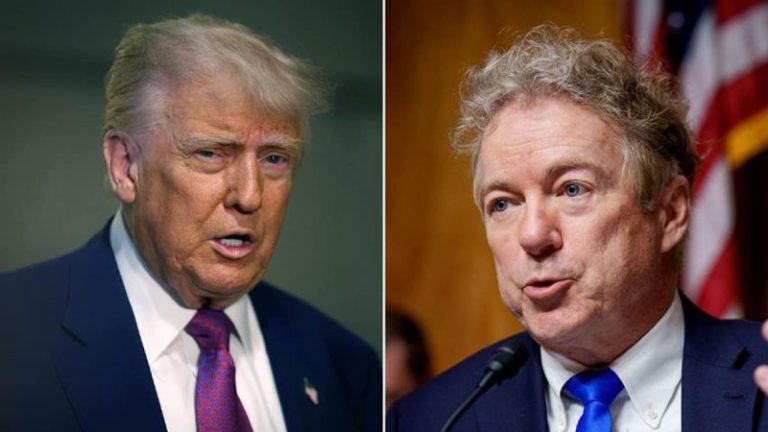
Sen. Rand Paul, R-Ky., said the debt limit increase included in the One Big Beautiful Bill Act is still a deal-breaker for him, saying it goes against conservative values, despite discussions with President Donald Trump about his concerns. 

Paul told reporters on Monday that the bill will increase the debt ceiling by $5 trillion, the largest debt increase in the U.S.

‘We have never raised the debt ceiling without actually meeting that target,’ he said. ‘So you can say it doesn’t directly add to the debt, but if you increase the ceiling $5 trillion, you’ll meet that. And what it does is it puts it off the back-burner. And then we won’t discuss it for a year or two.’

‘So I think it’s a terrible idea to do this,’ he added. 

Paul said he spoke with Trump about his concerns over the legislation during a ‘lengthy discussion,’ but that Trump ‘did most of the talking.’ 

‘I’ve told him I can’t support the bill if they’re together,’ Paul said. ‘If they were to separate out and take the, debt ceiling off that I very much could consider the rest of the bill.’

Paul noted that Congress voted to continue spending to avert a government shutdown. 

‘During the campaign, Republicans said they were against Bidennomics and Bidenflation and Biden spending. When March, we renewed the Biden’s spending levels,’ Paul said. ‘So the spending levels we live under now are Biden-GOP spending levels. They’ve all come into agreement.’

‘But come the end of September, when our fiscal year ends, the deficit is going to be $2.2 trillion. That’s just not conservative,’ he added. ‘They’re borrowing 5 trillion. That means they’re anticipating the following year being over 2 trillion as well. So it’s just not a conservative thing to do.’

Over the weekend, Trump warned Paul would be ‘playing right into the hands of the Democrats’ if he votes against the bill.

‘If Senator Rand Paul votes against our Great, Big, Beautiful Bill, he is voting for, along with the Radical Left Democrats, a 68% Tax Increase and, perhaps even more importantly, a first time ever default on U.S. Debt,’ he wrote on his Truth Social platform. 

‘Rand will be playing right into the hands of the Democrats, and the GREAT people of Kentucky will never forgive him! The GROWTH we are experiencing, plus some cost-cutting later on, will solve ALL problems. America will be greater than ever before!’ he added. 

Next week, Senate Republicans will get their turn to go through the bill and are eying changes that could be a hard sell for House Speaker Mike Johnson, R-La.

This post appeared first on FOX NEWS

Cartier Resources Inc. (″ Cartier ″ or the ″ Company ″) (TSXV: ECR; FSE:6CA) is pleased to announce the execution of an agreement (the ″ Agreement ″) with Exploits Discovery Corp. (CSE: NFLD) (″ Exploits ″) to option 100% of its interests in three groups of exclusive exploration rights, located in the Province of Québec, commonly referred to as: (a) the ″Wilson project″ located in Lebel-sur-Quévillon (the ″ Wilson Property ″); (b) the ″Fenton project″ located in Chapais (the ″ Fenton Property ″); and (c) the ″Benoist project″ located in Miquelon (the ″ Benoist Property ″), together the ″ Properties ″.

During the four-year option period, Exploits shall have the sole and exclusive right and option to earn a 100% interest (the ″ Option ″) by paying Cartier an amount aggregating $1,750,000 in cash, issuing Cartier an aggregate of 9,250,000 common shares of Exploits and incurring not less than $12,250,000 in expenditures on the properties. The Agreement is conditional on Exploits obtaining all necessary regulatory approvals under the policies of the Canadian Securities Exchange (CSE) in connection therewith. Within ten (10) business days of the effective date, Cartier will receive an amount of $200,000 in cash and 1,750,000 common shares of Exploits. All shares issued to Cartier under the Agreement will be subject to a statutory four (4) month hold period.

Upon due exercise of the Option in respect of any of the Properties, Cartier will retain a 2.0% net smelter returns (″NSR″) production royalty (each, a ″ Royalty ″) over the applicable Property(ies). One-half of the Royalty (1.0% NSR) will be redeemable at the election of Cartier for a cash payment of $2,000,000 and the remaining half of the Royalty (1.0% NSR) will be redeemable at the election of Cartier for a cash payment of $20,000,000.

About Cartier Resources Inc.

Cartier Resources Inc., founded in 2006, is an exploration company based in Val-d’Or. The Company’s projects are all located in Québec, which consistently ranks among the world’s top mining jurisdictions. Cartier is advancing the development of its flagship Cadillac project.

Cautionary Statement

Certain statements contained in this press release constitute forward-looking information under the provisions of Canadian securities laws including statements about the Company’s plans. Such statements are necessarily based upon a number of beliefs, assumptions, and opinions of management on the date the statements are made and are subject to numerous risks and uncertainties that could cause actual results and future events to differ materially from those anticipated or projected. The Company undertakes no obligation to update these forward-looking statements in the event that management’s beliefs, estimates or opinions, or other factors should change, except as required by law

For further information, contact:
Philippe Cloutier, P. Geo.
President and CEO
Telephone: 819-856-0512
philippe.cloutier@ressourcescartier.com
www.ressourcescartier.com

Neither the TSX Venture Exchange nor its regulatory services provider accepts responsibility for the adequacy or accuracy of this press release.

News Provided by GlobeNewswire via QuoteMedia

This post appeared first on investingnews.com

NEWYou can now listen to Fox News articles!

The FBI is urging members of the public to tip them off about any facilities or individuals who ‘mutilate’ children with surgeries ‘under the guise of gender-affirming care.’

The federal law enforcement agency shared the message Monday on social media.

‘Help the FBI protect children. As the Attorney General has made clear, we will protect our children and hold accountable those who mutilate them under the guise of gender-affirming care,’ the posts on X and Facebook read. ‘Report tips of any hospitals, clinics, or practitioners performing these surgical procedures on children at 1-800-CALL-FBI or tips.fbi.gov.’

Chloe Cole responded to the FBI’s post on X by noting, ‘I’m a detransitioner and I’ve spoken personally with hundreds of others that have been seriously injured by this practice. We want to see this burnt to the ground.’

President Donald Trump issued an executive order earlier this year titled ‘Protecting Children from Chemical and Surgical Mutilation.’ 

The order noted, in part, that ‘it is the policy of the United States that it will not fund, sponsor, promote, assist, or support the so-called ‘transition’ of a child from one sex to another, and it will rigorously enforce all laws that prohibit or limit these destructive and life-altering procedures.’

In an April memo, Attorney General Pam Bondi noted, ‘The Department of Justice will not sit idly by while doctors, motivated by ideology, profits, or both, exploit and mutilate our children. Under my watch, the Department will act decisively to protect our children and hold accountable those who mutilate them under the guise of care.’

In a statement provided to Fox News Digital on Tuesday morning, a Justice Department spokesperson noted, ‘As Attorney General Bondi has made clear, this Department of Justice will use every legal and law enforcement tool available to protect innocent children from being mutilated under the guise of ‘care.”

This post appeared first on FOX NEWS

NEWYou can now listen to Fox News articles!

President Donald Trump’s Justice Department is reviewing the list of people that were granted pardons by former President Joe Biden, amid new concerns about his use of an AutoPen to automatically sign documents, as well as concerns about his state of mind in his final months in office.

Fox News was told Tuesday that Justice Department Pardon Attorney Ed Martin is reviewing a list of Biden-era pardons granted by the president during his final weeks in office.

It is unclear what individual pardons are being reviewed by Martin’s office, though Reuters reported this week that the office is planning to look at the preemptive pardons that Biden granted to his son, Hunter Biden, as well as more than 35 death row inmates whose sentences were changed to life in prison during Biden’s final days in office. 

DOJ officials did not respond to Fox News’s requests for comments on the email or the exact nature of the review

Former President Joe Biden used his final weeks as commander-in-chief to grant clemency and pardon more than 1,500 individuals, in what the White House described at the time as the largest single-day act of clemency by a U.S. president.

But critics took umbrage at the long list of names, noting that it included persons convicted of defrauding U.S. taxpayers of tens of millions of dollars. Many took aim at his use of preemptive pardons to family members and others in Biden’s inner circle.

This is a developing news story. Check back for updates.

This post appeared first on FOX NEWS

NEWYou can now listen to Fox News articles!

President Donald Trump blasted China recently on Truth Social, saying Beijing had ‘TOTALLY VIOLATED ITS AGREEMENT WITH US.’ Trump furiously concluded, ‘So much for being Mr. NICE GUY!’ 

Apparently, in return for mutual deescalation of trade tensions, Beijing had committed to again allow the free flow of rare earth minerals to the U.S. However, they did not follow through on that promise. No wonder Trump was angry; he should not, however, have been surprised. 

The White House will try to resolve this issue, and will hopefully again reduce mutual tariffs. The stock market will celebrate a near-term resolution, business managers will exhale, and shoppers won’t hoard Barbies for Christmas. 

But longer term, the Trump White House must commit to eliminating our dependence on China for essential goods, which gives Beijing a stranglehold on our economy. China is an enemy and cannot be trusted. Relying on them for rare earths or for other critical goods, like pharmaceuticals, is dangerous. 

Rare earths are ‘essential’; we need lanthanum and cerium, for instance, to make camera lenses and catalytic converters, respectively. Indeed, we need rare earths to produce everything from cars to missiles to cell phones. China accounts for about 60% of global mine output as well as 90% of processed materials. Our economy comes to a virtual standstill without these products. The Chinese know this and will take advantage of that reliance.  

This is one reason that Trump’s proposal of a joint venture with Ukraine is brilliant. If the two countries can together begin to mine and process rare minerals, the U.S. will have a vested interest in defending Ukraine against Russian aggression (while our presence might presumably deter another assault) and the undertaking would also help alleviate our reliance on China. Ukraine is home to 22 of the 34 minerals classified as ‘critical’ by the EU; we need them.  

It is not just rare earths and minerals we should be concerned about. Since the COVID-19 emergency, Americans have become increasingly aware that we also depend on China (and to a lesser degree India) for many essential pharmaceuticals, a reliance which could prove deadly should Beijing choose to block exports.  

In last year’s first quarter, a total of 323 drugs were in short supply, according to data published by the American Society of Health-System Pharmacists, the highest level since reporting began in 2001. The shortages sent parents searching high and low for amoxicillin and other prescription drugs for themselves and their kids. 

The Covid pandemic revealed the downside of not being self-sufficient in medical goods, when Beijing chose to withhold vital drugs and personal protective equipment from Americans. One of the most outrageous derelictions of Joe Biden’s presidency was not addressing that dangerous vulnerability.    

At the outset of the pandemic, China controlled roughly half the global production of products like face masks and ventilators; though they expanded output 12-fold as Covid spread, they stopped exports to the U.S. The United States, for its part, was importing about 90% of the surgical face masks we used, even though we had invented virus-filtering N95 masks and disposable nitrile gloves.   

Between January and March 2020, Chinese exports of critical medical goods to the U.S. fell sharply. China apologists argue (wrongly) that the decline stemmed from tariffs placed on such goods during the first Trump administration. Ventilators, oxygen masks and other medical products were not covered by Trump’s tariffs against China; the fall-off was a purposeful decision by Beijing to restrict U.S. supplies. 

Reacting to critical shortages, with health workers having to reuse masks and wear garbage bags over their heads for protection, U.S. firms stepped up and began producing the necessary protective gear. But, as the emergency waned, China resorted to its usual practices and flooded our market with cheap products, undercutting U.S. manufacturers. 

That’s when the Biden administration should have stepped in to protect U.S. producers; for an administration that exhibited an almost religious zeal for wearing masks, ensuring domestic output (and availability) would seem a layup. They did not. 

In April 2025, the New York Times reported, ‘Few domestic industries have been as devastated by the flood of cheap Chinese imports as manufacturers of face masks, exam gloves and other disposable medical gear that protects healthcare workers from infectious pathogens.’ At the height of the pandemic, some 107 U.S. companies had started up to produce masks and glove; today only five remain.   

It was not just PPE that became scarce. In 2020, the New York Times quoted a Chinese health specialist at the Council on Foreign Relations saying, ‘Chinese pharmaceutical companies have supplied more than 90 percent of U.S. antibiotics, vitamin C, ibuprofen and hydrocortisone, as well as 70 percent of acetaminophen and 40 to 45 percent of heparin in recent years.’  

Congress, alarmed by revelations of U.S. dependence for PPE and pharmaceuticals, did what they do best: ordered up some studies on the issue and demanded better reporting. During Trump’s last year in office, his administration tried to boost domestic manufacturing of pharmaceuticals, but the effort died in the Biden years. 

In last year’s first quarter, a total of 323 drugs were in short supply, according to data published by the American Society of Health-System Pharmacists, the highest level since reporting began in 2001.

This is a fixable problem. If we can devote hundreds of billions of dollars to boosting domestic production of windmills and semiconductors, surely we should be taking similar steps to end our dependence on Chinese-provided drugs.   

The New York Times revealed the Biden administration’s multi-billion-dollar solution to drug shortages writing, ‘The White House earlier this month proposed…  linking Medicare payments to hospitals in part on whether hospitals do a good job buying drugs from companies that demonstrate quality over the long term, rather than just the cheapest price.’ 

That is not a solution. Instead, a solution would entail reducing our dependence on China for essential goods of all kinds and making domestic manufacturing profitable again through lower taxes, new technology like AI and deregulation. These are policies that dominate the Trump agenda, and they will work to make the U.S. independent again. 

This post appeared first on FOX NEWS

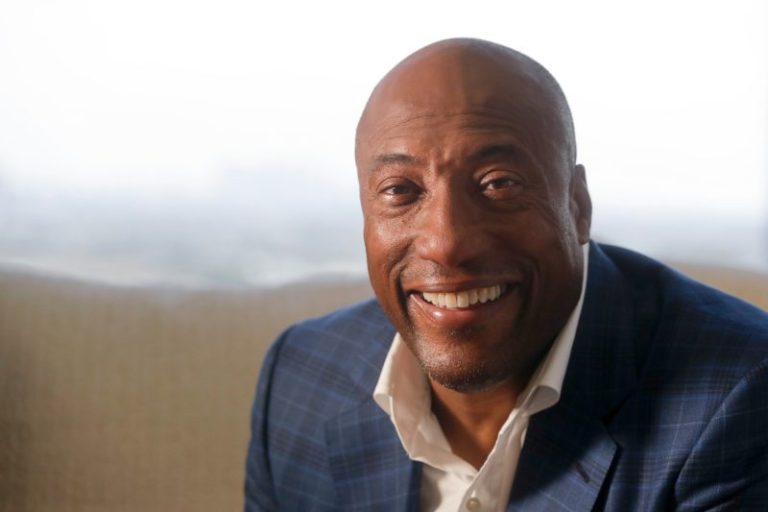
Byron Allen is putting his broadcast TV stations up for sale.

Allen Media Group said on Monday it has retained investment bank Moelis & Co. to sell its group of 28 owned and operated broadcast TV stations, which are affiliated with ABC, NBC, CBS and Fox in 21 markets across the U.S.

In a news release, Allen said the company has invested more than $1 billion into acquiring the stations over the past six years and after receiving “numerous inquiries and written offers” for most of the stations, has decided to explore a sale.

The Allen Media Group stations join others that have recently hit the sale block. Last year, CNBC reported that Sinclair was exploring the sale of more than 30% of its stations. Apollo Global Management is also reportedly exploring a sale of its Cox Media Group portfolio of TV and radio stations.

Allen Media Group said a sale of the stations would significantly reduce its debt load. Earlier this year, the company refinanced a $100 million debt facility. While S&P Global Ratings said it expected the company to maintain sufficient liquidity over the next 12 months, it noted that Allen Media Group still maintained a junk rating and faced future debt risks.

Last year, CNBC reported that Allen Media Group had been consistently late in making payments to its network owners, in some cases as much as 90 days past due, with the payments totaling tens of millions of dollars throughout the year. The reason for the lateness had been unclear, and representatives for Allen Media Group declined to address the details of CNBC’s reporting.

The stations have also reportedly undergone layoffs.

Allen, a former comedian, founded Entertainment Studios, now known as Allen Media Group, in the early 1990s. He later formed Allen Media Group Broadcasting in 2019 and has built up his profile and business ever since with a string of smaller deals.

He has also become known for expressing interest in buying various media assets to bulk up his media empire. In recent years, he has made a $30 billion bid for Paramount Global when it was up for sale in 2024, as well as a $10 billion offer for ABC and other Disney networks, and he reportedly offered $3.5 billion for Paramount’s BET Media Group.

Disclosure: Comcast’s NBCUniversal is the parent company of CNBC and broadcast network NBC.

This post appeared first on NBC NEWS

Ioneer Ltd (ASX: INR, Nasdaq: IONR) (Ioneer) is pleased to announce a 308% upgrade to the Ore Reserve estimate for its 100%-owned Rhyolite Ridge Lithium-Boron Project (‘Rhyolite Ridge’ or the ‘Project’) in Nevada, USA, alongside updated Project economics.

  • Rhyolite Ridge Ore Reserve more than quadrupled from 60 million tonnes in 2020 to 247 million tonnes, delivering a mine life of 95 years
  • Ore Reserve now contains a total of 1.92 Mt of lithium carbonate equivalent and 7.68 Mt of boric acid equivalent
  • Underpinning plans for a large, long-life, low-cost expandable operation, producing lithium carbonate, boric acid and then battery-grade lithium hydroxide
  • Stable co-product – boric acid accounts for an average 25% of annual revenue in the first 25 years; helping ensure positive EBITDA at low lithium prices and EBITDA margin of 65.7% based on average production over first 25 years
  • All-in sustaining cash cost of US$5,745 per metric tonne lithium carbonate equivalent places the Rhyolite Ridge Project in the bottom of the global lithium cost curve
  • Compelling Project economics with an after-tax NPV of US$1.367 billion, and an unlevered, after-tax internal rate of return (IRR) of 14.5%

The Ore Reserve has increased by 186.6 million tonnes (Mt) and approximately 48% of the Mineral Resource has been converted into Reserve, now estimated at:

  • 246.6 Mt at 1,464 ppm lithium and 5,444 ppm boron
  • Containing 1.92 Mt of Lithium Carbonate Equivalent (LCE) and 7.68 Mt of Boric Acid Equivalent (BAE)

“Today’s updated Reserve and Mine Plan reinforces the importance of Rhyolite Ridge’s remarkable mineralogy. Our Ore Reserve estimate of 247 Mt containing a total of 1.92 Mt LCE and 7.68 Mt BAE make it the largest lithium-boron Reserve in the world,” said Bernard Rowe, Managing Director, Ioneer. “It allows Ioneer to match prevailing market conditions and blend or prioritise ore to produce a valuable boric acid co- product, whose market is uncorrelated with the Project’s primary lithium product. No other lithium project offers this level of flexibility and economic advantage. In periods of low cycle lithium pricing, like today, we plan to prioritize the high-boron ore production to optimize the relative proportion of total revenue derived from boric acid.”

By prioritising High-Boron (Hi-B) ore in the first 25 years of production, the Project is poised to produce an average of ~19,200 tonnes per annum (tpa) of LCE, and 116,400 tpa of boric acid (see Table 1).

The updated Ore Reserve estimate, 95-year mine plan for stage one operations, and Project economics reaffirms Rhyolite Ridge as a highly attractive global Project to produce lithium carbonate, lithium hydroxide and boric acid. The updated findings position Ioneer, on an LCE basis, in the lowest cost quartile for lithium production globally with an estimated all-in sustaining cash cost to produce battery grade lithium hydroxide of US$5,745 and a cash cost of C1 $3,858 per tonne net of expected boric acid revenue in the first 25 years.

The Project has a stable overall operating cost structure to produce lithium carbonate and battery grade lithium hydroxide due to the scale and reliability of its boric acid credit. Boron remains one of the most stable natural resource commodities over many decades.

Ioneer has refined Project plans over the past four years and updates now include an Association for the Advancement of Cost Engineering (AACE) Class 2 capital cost estimate (-10%, +15%) with approximately 70% of the Project’s engineering complete. As a result of this and other engineering work including RAM analysis and detailed engineering design, Ioneer has adopted a more conservative approach to plant availability, equipment downtime and maintenance strategies. While this approach reduces bottom line economics, the Company believes it is appropriate for a Project of this type and scale.

The Company now estimates total capital expenditure to complete the Project will be US$1,667.9 million, including a 10% contingency.

Click here for the full ASX Release

This post appeared first on investingnews.com