Author

admin

Browsing

The Gaza Humanitarian Foundation’s (GHF) new chairman is ignoring critics and keeping his focus on what he calls the group’s ‘singular mission’ of making sure the people of Gaza have food.

‘Our mission has nothing to do with Hamas. It has nothing to do with Israel. It has everything to do with making sure that hungry Gazans get food. That is our singular mission. No other mission,’ Rev. Johnnie Moore, GHF’s executive chairman, told Fox News Digital.

Moore took the helm June 3, just a few days after the Israeli- and U.S.-backed aid group began its distribution operations.

Even before GHF began distributing aid, it faced criticism in the weeks leading up to its launch. The United Nations came out strongly against the group. U.N. Under-Secretary-General for Humanitarian Affairs and Emergency Relief Coordinator Tom Fletcher was a vocal critic, claiming the U.N. already had the infrastructure and ability to distribute aid.

Moore, however, believes GHF is ‘trying to solve a problem that the U.N. hasn’t been able to solve,’ namely, the issue of Hamas stealing aid. Rather than admonish critics, Moore is urging them to join GHF’s efforts to get food to people on the ground in Gaza.

The GHF chief also noted that, despite what critics have said, Gazans have been ‘incredibly grateful’ to receive the support. Not only have the beneficiaries been thanking the U.S., they’ve been thanking President Donald Trump. Moore attributes this to a promise the commander in chief made in the Oval Office.

‘They’re thanking President Trump specifically because a few weeks ago, in the Oval Office, in one of the many, many press briefings that President Trump does, he made a passing comment,’ Moore said.

‘And the comment related to how Hamas was treating the Gazan people very badly when it came to humanitarian aid. And he made a promise that the United States would do something about it. And the people in Gaza are attributing our free distribution of food as a direct response to the promise of the president of the United States.’

Israel and the U.S. have repeatedly said that GHF is the best mechanism for distributing aid to Gazans and ensuring that Hamas does not get anything. Moore told Fox News Digital humanitarian aid officials have faced a ‘false choice’ for years between Hamas and the people of Gaza.

‘I think for many, many years, the aid community thought that the cost of giving aid to the people of Gaza is that you had to lose a certain amount of that aid to all of these other nefarious purposes. We’re just showing that that’s a false choice. That doesn’t have to be the case. We can actually give aid without facing these dilemmas,’ Moore said.

‘Since the Israeli authorities allowed the U.N. to resume bringing limited aid into Gaza after nearly 80 days of a total blockade of any supplies, there have been understandable instances of trucks carrying food being offloaded by hungry civilians,’ Eri Kaneko, spokesperson for the U.N. Office for the Coordination of Humanitarian Affairs, told Fox News Digital.

‘In some cases, we have also seen unacceptable looting by armed, criminal gangs, which posed tremendous risk to our drivers’ safety. To meet humanitarian needs in Gaza and help reduce looting, far more essential supplies should be allowed into Gaza through multiple crossings and routes.’

In late May, Israeli U.N. Ambassador Danny Danon revealed the international institution was using ‘mafia-like’ tactics against NGOs that were open to working with GHF. The U.N. removed several NGOs from a shared aid database, which acts as a ‘central system for tracking aid deliveries into Gaza,’ according to Danon.

The following week, after Danon exposed the U.N.’s actions, the U.S. vetoed a U.N. Security Council resolution calling for a ceasefire in Gaza. The resolution also addressed humanitarian aid, though Danon said it would have undermined, rather than advanced, such efforts.

Just minutes before vetoing the resolution, U.S. Chargé d’Affaires Dorothy Shea urged the U.N. to support GHF ‘to help it safely deliver aid without being diverted by Hamas. The GHF has emphasized it will deliver aid consistent with the humanitarian principles of humanity, neutrality, impartiality and independence.’
This post appeared first on FOX NEWS

President Donald Trump said Wednesday he was willing to extend the deadline for countries to reach a trade deal with the United States, but he doesn’t think it will be necessary.

At the same time, he also indicated that in one to two weeks his administration would be sending out letters telling countries ‘what the deal is.’ 

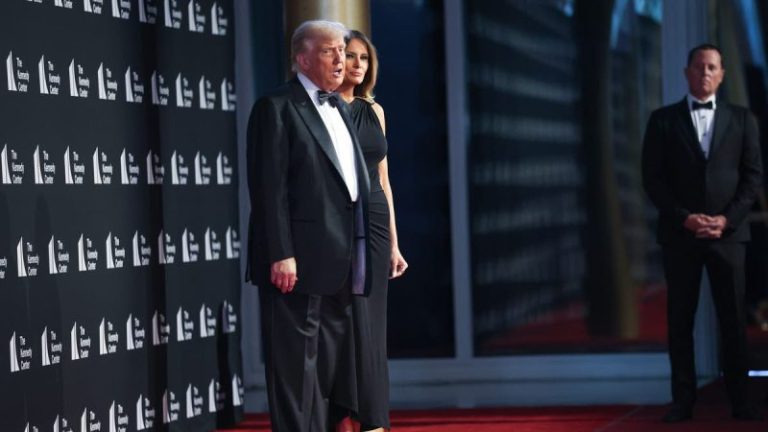
Trump made the remarks ahead of a performance of ‘Les Misérables’ that he attended at the Kennedy Center in Washington with the first lady.

‘I would,’ Trump said when asked if he would be willing to extend the July 8 deadline for countries to negotiate a trade deal or else face steep tariffs. ‘But I don’t think we’re going to have that necessity,’ the president added, telling reporters ‘we’re rocking in terms of deals’ right now.

Shortly after announcing sweeping tariff policies on April 2 for virtually every U.S. trading partner, the Trump administration chose to institute a 90-day pause to give countries a chance to make a deal with the United States. 

Trump noted during the gaggle with reporters ahead of Wednesday’s Kennedy Center performance that the United States remains in talks with about 15 countries with whom it is still trying to cement a deal. But the president said that he intends to send letters to these partners setting unilateral tariff rates if a deal is not reached.   

‘We’re dealing with Japan. We’re dealing with South Korea. We’re dealing with a lot of them. We’re dealing with about 15 countries. But as you know, we have about 150-plus, and you can’t [make a deal with all of them]. So we’re going to be sending letters out in about a week and a half, two weeks, to countries and telling them what the deal is.’

‘At a certain point, we’re just going to send letters out … saying this is the deal, you can take it or leave it,’ Trump added.

Highly anticipated trade talks with China held in London this week led to a preliminary agreement between the world’s two biggest economic powers, but the ‘framework’ is still pending final approval from Chinese President Xi Jinping and Trump.

‘We made a great deal with China. We’re very happy with it,’ Trump told reporters at the Kennedy Center on Wednesday evening. ‘We have everything we need, and we’re going to do very well with it. And hopefully they are, too.’

This post appeared first on FOX NEWS

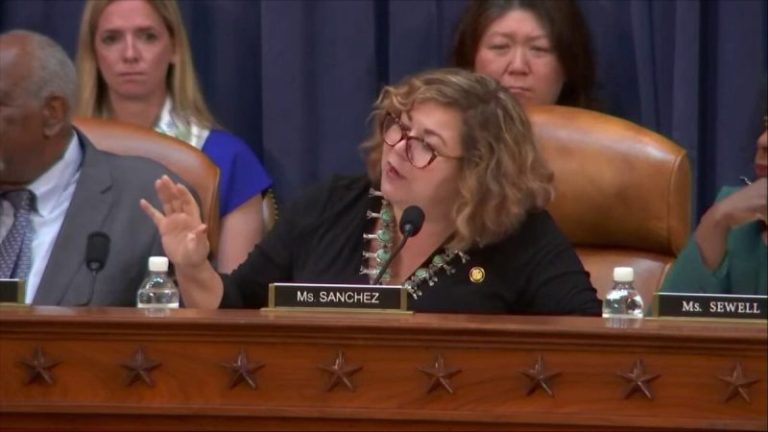
A House Ways and Means Committee hearing took an unexpected turn Wednesday when Rep. Linda Sanchez (D-CA) accused Treasury Secretary Scott Bessent of interrupting her because of her gender—prompting audible groans from the room.

The exchange occurred during a tense five-minute questioning session, where Sanchez challenged Bessent on the impact of tariffs enacted under President Trump’s administration.

‘Prices are rising on many everyday goods,’ Sanchez said, citing increases in clothing, shoes, canned food, toys, and household tools. She added, ‘On average, Trump’s tariffs are estimated to cost households $3,000 more for the same goods than they would have last year,’ though she did not cite the source of the figure when pressed.

When Bessent attempted to interject, Sanchez quickly cut him off: ‘Please don’t interrupt me… I know I’m a woman, but please try to limit yourself to answering my questions.’

That remark prompted groans from the hearing room, with one attendee audibly reacting, ‘Oh, come on.’ Sanchez responded: ‘No, I’m sorry, but we get talked over all the time, and I don’t want that to happen at this hearing.’

Bessent, who is openly gay, did not address the accusation and instead focused on defending the administration’s trade policies. 

When Sanchez challenged him on pricing impacts and China’s trade behavior, Bessent responded, ‘That’s incorrect,’ and said, ‘They met their agreements under President Trump in 2020, and President Biden did not enforce them.’

Sanchez repeatedly claimed that American consumers are paying more due to tariffs and described recent negotiations with China as rushed and lacking transparency. ‘A poorly negotiated trade deal with China is probably not worth the paper that it is written on,’ she said. ‘I was alarmed to hear this morning that Trump said the U.S.–China deal was done after just two days of talks in London.’

Bessent defended the agreement as an initial step. ‘The deal struck was for a specific goal, and it will be a much longer process,’ he said, adding, ‘China has proven an unreliable partner.’

The clash between Sanchez and Bessent was repeatedly moderated by Chairman Adrian Smith (R-NE), who reminded members of time limits and decorum throughout the hearing.

This post appeared first on FOX NEWS

President Donald Trump’s $9.4 billion spending cuts package survived a key hurdle on Wednesday afternoon, setting the measure up for a final House-wide vote later this week.

Trump’s proposal, which was introduced as legislation by House Majority Leader Steve Scalise, R-La., would cut $8.3 billion from the U.S. Agency for International Development (USAID), and just over $1 billion from the Corporation for Public Broadcasting.

The Corporation for Public Broadcasting distributes federal funding to NPR and PBS.

The House of Representatives made a procedural motion known as a ‘rule vote,’ which passed mostly along party lines. 

The rule passing now allows for debate on the $9.4 billion spending cut measure, followed by a final House-wide vote.

But it’s not atypical for House leaders to include unrelated measures in rule votes, as is the case with the spending cuts package – House GOP leaders included a provision with minor changes to Trump’s ‘one big, beautiful bill’ to account for the Senate needing to amend the bill.

That latter piece of legislation, a vast tax and immigration bill, is moving through the budget reconciliation process.

By dropping the Senate’s threshold for advancement from 60 votes to 51, it allows the party in power to skirt the minority – in this case, Democrats – on vast pieces of legislation, provided they adhere to a specific set of budgetary rules.

House GOP leaders said they needed to make the recent changes to the bill to better adhere to the Senate’s ‘Byrd Bath,’ when the Senate parliamentarian reviews the bill and removes anything not adhering to reconciliation guidelines.

Whereas that deals with the government’s mandatory spending processes that are more difficult to amend, the $9.4 billion spending cuts package tackles discretionary spending that Congress controls every year.

It’s called a ‘rescissions package,’ which is a formal proposal by the White House to claw back federal funds already allocated for the current fiscal year.

Like reconciliation, the mechanism allows for a 51-vote majority in the Senate rather than 60. Congress has 45 days to consider it, or it is deemed rejected.

Republican leaders have held up this rescissions package as the first step to codifying the billions of dollars of government waste identified by Elon Musk’s Department of Government Efficiency (DOGE).

Trump allies have also made clear they view this first package as a test of what kind of cuts congressional Republicans can stomach.

And while the rule vote was expected to pass, the bill could have trouble ahead of its expected Thursday afternoon vote.

Rep. Mark Amodei, R-Nev., pointed out in a bipartisan statement that the media funding represents less than 0.01% of the federal budget and said taking that money away would ‘dismantle a trusted source of information for millions of Americans.’

Rep. Don Bacon, R-Neb., told reporters on Tuesday that he got assurances that USAID cuts would exclude critical medical funding.

‘I feel better than what I was hearing last week, that was gonna be a total cut,’ he said, without revealing whether he would support the bill.

This post appeared first on FOX NEWS

Nintendo sold more than 3.5 million units of its flagship Switch 2 gaming system in the four days following its launch, with online stores of major U.S. retailers putting up “out of stock” signs.

The record-breaking start for the company’s first new console in eight years, puts Nintendo on the path to realizing its aim of selling 15 million units of the Switch 2 console in the fiscal year ending March 2026.

However, analysts continue to believe that those expectations are modest, and forecast the strong initial demand to sustain.

“The market expected a record from Nintendo, and as it turns out, Nintendo delivered,” Serkan Toto, CEO and founder of gaming industry consultancy Kantan Games, told CNBC.

“All signals prior to launch pointed to significant demand, and I believe we will see further records broken over the next weeks or months,” he added.

Toto has maintains that the Switch 2 will sell over 20 million units in its first 12 months. David Gibson, senior research analyst at MST Financial told CNBC that he expects 20 million sales for the year ending March 2026.

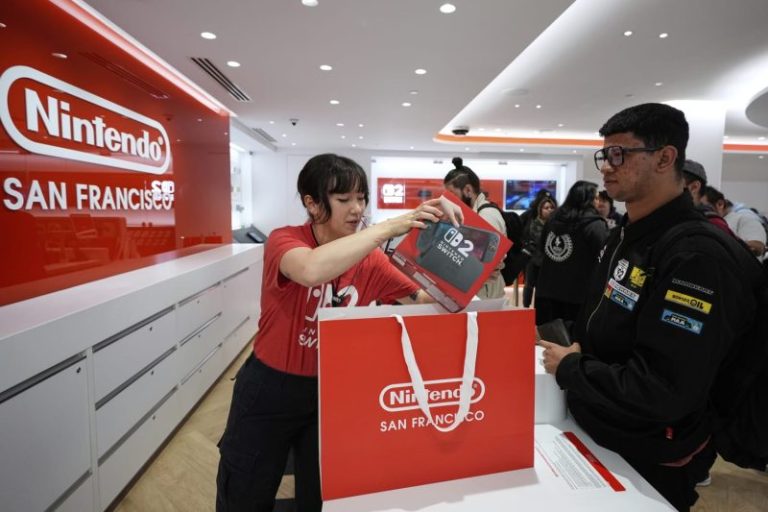
The Switch 2, which was released on June 5, has been met with much fanfare, with people lining up for hours ahead of midnight releases at Nintendo stores.

“Fans around the world are showing their enthusiasm for Nintendo Switch 2 as an upgraded way to play at home and on the go,” Nintendo of America President and Chief Operating Officer Doug Bowser said in a statement, adding the company was thankful for the response.

Tokyo-listed shares of Nintendo, which have gained nearly 30% so far this year, were down 3.5% on Wednesday, LSEG data showed. The company has seen its shares rise nearly fivefold since the original Switch debuted in early March 2017.

It remains to be seen if the Switch 2 can recapture the magic of its predecessor, which had set the bar with 15 million unit sales in its first year. It went on to sell more than 152 million units to become the second-highest selling Nintendo device ever, behind the Nintendo DS.

The record initial sales of the Switch are in line with the strong demand analysts had predicted. However, the rush has put into question Nintendo’s ability to meet demand.

Retailers including Walmart, GameStop, Target and Best Buy were out of stock of the consoles, their online stores showed Wednesday.

In April, Nintendo’s Bowser told CNBC that the company had been working with “retail partners to ensure there’s ample supply for not only the launch weekend, but well beyond.”

However, Nintendo President Shuntaro Furukawa stated the same month that 2.2 million people in Japan had entered the lottery to purchase the Switch 2 on launch day, exceeding expectations and what the company had initially planned to deliver to stores.

Kantan Games’ Toto said shortages in Japan were expected to persist, but would be less impactful elsewhere.

“Except for Japan where demand for Switch 2 is extraordinarily high, it looks like fans who really want the console and invest time in trying to secure one actually can get one,” he said. “It might take a while, but as far as can be monitored, supply seems to be more robust than around the launch of the original Switch in 2017.”

President Donald Trump’s “reciprocal tariffs” on most countries around the world also present headwinds for the Switch 2.

In April, the company announced that it would delay preorders of the Switch 2 in the U.S. while it considers the impact of tariffs.

The Switch 2 retails for $449 in the U.S., which makes it Nintendo’s priciest console to date.

Nintendo’s Bowser said in April the company was going to “monitor where tariffs are going” before making any further decisions on price hikes.

MST Financial’s Gibson said that a resolution to Trump’s tariffs and lower duty rates could see the Switch 2 prices drop in the U.S.

The Switch 2 builds on the success of the original Switch, featuring a larger screen and improved performance. The system also introduces the new GameChat2 feature, which allows players to voice or video chat with friends online and share game screens.

This post appeared first on NBC NEWS

Nintendo sold more than 3.5 million units of its flagship Switch 2 gaming system in the four days following its launch, with online stores of major U.S. retailers putting up “out of stock” signs.

The record-breaking start for the company’s first new console in eight years, puts Nintendo on the path to realizing its aim of selling 15 million units of the Switch 2 console in the fiscal year ending March 2026.

However, analysts continue to believe that those expectations are modest, and forecast the strong initial demand to sustain.

“The market expected a record from Nintendo, and as it turns out, Nintendo delivered,” Serkan Toto, CEO and founder of gaming industry consultancy Kantan Games, told CNBC.

“All signals prior to launch pointed to significant demand, and I believe we will see further records broken over the next weeks or months,” he added.

Toto has maintains that the Switch 2 will sell over 20 million units in its first 12 months. David Gibson, senior research analyst at MST Financial told CNBC that he expects 20 million sales for the year ending March 2026.

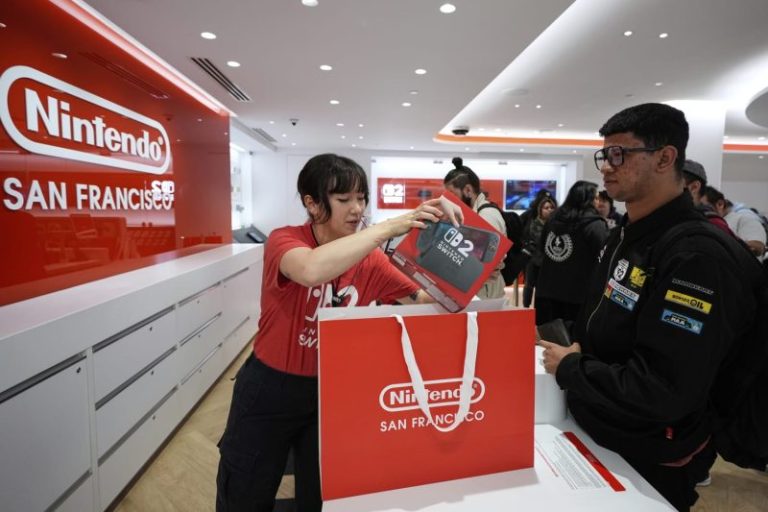
The Switch 2, which was released on June 5, has been met with much fanfare, with people lining up for hours ahead of midnight releases at Nintendo stores.

“Fans around the world are showing their enthusiasm for Nintendo Switch 2 as an upgraded way to play at home and on the go,” Nintendo of America President and Chief Operating Officer Doug Bowser said in a statement, adding the company was thankful for the response.

Tokyo-listed shares of Nintendo, which have gained nearly 30% so far this year, were down 3.5% on Wednesday, LSEG data showed. The company has seen its shares rise nearly fivefold since the original Switch debuted in early March 2017.

It remains to be seen if the Switch 2 can recapture the magic of its predecessor, which had set the bar with 15 million unit sales in its first year. It went on to sell more than 152 million units to become the second-highest selling Nintendo device ever, behind the Nintendo DS.

The record initial sales of the Switch are in line with the strong demand analysts had predicted. However, the rush has put into question Nintendo’s ability to meet demand.

Retailers including Walmart, GameStop, Target and Best Buy were out of stock of the consoles, their online stores showed Wednesday.

In April, Nintendo’s Bowser told CNBC that the company had been working with “retail partners to ensure there’s ample supply for not only the launch weekend, but well beyond.”

However, Nintendo President Shuntaro Furukawa stated the same month that 2.2 million people in Japan had entered the lottery to purchase the Switch 2 on launch day, exceeding expectations and what the company had initially planned to deliver to stores.

Kantan Games’ Toto said shortages in Japan were expected to persist, but would be less impactful elsewhere.

“Except for Japan where demand for Switch 2 is extraordinarily high, it looks like fans who really want the console and invest time in trying to secure one actually can get one,” he said. “It might take a while, but as far as can be monitored, supply seems to be more robust than around the launch of the original Switch in 2017.”

President Donald Trump’s “reciprocal tariffs” on most countries around the world also present headwinds for the Switch 2.

In April, the company announced that it would delay preorders of the Switch 2 in the U.S. while it considers the impact of tariffs.

The Switch 2 retails for $449 in the U.S., which makes it Nintendo’s priciest console to date.

Nintendo’s Bowser said in April the company was going to “monitor where tariffs are going” before making any further decisions on price hikes.

MST Financial’s Gibson said that a resolution to Trump’s tariffs and lower duty rates could see the Switch 2 prices drop in the U.S.

The Switch 2 builds on the success of the original Switch, featuring a larger screen and improved performance. The system also introduces the new GameChat2 feature, which allows players to voice or video chat with friends online and share game screens.

This post appeared first on NBC NEWS

The U.S. stock market has been painting a subtle picture recently. While the broader indexes, such as the S&P 500 ($SPX), Nasdaq Composite ($COMPQ), and Dow Jones Industrial Average ($INDU), are indeed grinding higher, the daily movements have been relatively subdued. This is a noticeable shift from the more dynamic action we observed in April.

Investors may be waiting for Wednesday’s May Consumer Price Index (CPI), the results of the U.S.-China trade talks, or the next market-moving news headline. What’s encouraging is the underlying strength in market breadth. We’re seeing a healthy number of one-month new highs across most broader indexes (with the exception of Dow Utilities), Bullish Percent Indexes signaling bullish tendencies, and investors gravitating toward offensive sectors vs. defensive ones.

On the surface, everything points to a continuation of the bullish trend. However, as astute investors, our primary objective is to protect our capital. This means we mus always consider the possibility of a downside correction and be prepared to adapt.

This is where the StockCharts Market Summary page becomes an indispensable tool for your market analysis.

Let’s dive into how the Market Summary page can help you gain a unique perspective on market dynamics.

Beyond the Headlines: Uncovering Global Trends

One of the powerful features of the Market Summary page is its ability to provide a global snapshot. If you navigate to the Global Snapshot tab in the Equities panel and sort the “+/- SMA(200)” column in descending order, you’ll notice something fascinating: the Eurozone occupies the top spot while the Total US sits at the bottom (see image below).

FIGURE 1. A GLOBAL SNAPSHOT. The Eurozone is trading well above its 200-day simple moving average (SMA) while the Total US is only 4.37% above its 200-day SMA.Image source: StockCharts.com. For educational purposes.

This insightful view suggests that global markets have been trending well above their 200-day simple moving average than the US market. This insight is worth a deeper dive.

Consider the daily charts of the iShares MSCI Eurozone ETF (EZU) and Vanguard Total Stock Market ETF (VTI) which serve as proxies for these regions.

Since April 8, EZU has been on a steep ascent, demonstrating upward momentum. This price action is similar to the S&P 500, but if you consider the relative performance of the SPDR S&P 500 (SPY) vs. EZU, SPY is underperforming EZU (see bottom panel in the chart below).

FIGURE 2. DAILY CHART OF EZU. The ETF is exhibiting a steep ascent and is outperforming SPY. Will the trend become less steep or continue its steep uptrend? Be sure to monitor the RSI.Chart source: StockCharts.com. For educational purposes.

The Relative Strength Index (RSI) is showing lackluster momentum. Generally, a steep trend loses its mojo after a while and reverts to a more normal trend.

Meanwhile, though VTI has also moved higher, its percentage rise was slightly less than EZU. Also, as EZU hit an all-time high, VTI is still trying to reach that milestone (see chart below).

FIGURE 3. DAILY CHART OF VTI. The ETF is also exhibiting a steep ascent but is trying hard to reach its all-time high.Chart source: StockCharts.com. For educational purposes.

The RSI is showing lackluster momentum, similar to that of EZU, which could mean the steep ascent may be losing its steam.

Identifying Global Opportunities

It will be interesting to see how the global financial market evolves from here. Who will be the first to revert to a more normal sloping trend? Will EZU continue its outperformance, or will VTI take the lead?

And let’s not forget the global ETFs positioned in the middle of the pack. Regions like Asia (ex Japan), Latin America, or Emerging Markets could take the lead. For example, the Vanguard FTSE Emerging Markets ETF (VWO) has exhibited a more classic uptrend. Over the past year, it has outperformed SPY by around 127% (see chart below). The RSI is also showing greater momentum than the other charts we analyzed.

FIGURE 4. DAILY CHART OF VWO. This ETF is exhibiting a more normal uptrend and, over the last year, has outperformed SPY by a whopping 127%. RSI is also rising, suggesting there could be momentum here.Chart source: StockCharts.com. For educational purposes.

Empowering Your Stock Market Analysis

To stay ahead of market trends and uncover hidden gems, investors and traders should regularly monitor the charts in the Market Summary ChartLists. If you haven’t already, download the StockCharts Market Summary ChartPack (it’s free for subscribers).

Scrolling through the pre-built ChartLists will help you to:

  • Stay on top of the market’s price action across sectors, industries, and global regions.
  • Identify market internals, such as breadth and sentiment.
  • Uncover some hidden gems that could translate into favorable investment opportunities.

Disclaimer: This blog is for educational purposes only and should not be construed as financial advice. The ideas and strategies should never be used without first assessing your own personal and financial situation, or without consulting a financial professional.

Unlock the power of divergence analysis! Join Dave as he breaks down what a bearish momentum divergence is and why it matters. Throughout this video, Dave illustrates how to confirm (or invalidate) the signal on the S&P500, Nasdaq100, equal‑weighted indexes, semiconductors, and even defensive names like AT&T (T).

This video originally premiered on June 10, 2025. Watch on StockCharts’ dedicated David Keller page!

Previously recorded videos from Dave are available at this link.

Micron Technology, Inc. (MU) appears poised for an explosive breakout, both technically and fundamentally. While it remains to be seen whether this materializes by its Q3 earnings report on June 25, the setup suggests a high-probability move is about to happen, and soon.

The fundamental case for a breakout is backed by MU’s deep involvement in the AI memory boom. Its high-bandwidth memory (HBM) is powering Nvidia’s next-gen Blackwell chips, demand is outstripping supply, and prices are rising. With sold-out capacity for 2025 and earnings projected to surge 437% this year, MU’s Q3 report could be the next major catalyst.

In light of these forecasts, let’s put things into context and see where MU has stood over the past year in its comparative performance with VanEck Vectors Semiconductor ETF (SMH), our semiconductor industry proxy, Technology Select Sector SPDR Fund (XLK), for a sector comparison, and Invesco QQQ Trust (QQQ), a stand-in for the Nasdaq 100 Index ($NDX).

MU vs. SMH, XLK, and QQQ: Tracking Relative Performance

Despite its recent rally, MU remains a relative laggard. Whether it breaks out will depend on how effectively it positions itself amid shifting industry dynamics.

FIGURE 1. PERFCHARTS OF MU RELATIVE TO ITS INDUSTRY, SECTOR, AND THE NASDAQ 100.  MU has been the big laggard over the past year. You need to take a closer and more detailed look to gain more insight into MU’s current upward momentum.

While analysts are optimistic about its role in the evolving AI-driven landscape, that thesis will be put to the test when the company reports earnings in the coming weeks.

A Shift in Momentum? What the MarketCarpets Are Revealing

While MU lags its industry peers, it might help you to get a more granular view of performance within the semiconductor industry. This is where the StockCharts MarketCarpets Semiconductors summary can be helpful.

FIGURE 2. MARKETCARPETS – SEMICONDUCTORS. In contrast to its peers, a 5-day view shows that MU is the strongest performer.

Though MU has trailed its industry peers over the past year, the 5-day MarketCarpets view reveals a shift in momentum. With a 13.32% gain over the past week, MU is rapidly narrowing the gap and beginning to outpace its peers.

Weekly Chart Levels: Resistance, Support, and Entry Zones

Typically, you’d drill down to a daily chart for more precision, but, with MU, the weekly chart alone highlights the key levels worth watching.

FIGURE 3. WEEKLY CHART OF MU. The weekly chart shows all key levels, from entry to profit targets and stop loss levels.

The weekly chart view clearly outlines support, resistance, and potential entry and exit points. Listed below are the key levels and scenarios to watch.

MU Price Scenarios: Breakout or Breakdown?

  • Watch the rectangle formation: MU is approaching a breakout above key resistance at $115, just ahead of its June 25 earnings report. A decisive move above the rectangle could trigger long entries from bullish traders.
  • Upside scenario: A beat on earnings and strong forward guidance could fuel continued upside—unless derailed by broader geopolitical risks.
  • Downside scenario: If the breakout fails, look for support near the bottom of the formation. The Volume-by-Price indicator shows a heavy concentration of trading at that level, reinforcing its significance as a support zone. However, a breakdown there may cast doubt on the current uptrend thesis.
  • Profit-taking zone: If MU continues its bullish trajectory, expect resistance and likely profit-taking between $127 and $137, an area marked by multiple highs and consolidation levels throughout 2024.

Why $127 to $137, when the weekly chart shows $130 to $135? Here’s where zooming in helps.

FIGURE 4. ZOOMING N TO A DAILY CHART OF MU. This shows, in much greater detail, the potential resistance levels above.

The top and bottom of this consolidation provide a clearer view of potential resistance, which may also serve as profit-taking levels for short-term traders, so keep an eye on this.

  • Last thing – watch the peak: A second round of resistance and potential profit-taking may occur near $155, a key level that previously marked the stock’s all-time high.

Momentum-wise—and note we’re looking at a longer-term time frame—the Relative Strength Index (RSI) suggests there’s still plenty of room to run before MU enters overbought territory. Volume-wise, however, you will want to see the Chaikin Money Flow (CMF) levels increase once the breakout occurs, confirming that buying pressure is supporting the move.

Quick Take: The Setup at a Glance

In a nutshell: Watch for a breakout above $115 ahead of MU’s June 25 earnings by setting an alert using the Technical Alert Workbench. Note that entering a position ahead of earnings is always a risky prospect. If you are planning to take any action at all, make sure it’s in alignment with your own personal trading strategy and criteria.

A beat on earnings and strong guidance could fuel further upside, but watch out! If Wall Street decides to “sell the news,” due to any detail that dampens investor or analyst sentiment, a sharp decline could follow. If MU moves strongly to the upside, look for confirmation via rising CMF levels, which would signal real buying pressure.

If the breakout fails, key support lies near the bottom of the current trading range. On the upside, expect potential resistance and profit-taking between $127–$137, with a secondary ceiling near $155. The RSI still shows room for further gains before MU becomes overbought.

Final Thoughts: Will MU Deliver on the AI Hype?

MU may be lagging now, but, as the MarketCarpets data shows, momentum is quietly shifting, and the shift may accelerate as MU approaches both a potential breakout level and its earnings date. With a critical breakout level in sight and earnings just days away, consider preparing for a potential surge in volatility, which could move the stock in either direction. If MU does break to the upside, whether it can maintain its momentum post-breakout will depend on volume, CMF strength, and how convincingly MU rides the AI memory wave.


Disclaimer: This blog is for educational purposes only and should not be construed as financial advice. The ideas and strategies should never be used without first assessing your own personal and financial situation, or without consulting a financial professional.

Red Mountain Mining Limited (“RMX” or the “Company”) is pleased to report that Highly Anomalous Antimony soil assays have been confirmed at Oaky Creek, part of RMX’s 100% owned Armidale Antimony-Gold Project. A newly defined south-east trend away from the Oaky Creek North pits has been revealed, additionally a new area near Oaky Creek South has opened where up to 333pm Sb in soil has been discovered. The distribution of Antimony in the soils suggests a network across Oaky Creek, of multiple veins existing over 2.3km along the Namoi Fault and up to 400m from the fault. The supporting rock chip assays are pending and expected to be received by the end of June.

HIGHLIGHTS

  • Highly Anomalous Antimony-in-Soil results reveal new target zones beyond known source areas at both Oaky Creek North and Oaky Creek South
  • Two New Highly Anomalous areas defined, with assays up to 333ppm Sb in soil
  • New Northern Antimony area is potentially a strike extension of Oaky Creek North, ~1km south-east away from the historic pits
  • A newly defined Antimony soil trend north of Oaky Creek South also confirms a previously undiscovered trend
  • High Gold-in-soil assay result lies in the New Northern Antimony area
  • Rock Chip assay results are anticipated to be received by the end of June

Red Mountain Widens Antimony Mineralisation at Oaky Creek

Red Mountain is pleased to report that it has discovered a new anomalous antimony target zone, which includes a spot high of 333ppm Sb and located 400m to the north of the Oaky Creek South pits. This new area represents a possible ENE strike similar to the trend at Oaky Creek South.

At Oaky Creek North distribution of antimony suggests a south easterly extension of around 1km with a strong response towards the end of the extension. The area in between is cropped and cultivation may have subdued the surface geochemical response. Local reports indicate historical pits were infilled, and displaced rock piles contained visible stibnite, identified by the onsite geologist (ASX Announcement 30 May 2025).

Antimony-in-soil anomalies also validate the mineralisation at both the historic Oaky Creek North and Oaky Creek South pits, where coarse stibnite was previously extracted by hand from the shafts/pits (Figure 1).

Red Mountain analysed the soils for gold in the Aqua regia multielement suite, although not as sensitive as a Fire Assay technique, encouragingly gold was reported in several areas (refer to Figure 2 for the Gold Heat map). The high gold-in-soil sample lies on strike to the north of the 99ppm Sb soil sample on the Oaky Creek North trend. At Oaky Creek South, gold-in-soil was located just west of the old workings.

Click here for the full ASX Release

This post appeared first on investingnews.com