Author

admin

Browsing

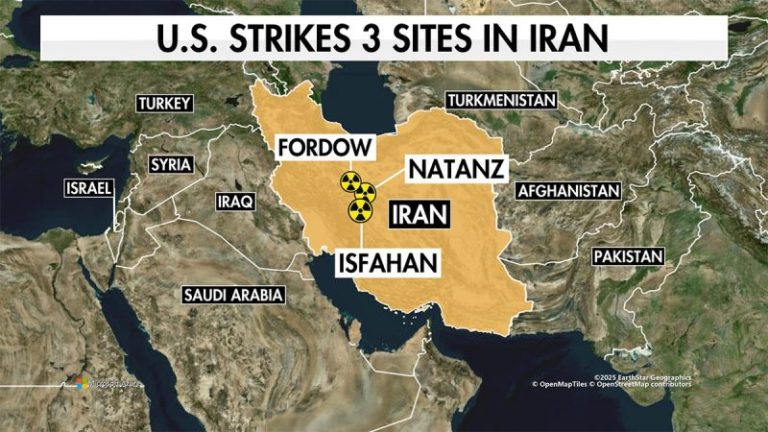
As the dust still settles following the U.S. attack on Iran’s nuclear sites, analysts say the next steps will determine whether the Islamic Republic’s atomic ambitions have truly been crippled. 

Commenting on the mission, President Donald Trump wrote on Truth Social that: ‘The damage to the Nuclear sites in Iran is said to be ‘monumental.’ The hits were hard and accurate. Great skill was shown by our military. Thank you!’

Also on Sunday, Chairman of the Joint Chiefs of Staff Gen. Dan Caine told reporters, ‘Final battle damage will take some time, but initial battle damage assessments indicate that all three sites sustained extremely severe damage and destruction.’ He added it was far too early to comment ‘on what may or may not still be there.’

A senior Israeli security source told Fox News Digital, ‘It’s still too soon to know for sure, but it appears the sites were seriously damaged — it looks excellent.’

‘History is being written,’ said Reserve Brig. Gen. Yossi Kuperwasser, head of the Jerusalem Institute for Strategy and Security and a former IDF intelligence chief. ‘This is a powerful development that significantly weakens the Iranian threat and highlights the deep cooperation between Israel and the United States. But the journey is far from over.’

According to Kuperwasser, the strikes caused heavy damage to core parts of Iran’s nuclear infrastructure. ‘But I don’t think the program is destroyed,’ he told Fox News Digital. ‘They still have enriched uranium, the ability to produce centrifuges, and scientists. We killed many, but not all. And even the bombed facilities — we don’t know for sure that nothing remains.’

Kuperwasser emphasized that while Tehran may retain some nuclear assets, a key strategic threshold has now been crossed. ‘Until now, everything was covert: sabotage, diplomacy, sanctions. But now, military action has proven far more effective. If Iran tries to restart its program, they know we — and the Americans — are prepared to strike again.’

Sima Shein, a former senior Mossad official and Iran expert at Israel’s Institute for National Security Studies (INSS), agreed that Iran’s capabilities have been degraded, but not eliminated.

‘There’s no doubt these were the three most important sites,’ Shein told Fox News Digital, referring to the U.S. strike Saturday night that hit Natanz, Isfahan, and Fordow, but claimed ‘Iran has dispersed its enriched uranium — both 60% and 20% — across various unknown locations. They’ve likely hidden advanced centrifuges as well, because production oversight hasn’t existed for years.’

She added that if a future diplomatic agreement is reached, the first condition must be ‘full disclosure and removal’ of all remaining fissile material.

Mark Dubowitz, CEO of the Foundation for Defense of Democracies (FDD), told Fox News Digital that all remaining Iranian nuclear facilities must be completely dismantled and referred to FDD expert’s plan, which outlined a strategy for the permanent dismantlement of Tehran’s nuclear weapons enterprise. 

The report calls for the destruction of all enrichment sites, the removal or seizure of enriched uranium, the dismantling of advanced centrifuges, and a permanent halt to weaponization efforts. It also demands unrestricted inspections, irreversible disarmament, and strict enforcement through snapback sanctions. FDD argues that anything less would leave Iran capable of rebuilding its nuclear program.

Amos Yadlin, a former head of Israeli military intelligence and president of the Mind Israel think tank, called the American strike a ‘game-changer.’

‘Trump’s doctrine of ‘peace through strength’ is in action,’ Yadlin said. ‘Geopolitically, this changes the entire war — and sends a message to China, Russia, and others.’

But Yadlin also believes Iran’s nuclear capabilities haven’t been wiped out completely. ‘There are two possible Iranian responses: retaliation and changing nuclear policy. Retaliation may come via terror attacks in the Gulf, or pressure through proxies like Hezbollah or the Houthis. But I think the more likely shift is in nuclear posture — perhaps withdrawing from the NPT.’

‘They’re in a dilemma,’ Shein told Fox News Digital. ‘They don’t want to drag the U.S. further into military conflict, and they can’t risk harming ties with Gulf neighbors. A military retaliation — like closing the Strait of Hormuz — would invite overwhelming force. Expelling inspectors or quitting the NPT [Non-Proliferation Treaty] may be their next moves.’

Kuperwasser added that military pressure alone may not bring lasting resolution — unless paired with either a diplomatic agreement with intrusive inspections, or a credible threat of continued strikes.

‘If there’s an agreement, it must be based on verification — not trust,’ he said. ‘Anywhere, anytime inspections. But if they refuse, we can continue striking any new facility they build.’

As Israel and the U.S. prepare for potential cycles of response and counter-response, Kuperwasser believes the Israeli public is ready.

‘These are historic times,’ he said. ‘We understand the sacrifice — and we’re ready to see it through.’

This post appeared first on FOX NEWS

Roughly three-quarters of the nation’s health insurance providers signed a series of commitments this week in an effort to improve patient care by reducing bureaucratic hurdles caused by insurance companies’ prior-authorization requirements.

Director of the Centers for Medicare and Medicaid Services, Dr. Mehmet Oz, alongside Health and Human Services Secretary, Robert F. Kennedy Jr., announced the new voluntary pledge from a cadre of insurance providers, who cover roughly 75% of the population, during a press conference Monday. The new commitments are aimed at speeding up and reducing prior-authorization processes used by insurers, a process that has been long-maligned for unnecessarily delaying patient care and other bureaucratic hurdles negatively impacting patients.   

‘The pledge is not a mandate. It’s not a bill, a rule. This is not legislated. This is a opportunity for industry to show itself,’ Oz said Monday. ‘But by the fact that three-quarters of the patients in the country are already covered by participants in this pledge, it’s a good start and the response has been overwhelming.’

Prior-authorization is a process that requires providers to obtain approval from a patient’s insurance provider before that provider can offer certain treatments or services. Essentially, the process seeks to ensure patients are getting the right solution for a particular problem.

However, according to Oz, the process has led to doctors being forced to spend enormous amounts of man-power to satisfy prior-authorization requirements from insurers. He noted during Monday’s press conference that, on average, physicians have to spend 12 hours a week dealing with these requirements, which they see about 40 of per week. 

‘It frustrates doctors. It sometimes results in care that is significantly delayed. It erodes public trust in the healthcare system. It’s something we can’t tolerate,’ Oz insisted.


The pledge has been adopted by some of the nation’s largest insurance providers, including United Healthcare, Cigna, Humana, Blue Cross & Blue Shield, Aetna and many more. While the industry-led commitments aim to improve care for patients, it could potentially eat into their profits as well if patients start seeking care more often.

The commitments from insurers cemented this week include taking active steps to implement a common standardized process for electronic prior-authorization through the development of standardized submission requirements to support faster turnaround time. The goal is for the new framework to be operational by Jan. 1, 2027.

Another part of the pledge includes a commitment from individual insurance plans to implement certain reductions in its use of medical prior-authorization by Jan. 1, 2026. On that date, if patients switch insurance providers during the course of treatment, their new plan must honor their existing prior-authorization approvals for 90-days while the patient transitions.

Transparency is also a key part of the new commitments from insurance providers. Health plans enjoined with the commitments will pledge to provide clear and easy-to-understand explanations of prior-authorization determinations, including guidance for appeals. The commitment also states that by 2027, 80% of electronic prior-authorization approvals from companies will be answered in real-time.   

Oz, during the Monday press conference, compared the industry-led pledge to the Bible, saying, ‘The meek shall inherit the earth.’

‘I always grew up thinking ‘meek’ meant weak, but that’s not what meek means. ‘Meek’ means you have a sharp sword, a sword that could do real damage to people around you, but you decide, electively, to sheathe that sword and put it away for a while, so you can do goods, so you can do important things where once in a while we have to get together, even if we’re competitors, and agree,’ Oz said Monday.

‘That’s what these insurance companies and hospital systems have done,’ he continued. ‘They have agreed to sheathe their swords to be meek for a while, to come up with a better solution to a problem that plagues us all.’

This post appeared first on FOX NEWS

Apple was sued on Friday by shareholders in a proposed securities fraud class action that accused it of downplaying how long it needed to integrate advanced artificial intelligence into its Siri voice assistant, hurting iPhone sales and its stock price.

The complaint covers shareholders who suffered potentially hundreds of billions of dollars of losses in the year ending June 9, when Apple introduced several features and aesthetic improvements for its products but kept AI changes modest.

Apple did not immediately respond to requests for comment.

CEO Tim Cook, Chief Financial Officer Kevan Parekh and former CFO Luca Maestri are also defendants in the lawsuit filed in San Francisco federal court.

Shareholders led by Eric Tucker said that at its June 2024 Worldwide Developers Conference, Apple led them to believe AI would be a key driver of iPhone 16 devices, when it launched Apple Intelligence to make Siri more powerful and user-friendly. But they said the Cupertino, California-based company lacked a functional prototype of AI-based Siri features and could not reasonably believe the features would ever be ready for iPhone 16s.

Shareholders said the truth began to emerge on March 7 when Apple delayed some Siri upgrades to 2026 and continued through this year’s Worldwide Developers Conference on June 9 when Apple’s assessment of its AI progress disappointed analysts.

Apple shares have lost nearly one-fourth of their value since their Dec. 26, 2024 ,record high, wiping out approximately $900 billion of market value.

This post appeared first on NBC NEWS

Walmart has agreed to pay $10 million to settle a Federal Trade Commission civil lawsuit accusing the world’s largest retailer of ignoring warning signs that fraudsters used its money transfer services to fleece consumers out of hundreds of millions of dollars.

The settlement was filed on Friday in Chicago federal court, and requires approval by U.S. District Judge Manish Shah.

Walmart also agreed not to process money transfers it suspects are fraudulent, or help sellers and telemarketers it believes are using its services to commit fraud.

“Electronic money transfers are one of the most common ways that scammers tell consumers to send them money, because once it’s sent, it’s gone for good,” said Christopher Mufarrige, director of the FTC consumer protection bureau. “Companies that provide these services must train their employees to comply with the law and work to protect consumers.”

The Arkansas-based retailer did not admit or deny wrongdoing in agreeing to settle. Walmart did not immediately respond to requests for comment.

In its June 2022 complaint, the FTC accused Walmart of turning a blind eye to fraudsters who used its money transfer services to cash out at its stores.

Walmart acts as an agent for money transfers by companies such as MoneyGram and Western Union. Money can be hard to trace once delivered.

The FTC said fraudsters used many schemes that included impersonating Internal Revenue Service agents, impersonating family members who needed money from grandparents to avoid jail, and telling victims they won lotteries or sweepstakes but owed fees to collect their winnings.

Shah dismissed part of the FTC case last July but let the regulator pursue the remainder. Walmart appealed from that decision. Friday’s settlement would end the appeal.

This post appeared first on NBC NEWS

The S&P MidCap 400 SPDR (MDY) is trading at a moment of truth as its 5-day SMA returns to the 200-day SMA. A bearish trend signal triggered in early March. Despite a strong bounce from early April to mid May, this signal remains in force because it has yet to be proven otherwise. Today’s report will show how to quantify signals and reduce whipsaws using the percentage difference between two SMAs.

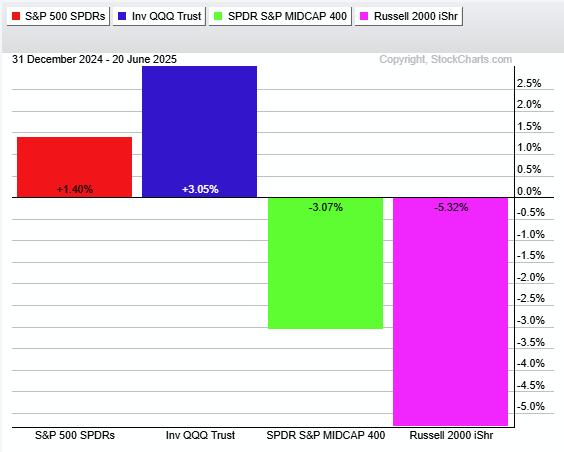
First note that MDY is lagging SPY and QQQ because its 5-day has yet to cross above its 200-day. The latter two saw bullish crosses in mid May, over a month ago. A bullish breakout in MDY would reflect broadening upside participation, which would be bullish for stocks. The PerfChart below shows SPY and QQQ with year-to-date gains. MDY and IWM are down year-to-date. 


***********************

TrendInvestorPro continues to follow the leading uptrends and recent breakouts in metals-related ETFs. These include gold, silver, palladium, platinum, copper and associated miners. Tech-related ETFs are also leading and featured in our reports/videos. Click here to learn more and get full access to our research.

***********************

The chart below shows MDY hitting its moment of truth as the 5-day SMA (black line) bumps against the underside of the 200-day SMA (blue line). A bearish cross occurred in late February and this signal has yet to be reversed. However, I am not watching for a simple 5/200 cross. Instead, I want to see the 5-day SMA clear the 200-day SMA by a certain percentage. This is a signal threshold.

The indicator window shows Percent above MA (5,200,1), which measures the percentage difference between the 5 and 200 day SMAs. See the TIP Indicator Edge Plugin for details. I placed signal thresholds at +3% and -3% to reduce whipsaws. A bullish signal triggers with a move above +3% and a bearish signal triggers with a move below -3%. At the very least, this indicator value is still negative and bearish. A move above 0 would reflect a positive 5/200 cross, while a move above +3% would trigger a bullish trend signal. This indicator is part of the TIP Indicator Edge Plugin for StockCharts ACP.

The signal threshold levels depend on your personal preferences and trading styles. Tighter thresholds generate earlier signals, but with more whipsaws. Wider thresholds reduce whipsaws, but increase signal lag. This is always the tradeoff. I prefer plus/minus 1 percent when using the 5/200 cross for SPY. I widened these thresholds to plus/minus 3 percent for MDY because it is more volatile.

TrendInvestorPro continues to follow the leading uptrends and recent breakouts in metals-related ETFs. These include gold, silver, palladium, platinum, copper and associated miners. Tech-related ETFs are also leading and featured in our reports/videos. Click here to learn more and gain immediate access. 

In today’s “Weekly Market Recap”, EarningsBeats.com’s Chief Market Strategist Tom Bowley looks ahead to determine the likely path for U.S. equities after the weekend bombing of Iran nuclear sites. Are crude prices heading higher? Will energy stocks outperform? What additional roadblocks might we have to negotiate after the latest Fed meeting and policy statement? Could we see fallout from June monthly options expiring on Friday? Check it all out in the video below….

Happy trading!

Tom

Canada’s tech sector saw momentum this week, with announcements spanning venture capital and quantum computing, as well as global policy leadership news out of the G7 summit.

Axl on a mission to retain Canadian innovation

On Tuesday (June 17), Axl, a newly founded Canadian venture studio, announced plans to help launch 50 artificial intelligence (AI) companies in Canada over the next five years, supported by a C$15 million fund led by co-founder Daniel Wigdor, a computer science professor at the University of Toronto.

The venture’s other founders are Tovi Grossman, another University of Toronto professor, entrepreneur Ray Sharma and former Telus (TSX:T,NYSE:TU) executive David Sharma. Mining magnate Rob McEwen of McEwen Mining (TSX:MUX,NYSE:MUX) and Smart Technologies co-founder David Martin are also investors.

According to Wigdor, Axl will tackle practical business problems and connect them with promising academic research in a bid to keep Canadian innovation at home. “The social contract academics believe we have with society is that we invent these technologies and inspire people,” he told the Globe and Mail on Tuesday. “The tragedy is that the foundational technologies we’re inventing in Canada are not accruing capital for Canada.’

Wigdor pointed to his own career as a cautionary tale, explaining that the iPhone’s multi-touch interface was presaged by research he conducted in the early 2000s for his University of Toronto thesis, which itself built on concepts pioneered by University of Toronto professor Bill Buxton in the 1980s.

Other University of Toronto AI breakthroughs fueled the international rise of figures like Geoffrey Hinton, OpenAI co-founder Ilya Sutskever and xAI’s Jimmy Ba, all of whom took their expertise to US-based companies.

Carney talks tech leadership at G7 summit

Initiatives like Axl’s signal a proactive approach to Canada’s challenge of retaining tech talent and capitalizing on its world-class research; however, its success will hinge on broader public support.

Prime Minister Mark Carney has signaled that fostering tech innovation at home is a priority. He told G7 leaders that driving the digital transition, led by AI and quantum computing, would be one of his top goals at the summit.

Quantum technology was reportedly discussed at length during the two day meeting, which took place in Kananaskis, Alberta. In addition, a joint statement from members released by the prime minister’s office indicates that Canada will launch the G7 GovAI Grand Challenge and host a series of Rapid Solution Labs “to develop innovative and scalable solutions to the barriers we face in adopting AI in the public sector.”

That emphasis echoes longstanding concerns from the research community.

A 2024 letter acquired by the Logic and sent to then-innovation minister François-Philippe Champagne by the Quantum Advisory Council cites the significant sums that other countries have invested in quantum technology.

“The cost of inaction is tremendous,” the group wrote at the time, pointing to Canada’s history of “inventing core technologies,” but letting other countries “grow industries around our inventions.”

The council proposed a C$1 billion program that would mirror the Quantum Benchmarking Initiative (QBI), which fosters domestic quantum computing in the US. The QBI has selected 18 companies for its first phase, including three from Canada; firms that demonstrate the ability to build a functional quantum computer by 2033 will be eligible to receive up to US$316 million, making it a potential “kingmaker” program.

The second phase of the program is set to launch in August 2025. While no relocation demands have been made, concerns exist that later-stage QBI terms could force Canadian winners to the US.

The Quantum Advisory Council said its proposed program would be run by the National Research Council, which would independently assess firms to accelerate the development of competitive domestic quantum companies.

It would build on a C$360 million national quantum strategy announced in April 2021.

The council’s recommendations include increased grants for scientific and social science research into quantum technologies, and a new federal clusters program to foster regional quantum ecosystems encompassing research, development and training, alongside ethical and secure use. It also calls for significant investment in quantum-safe software certification and the development of other security systems.

In a speech at the Quantum Now conference in Montreal on Thursday (June 19), Canada’s AI minister, Evan Solomon, emphasized the need to protect Canada’s talent pipeline. “We cannot allow short-term funding opportunities to hollow out our domestic capabilities or transfer generations of Canadian innovation outside our borders,” he said.

Earlier this month, the minister said he would move away from “over-indexing on warnings and regulation” and instead focus on finding ways to unleash the economic potential of AI. The ongoing collaboration between government initiatives and private ventures will be key to unlocking Canada’s full potential in the new digital era.

Securities Disclosure: I, Meagen Seatter, hold no direct investment interest in any company mentioned in this article.

This post appeared first on investingnews.com

DY6 Metals Ltd (ASX: DY6, “DY6” or the “Company”) is pleased to announce the initial visual estimations from the reconnaissance exploration program at the Douala Basin HMS Project, Cameroon. Desktop studies incorporating detailed geological mapping, geophysics, and known mineral occurrences, were used to define initial, high priority targets for ground- truthing. The reconnaissance programme, which consisted of hand auger and channel sampling, was successful in identifying high estimated concentrations of heavy mineral (HM) mineralisation across all the six tenements that make up the project. Additionally, the Company’s consultants have observed the presence of natural rutile grains within panned concentrates.

HIGHLIGHTS

  • The Company’s reconnaissance auger and channel sampling programme has been completed at the Douala Basin HMS Project
  • Reconnaissance sampling undertaken across the 6 Douala Basin tenements has identified thick zones of high estimated concentrations of heavy minerals (HM) as well as natural rutile
  • Work at the Douala Basin Project followed up on historical HM occurrences identified by previous Eramet drilling, as well as priority areas identified through the Company’s internal reviews
  • Samples collected from the reconnaissance program are due to be submitted for laboratory analysis in the coming weeks, with results expected in the September quarter
  • At Douala Basin, exploration will transition to a detailed campaign of auger drilling

Samples collected from this initial exploration programme are currently being prepped for dispatch to the Company’s laboratory for analysis in South Africa, with results expected in the September quarter.

Technical Consultant, Cliff Fitzhenry, commented:“While the Company’s primary focus is on the Central Rutile Project, where we have recently reported the presence of wide-spread residual natural rutile mineralisation, we believe that the Douala Basin HMS project has significant potential. The reconnaissance programme has over the last few weeks demonstrated the potential of the area, with the identification of high concentrations of visible heavy mineral sands across the project tenements through a mixture of auger, channel, and soil sampling work. Pleasingly, we have also observed natural rutile grains at Douala Basin.

We look forward to the assay results of the reconnaissance programme in the coming months.”

Reconnaissance exploration at the Douala Basin HMS Project

As announced on 5 June 2025, the Company commenced reconnaissance auger and grab sampling programmes at the Central Rutile and Douala Basin HMS projects, Cameroon. At the Douala Basin project, the Company has completed 12 hand auger drill holes (refer Figure 1), collecting 53 samples in the process, as well as collected 38 channel samples from 11 surfaces for analysis (refer Tables 1 & 2).

Cautionary Statement:

The Company cautions that, with respect to any visual mineralisation indicators, visual observations and estimates of mineral abundance are uncertain in nature and should not be taken as a substitute or proxy for appropriate laboratory analysis. Visual estimates also potentially provide no information regarding impurities or deleterious physical properties relevant to valuations. Assay results from the drilling and sampling programmes will be required to understand the grade and extent of mineralisation. Initial assay results are expected in August 2025.

Click here for the full ASX Release

This post appeared first on investingnews.com

The White House Office of Science and Technology on Monday directed federal agencies to implement ‘gold standard science’ principles to depoliticize science and restore public trust, Fox News Digital has learned.

White House Office of Science and Technology Policy Director Michael Kratsios sent guidance to federal research agencies Monday morning, incorporating President Donald Trump’s executive order on ‘Restoring Gold Standard Science.’

Fox News Digital exclusively obtained the guidance sent to federal agencies.

President Trump, in May, signed an executive order to restore ‘Gold Standard Science’ as the cornerstone of federal scientific research.

‘Gold Standard Science’ is ‘reproducible, transparent and falsifiable,’ according to the order. 

It is also ‘subject to unbiased peer review; clear about errors and uncertainties; skeptical of assumptions; collaborative and interdisciplinary; accepting of negative results as positive outcomes; and free from conflicts of interest.’ 

The executive order reinstated ‘the scientific integrity policies’ of the first Trump administration and ‘ensures that science is no longer manipulated or misused to justify political ends.’ 

‘President Trump’s Gold Standard Science EO will transform the conduct and management of federal science, from research design to public communication, in order to strengthen scientific inquiry, rebuild public trust, and ensure the U.S. continues to be the global leader in rigorous, evidence-based science,’ Kratsios told Fox News Digital. ‘But federal agencies are only one part of our nation’s research ecosystem.’

Kratsios added, ‘American universities, scientific journals, industry and philanthropic leaders all have a crucial role in improving the overall quality of research, and we encourage this executive action to serve as a model for the entire scientific enterprise.’

Kratsios sent the memo to federal agencies Monday morning to provide guidance to federal departments and agencies on implementing gold standard science ‘in the conduct and management of all aspects of their scientific activities, from research design to public communication.’

‘By adopting these standards, agencies will strengthen scientific inquiry, rebuild public trust, and ensure the United States continues as the global leader in rigorous, evidence-based science,’ the memo states.

Kratsios said that ‘Gold Standard Science’ represents a ‘commitment to the highest standards of scientific integrity, defined by nine core tenets: reproducible; transparent; communicative of error and uncertainty; collaborative and interdisciplinary; skeptical of its findings and assumptions; structured for falsifiability of hypotheses; subject to unbiased peer review; accepting of negative results as positive outcomes; and without conflicts of interest.’

‘These tenets ensure that federally-supported research and research used in federal decision-making is transparent, rigorous, and impactful, enabling federal decisions to be informed by the most credible, reliable, and impartial scientific evidence available,’ Kratsios wrote in the guidance.

But ‘Gold Standard Science’ is not limited to science, Kratsios said, saying that it is critical for tackling complex challenges in energy innovation and national security as well.

‘In an age of rapid technological progress and heightened public scrutiny, federally-funded and federally-performed science, and its use in Federal decision-making, must be beyond reproach,’ he wrote.

As for conducting science ‘without conflicts of interest,’ Kratsios said it is imperative to ensure that ‘research is designed, executed, reviewed, and reported free from financial, personal, or institutional influences that could bias outcomes or undermine objectivity.’

‘This approach is important for generating trustworthy and credible new knowledge, as it upholds scientific integrity, fosters public confidence, and ensures that results reflect evidence rather than external agendas,’ the memo states. ‘Maintaining freedom from conflicts of interest requires researchers, reviewers, and managers to disclose all relevant affiliations, funding sources, and relationships relevant to the science conducted, adhering to stringent ethical standards supported by strong institutional oversight, transparent reporting systems, and independent expert review mechanisms.’

Kratsios said agencies must ‘prioritize conducting and managing scientific research free from conflicts of interest to advance unbiased science,’ and must ‘require disclosure of all relevant conflicts of interest by researchers, reviewers, and agency officials involved in the funding or performance of Federal research.’

‘These efforts include requiring comprehensive, standardized disclosure of all financial, personal, or institutional interests in research proposals, publications, peer and merit reviews, and data repositories, with clear and standardized protocols to identify, mitigate, and manage potential biases,’ the memo states. ‘Agencies should mandate the use of independent oversight approaches and enforce strict conflict-of-interest policies.’

Agencies have 60 days to outline ‘Gold Standard Science’ implementation plans, including plans for training and resources to ensure agency personnel understand the new policy, and the use of artificial intelligence-driven tools when practical.

After Trump signed the May executive order to restore gold standard science, a senior White House official said there had been a decline in ‘disruptive research’ and investments in biomedical research, along with ‘serious cases’ of fraud and misconduct and the inability to reproduce scientific methods for the purpose of restoring public trust.

The official also blamed policy responses to the COVID-19 pandemic and ‘woke DEI initiatives’ for endangering the public’s trust in government scientists.

Now-retired National Institute of Allergy and Infectious Diseases Director Dr. Anthony Fauci was repeatedly denounced for flip-flopping and obfuscating during his time engineering the federal response to COVID-19, leading many, particularly on the right, to disregard and dismiss the legitimacy of federal health authorities outright.

That order cites the fact the Biden administration included political edits from teachers’ unions in school-reopening guidance, instead of leading with any scientific evidence.

Meanwhile, in an exclusive interview with Fox News Digital in April, Kratsios echoed Trump, saying the U.S. is in the ‘golden age’ and that this special moment in time is ‘underpinned by unbelievable science and technology.’

This post appeared first on FOX NEWS

With President Donald Trump’s extraordinary decision to attack three of the key/critical Iranian nuclear sites, two questions emerge: First, how will the Iranian populace react to the decision? Second, will this hurt or help the chances for regime change?

Of course, we will not get answers to these questions immediately. But I think it’s fair to say that history, in the not-so-distant past, offers an instructive guide to what could well happen. 

While it is challenging at this point to answer these questions with a high degree of certainty, there is one historical analogy which I was deeply involved in that may provide insights.

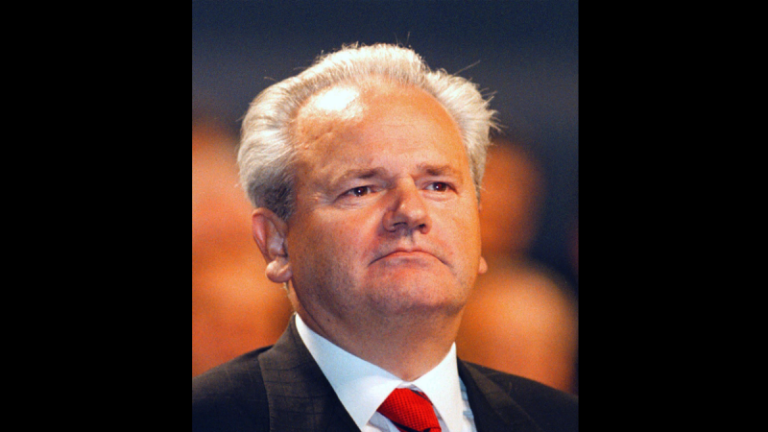
More than 24 years ago, while working in the Bill Clinton administration, I was one of the principal actors advising the State Department on the situation in Serbia. There, I led on-the-ground efforts to demonstrate to the Serbian opposition that President Slobodan Milosevic could be beaten.

At the time, many in both the U.S. and Serbia thought that nearly 80-days of NATO bombings and the 1999 Kosovo war had produced a rally around the flag effect in favor of Milosevic.

And yet, the polls I conducted conclusively demonstrated the opposite. 

The data revealed that, despite efforts by the regime to portray Milosevic as strong and popular, he was extremely weak, with a 70% unfavorable rating.

As was acknowledged in the Washington Post at the time, the strategic guidance I provided based on those polls led to the development of a campaign that soon toppled a regime few thought was quite so vulnerable.

There are striking parallels between Milosevic’s downfall and the situation the Khamenei regime finds itself in today.

In both, there are some who feel that foreign airstrikes would strengthen nationalist sentiment in favor of a regime that prioritizes projecting an aura of popularity despite being incredibly disliked by its citizens. 

Further, in Serbia, we found that there was pervasive anger towards the government, particularly over the poor state of the economy. In Iran, there is similar – if not even more intense – dissatisfaction with the regime’s chronic mishandling of economic and national policy.

To be sure, polling data from inside Iran is limited, although Stasis, a firm which specializes in conducting methodologically-sound surveys in the country, released a poll last October that is telling.

They found that nearly 8-in-10 (78%) Iranians feel that the government’s policies are to blame for the country’s economic struggles.

Additionally, in a country of 90 million, where roughly 60% are under the age of 30, the same poll shows that more than three-quarters (77%) of Iranians believe that ‘Iranian youth do not see prosperity for their future in Iran.’

All of this is to say that like Milosevic’s regime, the Iranian government appears to have strong popular support, but underneath the surface, is extremely weak and vulnerable.

For many, the idea that Israel – and especially Prime Minister Benjamin Netanyahu – could bring about regime change in Iran is hard to take seriously. 

But, a more detailed examination of the current situation, as well as Iran’s own recent history, supports the notion that Netanyahu could be more accurate than not.

Consider the history: Since 2009, there have been 10 nationwide protest movements, with millions of Iranians taking to the streets against the government.

And while there was a wide range of causes for those protests – from blatant election fraud to the most recent demonstrations set off by the killing of Mahsa Amini – they all underscore widespread opposition to the current regime. 

In that same vein, much like I saw in Serbia, the large number of protests and their various causes reveal a significantly large opposition that, under the right conditions, can effectively mobilize and pressure the regime. 

To that end, whereas we had to actively organize those movements in Serbia, those conditions are already evident in Iran, and on a much greater scale.

Aside from the bleak future facing Iran’s youth, the regime’s oppressive laws towards its nearly 44 million female citizens have turned virtually one-half of the population into second-class citizens with little to lose from rising up, as hundreds of thousands did during the 2022 Mahsa Amini protests. 

Underscoring just how deep the hatred is towards the regime, Iran International has reported receiving letters expressing personal thanks to Netanyahu, and the Jerusalem Post reported than an Iranian source told them, ‘This war has greatly strengthened and revived new optimism’ among Iranians for regime change.

The Post’s source inside Iran continued, saying that ‘conversations around the capital city (Tehran) are focused on the final days of the regime and that they brought it on themselves.’

Outside of Iran, the debate has already begun.

On one side are leaders such as Israeli Prime Minister Benjamin Netanyahu, as well as journalists like former National Security Advisor John Bolton, and Yorktown Institute President Seth Cropsey.

Those men have argued – Bolton and Cropsey in the Wall Street Journal, and Netanyahu speaking to Fox News’ Bret Baier and in other forums – that this is the most opportune moment for regime change in Iran since the revolution in 1979.

Given the deep reservoir of anti-regime sentiment among the Iranian people, the argument goes, the best course of action is that Israel’s destruction of the regime’s military and symbols of power will give Iranians the courage to rise up, united, against the government.

On the other side of the debate are those such as French President Emmanuel Macron. Haunted by failed regime change efforts in Iraq and Libya, Macron cast doubt on the possibility for success in pursuing regime change, saying it would ‘result in chaos.’

Some have also argued that Israel’s actions could create a ‘rally around the flag’ effect and spark nationalism among the Iranian people.

To be clear, while both sides have legitimate arguments, based off my experience in Serbia, I believe that Netanyahu and those on his side have a much stronger case.

The Iranian government is weaker than ever before after Israel destroyed virtually its entire chain of command and remains in total control of Iranian skies.

Likewise, unlike Libya and Iraq, Iran has a well-organized opposition, with a much more established sense of national unity than either Iraq or Libya ever had.

Taken together, there is strong evidence underpinning Israel’s belief that the Iranian regime could fall, especially given Israel’s extreme caution in only targeting symbols of the regime in order to avoid stoking nationalism.

Of course, there are risks in encouraging regime change, and it’s not at all guaranteed that the next regime is the one the West wants. It could very well result in a more extreme government led by remnants of the Revolutionary Guard hard-liners.

However, it is a mistake of similar magnitude to dismiss this chance out of hand. History has shown that when an oppressed people, angry at their government, find their confidence and are supported – even only by air power – the outcome need not be chaos, or the survival of the current government. 

It has, and could again, result in genuine regime change.

In both cases of Iran and Serbia there was widespread bombing of the country and indeed the civilians, with collateral damage on the civilian population. In the Serbian case all of the net results was that it strengthened the resolve of the Serbian people to rid themselves of an authoritarian dictator – Milosevic. And in the Iranian case, if history is any guide, it will weaken an already fragile regime and hopefully provide an outlet for the millions of Iranians who want a greater measure of freedom and peace in their lives.

This post appeared first on FOX NEWS